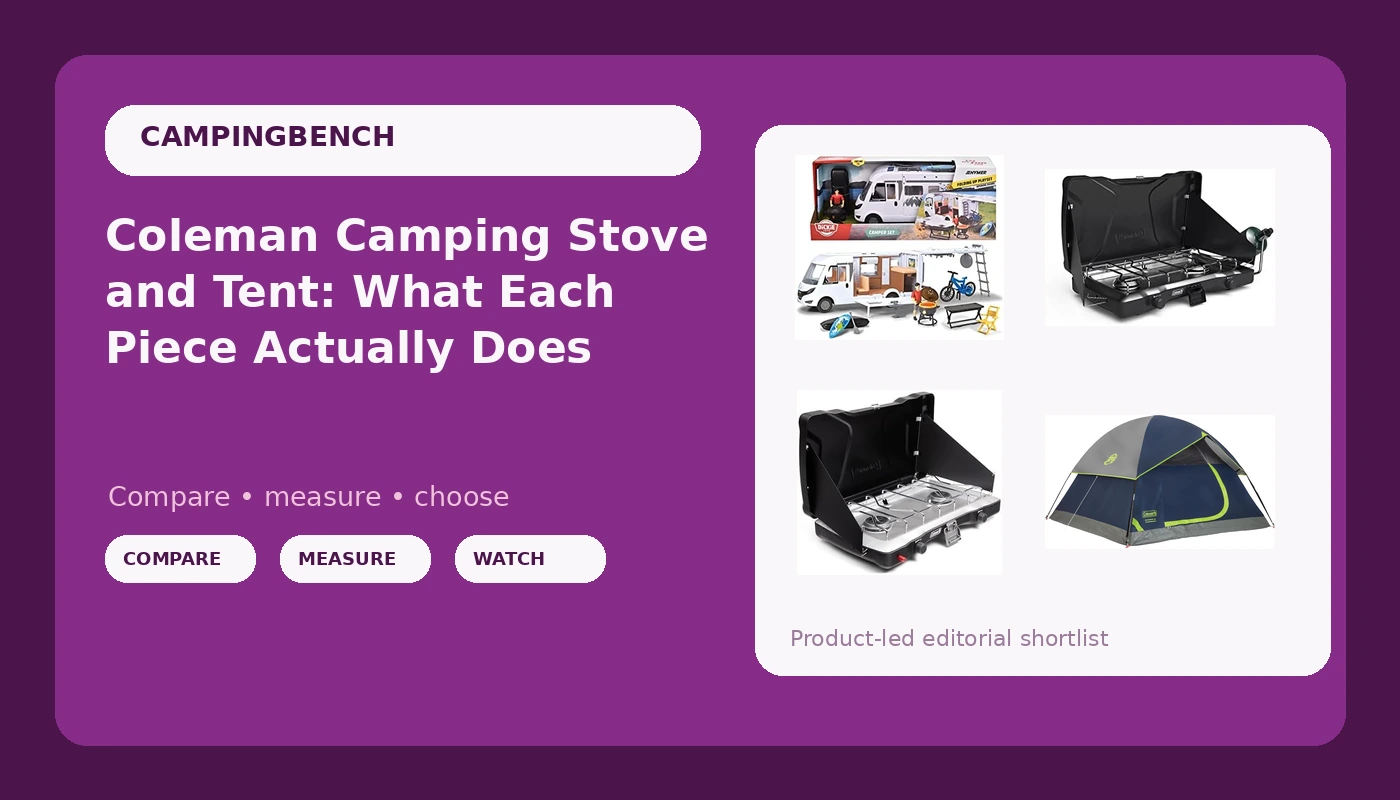
Most campers do not need a new category of gear. They need to know which pieces of a base camp earn their space in the truck and which ones are just along for the ride. This guide walks through a Coleman camping stove and tent setup the way a ranger reads a site at dusk: shelter first, cooking second, small comforts after that. The four listings below cover a family dome tent, two nearly identical two-burner propane stoves, and a toy camper that has nothing to do with survival and everything to do with keeping a kid busy while the adults cook.
Related: How to Choose a Two-Burner Camping Stove →
Quick answer
Start with shelter and cooking, in that order. A dome tent with a rainfly covers the sleeping half of the trip, and a two-burner propane stove covers the eating half. The real decision between the two Coleman stoves here is ignition: the Triton+ adds InstaStart push-button lighting, while the Triton is lit the old way with a match or lighter. The toy camper is a family-trip extra, not camping equipment, and it is worth treating it that way when you pack.
Four useful options
| Model | Best fit | What stands out |
|---|---|---|
| Coleman Sundome Camping Tent with Rainfly | Car camping, festivals, backyard nights | Rainfly included, and the line covers 2, 3, 4, and 6 person sizes |
| Coleman Triton 2-Burner Propane Stove | Camp cooks who want a plain two-burner cooktop | Two adjustable burners, wind guards, and 22,000 BTUs |
| Coleman Triton+ 2-Burner Propane Camping Stove | The same kitchen with push-button lighting | InstaStart ignition on top of the Triton layout |
| Dickie Toys Camper Toy with Hymer License | Keeping younger kids occupied at the site | Opening doors plus lights and sounds |
Base camp shelter: Coleman Sundome Camping Tent with Rainfly
The Sundome is the piece that decides whether a night goes well. A rainfly is the difference between a tent that sheds a passing shower and one that soaks through, and this listing includes one, which matters more than most of the specs people argue about online. Person count matters just as much. A two-person dome is a snug sleep for two adults on pads, while the larger sizes trade packed bulk and weight for room you can stand to spend a rainy afternoon inside.
The listing states a 10 minute setup, and that is a manufacturer claim rather than a field result. The honest way to treat any pitch-time number is to test it in your own yard, in daylight, before you rely on it at a trailhead in the rain. Weight is not published in the listing text here either, so if you are the one carrying it from the truck to the site, check the current listing details before you commit. For drive-up camping and festival weekends, that number rarely decides anything.
The plain stove: Coleman Triton 2-Burner Propane Stove
A two-burner propane stove is the anchor of a car camping kitchen because it lets you run a pot and a pan at the same time, which is the difference between a hot dinner and a sequence of lukewarm ones. The Triton keeps the formula plain: two adjustable burners, wind guards around the cooking surface, and 22,000 BTUs of rated output. It folds into a portable cooktop shape and runs on propane.
What it does not include is push-button ignition. You bring a lighter or matches, and you light the burners yourself. For plenty of campers that is fine, and it is one less ignition system to think about. It is also the reason this stove is usually the more affordable of the two Triton models when both are listed side by side, though prices move and you should check the current listing rather than trust a remembered number.
The push-button version: Coleman Triton+ 2-Burner Propane Camping Stove
The Triton+ is the same stove with one meaningful change: InstaStart ignition, so you press a button rather than reaching for a flame. That sounds like a small convenience until you are cooking breakfast in cold, damp weather with numb fingers and the lighter has migrated to the bottom of a bin. Push-button ignition also makes the stove easier to hand off to a camping partner who has never lit a propane burner before.
Everything else follows the Triton pattern: two adjustable burners, wind guards, 22,000 BTUs, portable cooktop format. If the two stoves sit close together in price when you look, the ignition is essentially what you are paying for, and that is a fair trade for a lot of campers. If the gap is wide, decide whether the button is worth it to you rather than assuming the plus sign means a better stove.
The campsite toy: Dickie Toys Camper Toy with Hymer License
The Dickie Toys camper is not camping gear in any functional sense, and it should not be judged like it is. It is a licensed Hymer camper model with opening doors and lights and sounds, which makes it a good candidate for the back seat, the picnic table, and the slow hour before dinner when the adults are still sorting out the kitchen. Think of it the way you think of a deck of cards: small, optional, and worth its space only if a child is coming along.
Two practical notes. Electronic toys and tents do not mix well, because lights and sounds tend to run on batteries that die at the worst moment, so pack spares or accept the silence. And like any small plastic item at a campsite, it needs a home in a bin at night. Loose toys become litter, and litter at a campsite is the one thing that genuinely does not belong there.
Prices and availability may change. Product images, names, and retailer links are matched to verified listings. No current price, rating, stock status, or measured result is stated here without current evidence.
What 22,000 BTUs does and does not tell you
BTU ratings describe heat output, and heat output is mostly about speed. A higher number means the burner can push more energy into a pot, which shortens the wait for boiling water. That is genuinely useful for a big pasta pot or a group breakfast. It tells you nothing about how well a burner holds a low simmer, how evenly it spreads heat across a pan, or how much fuel the whole thing drinks over a weekend.
Wind is the variable most people underestimate. A flame that looks strong in a calm driveway can be flattened by a breeze coming off a lake, which is exactly why the wind guards on both Triton models matter as much as the output rating does. Propane itself also behaves differently in the cold, since pressure drops as the canister chills, so a stove that roars in July can feel tame on a frosty October morning. Adjustable burners are the feature that lets you correct for all of this: wide open for a boil, barely cracked for rice or eggs.
The honest way to judge a stove is to cook a real meal on it, not to compare numbers on a box. Two burners at moderate output will out-cook one burner at high output every time, because cooking is a scheduling problem as much as a heat problem.
How to build the kit in the right order
The order you buy in matters more than the brand you buy. Shelter and cooking are the two jobs that decide whether a trip is comfortable, so they get the budget first. Extras, including toys and comfort items, get whatever is left, and they should never crowd out the tent you actually want. Run through these five steps before you add anything to a cart.
- Decide whether you are driving to the site or carrying the gear on your back. Most of this list is car camping equipment, and backpacking rules it out on weight alone.
- Pick the tent by how many people will actually sleep in it, then add breathing room if your vehicle can absorb the extra packed size.
- Confirm the tent includes a rainfly, and pitch it once at home so setup is not a first-time experiment in the dark.
- Choose the stove by ignition preference and burner count rather than by the largest output number on the page.
- Add the non-essentials last, including toys and camp chairs, and check that they fit the space you have left.
Setting up a car camping kitchen that works
- Find level ground before you unpack anything. A stove on a slope is a pot of hot food waiting to slide.
- Set up out of the wind, or at least open the wind guards, before you turn the burner up.
- Bring one pot and one pan that actually fit the burner spacing instead of a full set from the kitchen at home.
- Keep propane canisters upright, out of direct sun, and away from the tent and any open flame.
- Cook one full meal in the driveway before a real trip. It is the cheapest test you will ever run.
Which option should you choose?
Choose the Coleman Sundome Camping Tent with Rainfly when you want a straightforward car camping shelter with a rainfly included and you plan to match the person count to your group. Choose the Coleman Triton 2-Burner Propane Stove when you want a two-burner propane cooktop and are perfectly happy lighting it with a match or lighter. Choose the Coleman Triton+ 2-Burner Propane Camping Stove when push-button ignition is worth the difference to you, especially for cold-weather mornings. Choose the Dickie Toys Camper Toy with Hymer License when a child is coming along and you want a screen-free distraction for the slow hours.
None of these listings state packed weight, packed dimensions, or burner spacing, so measure your own storage space and read the current listing details before ordering. Prices and availability change often, which is why the right move is to check the current Amazon price on each listing rather than relying on a number you saw last season.
The bottom line
A comfortable camp is built from two decisions: where you sleep and how you eat. The Sundome covers the first with a rainfly included and a choice of person counts, and either Triton covers the second with two adjustable burners, wind guards, and 22,000 BTUs. Pick the Triton+ if you want InstaStart ignition and the plain Triton if you do not, then spend the difference on a better sleeping pad. Add the toy camper only if a kid is in the truck, and leave room in the bin for it. Shelter, kitchen, extras. That order has survived a lot of nights outside, and it will survive yours.