I have spent more than 500 nights in tents, most of them within an hour of Bend, Oregon, plus a full thru-hike of the Pacific Crest Trail in 2022. That is the lens I bring to this camping gear comparison. The four products in this roundup look like they have nothing to do with one another: an instant pop-up tent, a truck-bed tent, a two-burner propane stove, and a 17.5-ounce sleeping pad. They are all answers to the same question, and the question is not which one wins. It is which one matches the trip you actually take.
Related: Truck Bed Tent vs Ground Tent: Which One Fits Your Camp
The honest short answer: there is no single winner here, because these four products solve four different problems. If you drive to your campsite and sleep on the ground, the Night Cat pop-up tent and the Cofiyard stove do the most work for the money. If you sleep in the bed of a pickup, the Timber Ridge truck-bed tent is the only thing in this group built for you. If you walk to your campsite, the Gear Doctors Ether pad is the only one of the four you would ever put in a pack. Everything below is about matching the tool to the trip, not crowning a champion.
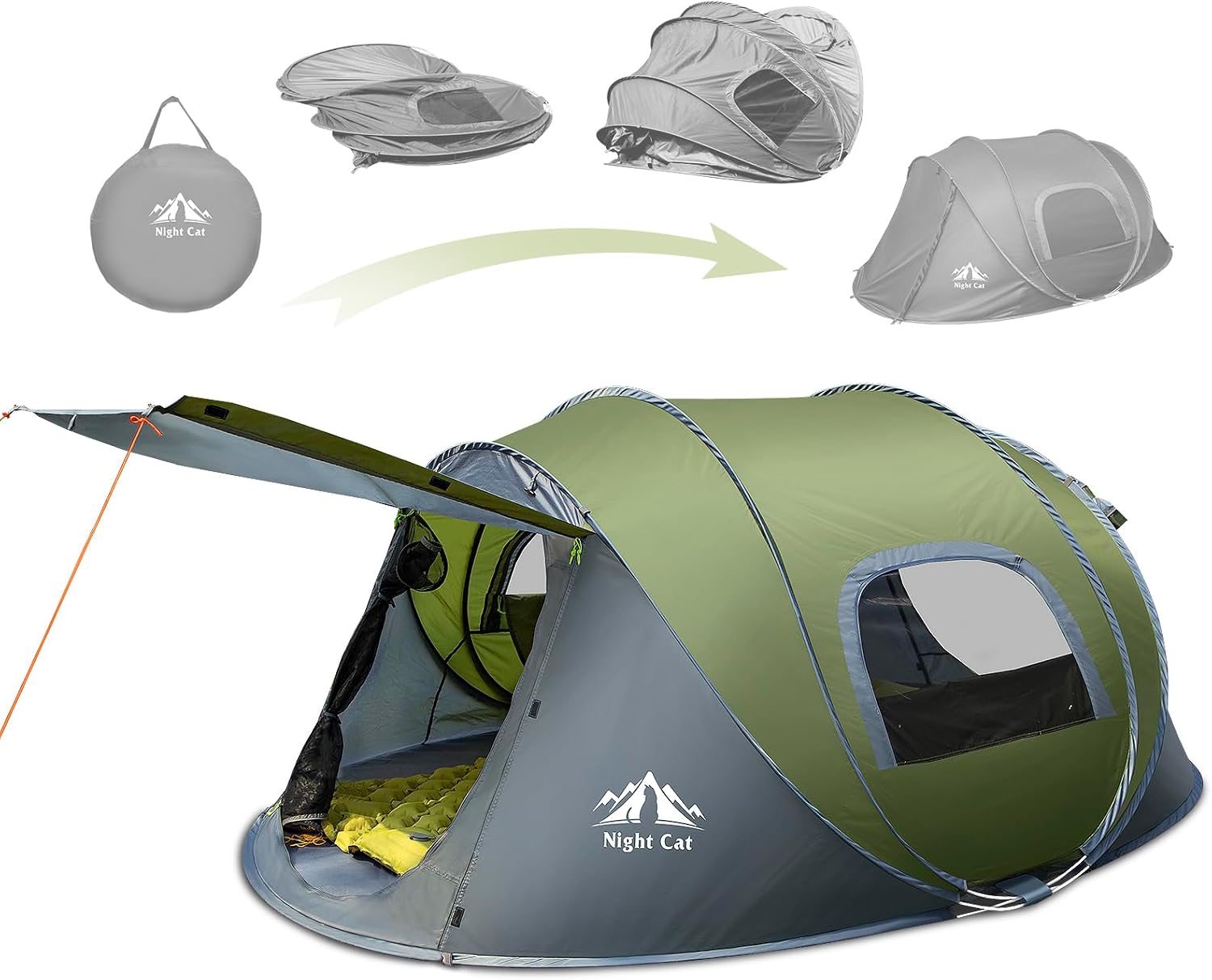
Night Cat Pop-up Camping Tent: 2 to 4 Person Tent Waterproof Instant Easy Setup Family Tent
Setup is the entire pitch: no pole puzzle, and a floor plan sized for a couple with gear or a small family
Pop-up designs trade packability for speed, so it belongs to car camping and nothing else
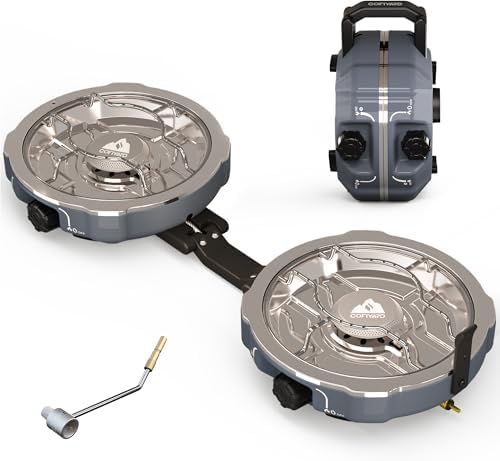
Cofiyard 20,000 BTUs 2 Burner Propane Camping Stove, Portable Folding Camp Stove with Adjustable Burners, Regulator and Carrying Bag
Two adjustable burners, a regulator, a carrying bag, and enough output to cook a real meal instead of rehydrating one
Heavy, bulky, and completely dependent on a vehicle and on propane you have to buy and haul
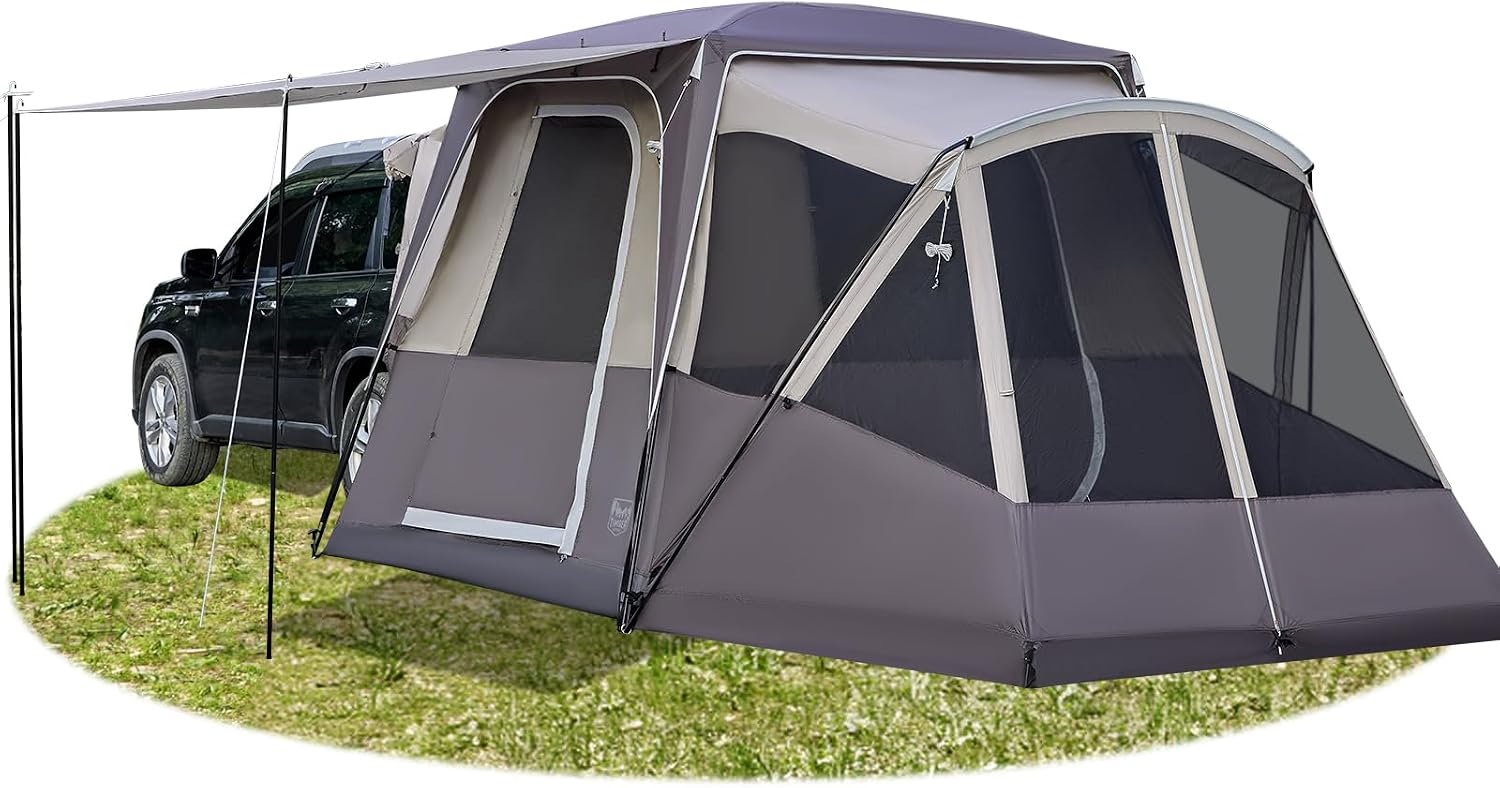
Timber Ridge Truck-Bed-Tents SUV Camping Tent
Sleeps you off the ground, away from rocks, cold soil, and the runoff path that floods a ground tent in hard rain
The most specialized purchase here: it only works if you own the right vehicle, and it has to fit that vehicle
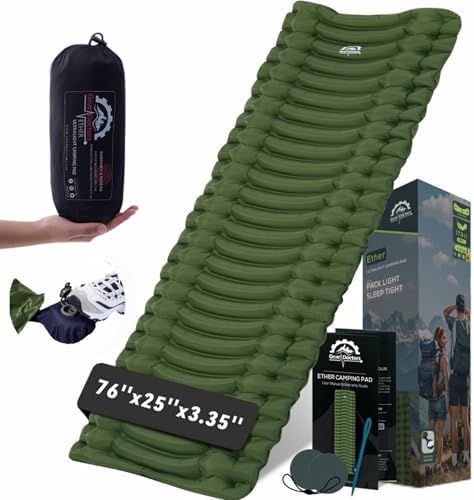
Gear Doctors® Ether 17.5oz Ultralight Camping Sleeping Pad
17.5 ounces and a compact packed size, which is the only spec that matters when the pad has to ride in a pack
Ultralight pads trade warmth and cushion for weight, so the R-value deserves a hard look before you commit
Prices and availability were captured from Amazon Creators API and may change.
How I judge camping gear
Four questions, every time.
- Will I actually carry it?
- Does it survive a storm?
- Does it work at mile 12 on day 3?
- Would I trust it on a multi-day trip?
Notice that none of those questions is "does it have the best spec sheet." Weight is not a number. It is how you feel at mile 12 on day 3 of a trip. Waterproofing is a promise that expires, and seam sealing is the real test. A tent that takes 20 minutes to pitch is a tent you will end up sleeping in the rain next to, because the storm does not wait for your pole sleeves.
The four products below fail and pass different questions. The stove fails question one for anyone walking anywhere. The pad fails question two if you camp in the cold without checking its insulation. The truck-bed tent fails question one for every person who does not own a pickup. The pop-up tent fails question four for a thru-hiker and passes it easily for a family that drives to a lake. That is why a single ranking would be useless, and why this comparison is organized around use instead.
Night Cat Pop-up Camping Tent: the five-minute shelter
The Night Cat Pop-up Camping Tent is a 2 to 4 person tent that advertises waterproof fabric and instant easy setup, and the setup claim is the one that matters most. A pop-up design removes the pole puzzle entirely. You pull it out of the bag, it opens, you stake it, and you are done. For a family camp with kids, that is worth real money, because pitch time is what decides whether dinner happens before dark and whether anyone has patience left for the fire.
Where it earns its place: car camping, festival weekends, a basecamp where the vehicle carries the load. Where it does not: anywhere you have to walk in. Pop-up tents trade packability for speed, and the packed shape is bulky and awkward compared with a conventional dome that folds down into a stuff sack. If your trip involves miles, this is not the shelter.
Storm worthiness is the other thing I would watch on any tent in this class. Before you trust it in a real rain event, check how the seams are finished and whether the fly actually covers the doors. Factory sealing fails, field sealing works, and that advice applies here as much as it applies to a tent that costs five times as much. Set it up in the yard, hose it down, and look for the wet spots before you find them at 2 a.m.
Cofiyard 20,000 BTU two-burner stove: the basecamp kitchen
The Cofiyard 20,000 BTU two-burner propane stove is a folding, portable unit with adjustable burners, a regulator, a carrying bag, and a handle built into the frame. The feature list reads like a tailgating ad, and that is not an insult. Two burners is the difference between a real meal and rehydrated sadness at a car camp, because you can run a pot of water and a skillet at the same time instead of sequencing everything through one flame.
Adjustable burners matter more than the headline output number. A stove that only knows high is a stove that scorches pancakes and burns coffee to the bottom of the pot. Being able to drop to a simmer is the difference between cooking and merely heating things up. The regulator and the included bag are the kind of small details that decide whether a stove gets used twice a season or every weekend, since a stove you have to improvise a connection for is a stove that stays in the garage.
The trade-offs are honest and unavoidable. This is a heavy, bulky piece of gear that runs on propane you have to buy and haul, and it is not going anywhere on your back. It is a car camping, tailgating, and barbecue tool, and it is very good at that job. Nobody carries a two-burner stove to a backcountry site, and nobody should pretend otherwise.
Timber Ridge Truck-Bed-Tents SUV Camping Tent: sleeping on the vehicle
The Timber Ridge Truck-Bed-Tents SUV Camping Tent takes a different approach to the same problem: instead of fighting the ground, it moves your sleeping platform onto the vehicle. You sleep in the bed of a pickup or the back of an SUV, off the dirt entirely.
That solves three problems at once. You are away from rocks and roots that find your spine no matter how carefully you clear a site. You are away from the cold soil that pulls heat out of a sleeping pad all night. And you are away from the runoff path that turns a ground tent floor into a puddle during a hard rain. For someone who already owns a truck, the vehicle becomes the tent platform, and the setup stops being about finding flat, dry ground.
The trade-offs are real, and they are specific. This tent only works with the right vehicle, and fit is everything, so measure the bed or cargo area before you buy and compare it against the listed dimensions. You are also committing to camps reachable by road, which rules out anything with a hike attached. And this is the most specialized purchase in this comparison, which means it makes the least sense for anyone who does not own the platform it needs. Buy it because you have the truck, not because you want an excuse to get one.
Gear Doctors Ether 17.5oz sleeping pad: the one that goes in the pack
The Gear Doctors® Ether 17.5oz Ultralight Camping Sleeping Pad leads with its weight, and that is the correct way to lead. A pad is the piece of sleep gear people skip to save money and grams, and it is the piece that decides whether you sleep at all. Comfort and weight are a trade-off, and the trick is knowing which trips need which. At 17.5 ounces and a compact inflatable packed size, this one is aimed squarely at the trips where the pack is on your back.
If you have ever spent a night on bare ground at elevation, you already know why this matters. Cold travels up through the ground and into you, and no sleeping bag rating survives a bad pad. This is the only product in this comparison that a backpacker would carry, and that alone makes it the most versatile of the four.
One caution, and it is the caution I give everyone. A sleeping pad is an insulation system, not just a cushion, and the R-value is the number that tells you how warm it sleeps. Ultralight pads generally trade warmth for weight, so check the R-value on the listing against the temperatures you actually camp in. A summer backpacker in the high desert is fine with a thin pad. A shoulder-season camper in the Cascades is not, and no amount of ultralight philosophy changes physics.
The trade-offs that actually decide it
Weight versus comfort. Every gram you remove comes from somewhere. The Ether pad removes it from cushioning, which is the right trade for a pack but the wrong trade for a truck bed. The Cofiyard stove removes nothing, which is why it cooks so well and why it never leaves the vehicle.
Setup time versus packed size. The Night Cat tent buys speed with bulk. A dome tent buys a small stuff sack with ten minutes of pole work in the rain. There is no design that wins both, only a design that wins the one you care about.
Vehicle dependency. The Timber Ridge tent is the most capable option here for one specific camper and completely useless for everyone else. That is not a flaw in the product. It is a flaw in buying it without owning the truck.
Storm worthiness. None of these four products comes with a waterproofing guarantee that lasts forever. Tents leak at the seams, stove flames die in wind, and pads do nothing about a wet sleeping bag. Plan for the worst night, not the best one, and the gear you own will hold up far better.
Who should buy what
The family car camper should pair the Night Cat pop-up tent with the Cofiyard stove. Fast shelter plus two burners covers the two things that go wrong on a drive-up trip: arriving late and getting hungry.
The truck owner should look hard at the Timber Ridge. It is the only product in this group that changes where you sleep rather than just how, and for the right vehicle it removes the worst parts of ground camping.
The backpacker should buy the Gear Doctors Ether pad and ignore the other three entirely. Everything else here is measured in pounds, and pounds are miles.
If you only buy one thing: buy the pad. It is the cheapest way to fix the most common reason people sleep badly outdoors, and it is the only purchase on this list that helps on every trip, whether you drive there or walk.
What I'm watching next
I am midway through a season of testing shelters for the shoulder months, and the pattern keeps repeating. The gear that gets used is the gear that is easy to use. The pop-up tent gets pitched. The two-burner gets cooked on. The pad gets carried. The 40-pound full camping setup stays in the garage, and that is the most expensive thing in it.
Buy for the trips you take, not the trips you daydream about. Then check the seams, check the R-value, and check the weather before you go.