I have slept more than 500 nights in tents, and maybe 40 of them were car camping nights. That ratio explains how I think about family car camping gear: it is not a compromise, it is a different sport. Nobody counts grams at a drive-in site. What you count is how many people fit on the floor, how long the shelter takes to pitch in wind, and whether the ice survives until Sunday morning.
This comparison covers four items: an 8-person tent with a room divider, a 3-inch memory foam sleeping pad, a zipperless hard cooler, and a book about pitching to investors. Three of those are camping gear. One is not, and I am going to say so plainly instead of pretending it belongs in a duffel bag.
My bias, up front. I am a park ranger in Bend, Oregon, I thru-hiked the PCT in 2022, and I keep a gear journal with an entry for every night out, including the nights that went wrong. I do not recommend gear I have not lived with, and my floor is 15 nights. I have not logged 15 nights in any of these four, so treat this as a category and design read, not a field report. Where a claim needs a rain test or a thermometer, I say so.
For most families building one car camping setup, the Kingfun 3 Inch memory foam pad is the purchase that changes how you sleep, and the CAMPROS CP 8 Person tent is the purchase that changes how camp feels. The Titan cooler is the comfort luxury. The book is a separate decision wearing camping-adjacent clothes.
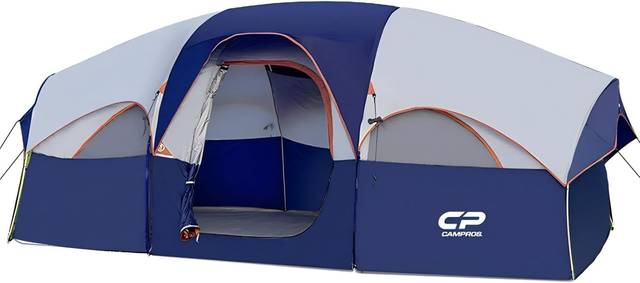
CAMPROS CP 8 Person Camping Tent
Room divider splits the floor into two rooms, which is the difference between a family tent and a family argument. Rainfly and weather-resistant construction cover the basics.
An 8-person tent is a car camping object. It is not going into a pack, and pitch time in wind is the real test at this size.
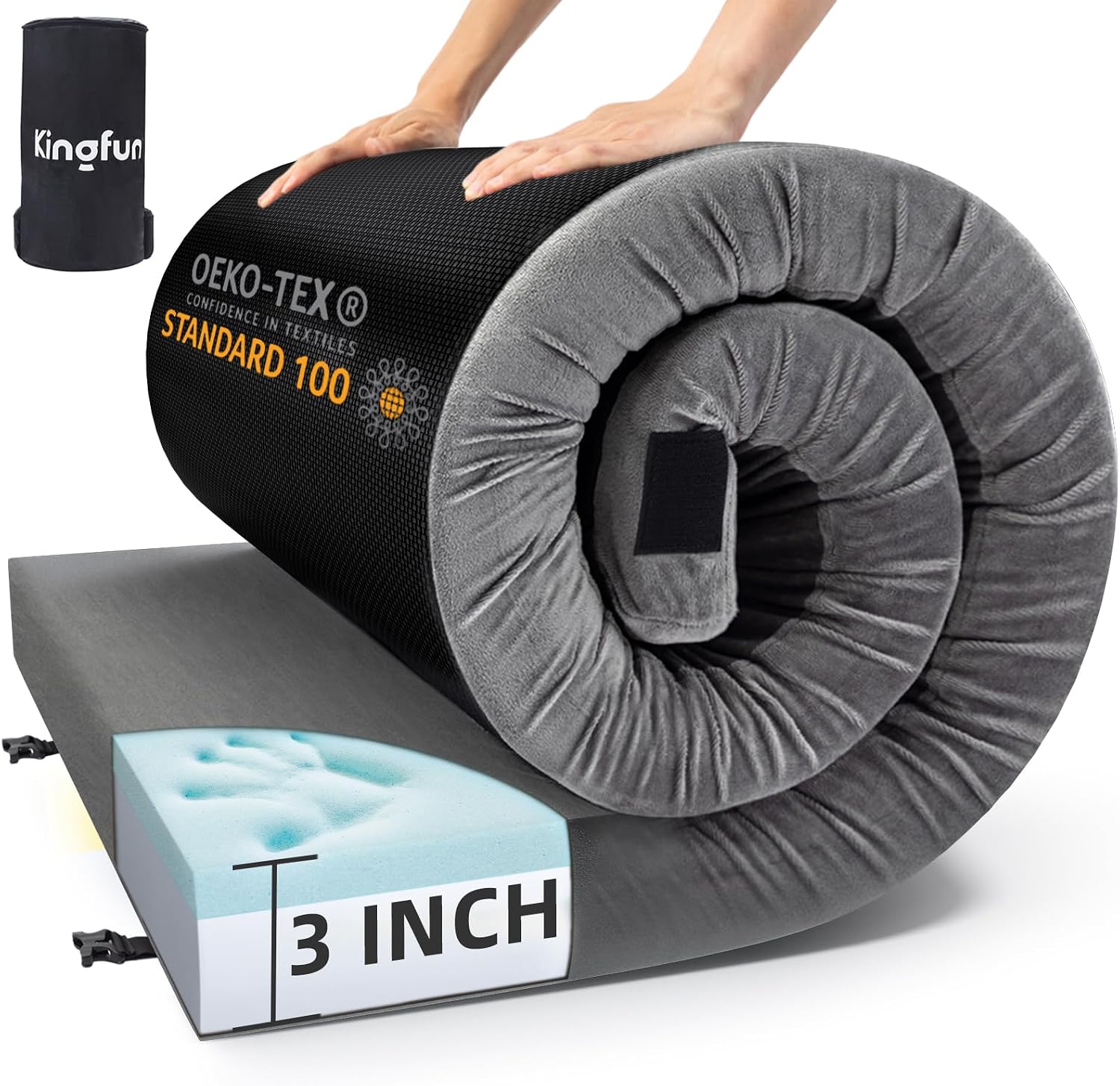
Kingfun 3 Inch CertiPUR-US Memory Foam Camping Mattress Pad
Three inches of memory foam is comfort you feel through a sleeping bag, and it rolls into its own travel bag. Waterproof surfacing matters on damp ground.
Foam is bulky and does not compress like an air pad. If the car is already full, this is the item fighting for space.

How to Pitch Anything: Tested Method with +1.500 entrepreneurs for Unlocking the Investors Vault
A framework rather than a pep talk, which is what you want if you are pitching a guide service, a gear brand, or a trail nonprofit.
It is not camping gear. No amount of wishful thinking puts it in the same category as a tent.
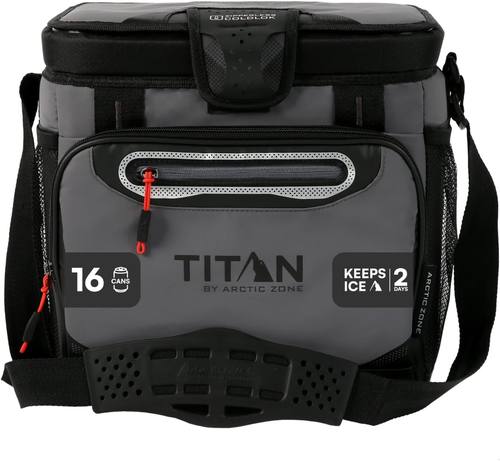
Titan Zipperless HardBody Cooler, Keeps Ice 2 Days
A zipperless lid and a hard body solve the two things that kill soft coolers: jammed zippers and collapsed walls.
Hard-sided coolers are heavy before you put anything in them, and "keeps ice 2 days" is a claim I would verify myself.
Prices and availability were captured from Amazon Creators API and may change.
What these four items actually have in common
Honestly, almost nothing, and that is the point of writing it down. Two of them are shelter and sleep, which is the core of any camp. One is food storage, which is comfort and safety. One is a business book, which is a completely different purchase that happens to share a shipping cart.
So I am going to evaluate them the way I evaluate any gear: what problem does it solve, what does it cost you in space or weight, and what would I need to see before I trust it? For car camping, the currency is not base weight. It is volume, setup time, and whether the thing survives weather you did not plan for.
The shelter: space is the feature
The CAMPROS CP 8 Person Camping Tent leads with the two specs that matter most for family camping: capacity and a room divider. A divider is not a gimmick. It turns one big open floor into two rooms, which means kids on one side, adults on the other, and a place for duffels that is not the middle of the sleeping area. If you have ever tried to change clothes in a single-room tent with three other people, you understand the value.
Weather resistant construction and a rainfly cover the basics, but "weather resistant" is a promise with an expiration date, and I do not take it at face value. The things I would check before trusting this tent in a storm: whether the fly covers the body or just the roof, whether the seams come factory sealed or need field sealing, and how many stake-out points exist. An 8-person tent is a sail. In a canyon wind, a tent this size lives or dies on guylines and stake placement, not on the fabric story.
Pitch time is my other hard rule. A tent that pitches from the inside means the interior gets wet while you set it up, and a tent that takes 20 minutes is a tent you will end up sleeping next to in the rain. I have not timed this one, and I am not going to guess. What I can say is that a shelter this size is a car camping commitment: you will not carry it anywhere, and you should not buy it expecting to.
The sleep layer: 3 inches of memory foam
The Kingfun 3 Inch memory foam pad is the item on this list that I would buy first, because sleep is the thing you cannot fix at camp once it goes wrong. Three inches of CertiPUR-US certified foam is real thickness. The certification is a materials standard, not a comfort rating, so read it as "this foam meets a known spec," not as "you will sleep like a king."
Where foam beats air: no puncture risk, no baffle failure, no slow leak at 2 a.m. that leaves your hip on the ground by morning. Memory foam gives you a surface that feels closer to a bed than anything inflatable, and a waterproof roll-up design with a removable travel bag is exactly what a tent floor demands, because tent floors get damp no matter how careful you are.
Where foam loses: volume. It rolls up, but it does not compress to the size of a water bottle, and if your trunk is already full of an 8-person tent and a hard cooler, this pad is the third bulky object. There is no R-value advertised here, and I would not assume one. If you sleep cold in shoulder seasons, put a closed-cell foam pad underneath it and you have a system that handles cold ground far better than foam alone.
This is a floor sleeping mat for tents, truck beds, and guest rooms. It is not a backpacking pad, and nobody should pretend otherwise.
The cooler: zipperless is the whole story
The Titan Zipperless HardBody Cooler makes one design argument and makes it well: zippers are the weakest point on a soft cooler. They jam with sand, they fail at the seam, and once they leak cold air, your ice is gone. A zipperless lid removes that failure mode entirely, and a hard body means the walls do not collapse when the cooler is half empty.
"Keeps ice 2 days" is the claim on the label. My version of a rain test for a cooler is a thermometer, a pre-chilled load, and a full weekend, and I have not run it. If you buy this, run your own test: pre-chill it, pack it tight, keep it out of direct sun, and open it as little as possible. Ice retention numbers are earned by how you use a cooler, not by what the box says.
The trade-offs are honest ones. A hard cooler is heavy before it holds anything, and it does not squish into a gap in the trunk the way a soft bag does. What I would check in person: how the lid seals without a zipper, how it carries when loaded, and whether the drain and latch feel like they will survive a season of gravel roads.
The odd one out: the pitching book
How to Pitch Anything is not camping gear, and I am not going to grade it like a tent. It is a book about unlocking investor funding, aimed at founders, and the title claims a tested method built with more than 1,500 entrepreneurs. I cannot verify that number and I do not need to. The real question is whether a structured framework beats the free advice you can find anywhere.
Here is who it is actually for: the person sitting in a camp chair on a rainy afternoon, sketching out a guide service, a shuttle business, a small gear brand, or a land-access nonprofit. If you are writing a business plan by headlamp, a method beats motivation, and that is the case for this one.
Here is who it is not for: anyone shopping for a tent. It is the only item in this comparison I cannot evaluate with a rain test or a volume audit, and I will not fake a verdict on it. Buy it for the pitch, not for the pitch time.
The volume audit nobody wants to do
I preach weight, but for car camping the honest metric is volume. Stack these three pieces of gear in your head: a tent that sleeps eight, a 3-inch memory foam pad, and a hard-bodied cooler. That is three of the bulkiest objects in camping, and together they will eat most of a midsize SUV cargo area before you add food, chairs, or a single duffel of clothes.
That is fine. It is a choice, not a mistake, as long as you make it deliberately. What it does mean is that none of this gear is going anywhere on your back. If you ever want to walk a mile from the trailhead with your shelter and sleep system, this is not that kit and it was never trying to be. Base weight only matters for the trips where you carry the weight. This is not one of them.
How I would split the money
If you are starting from nothing, buy in this order.
Sleep first. The Kingfun pad is the item that determines whether the trip is fun on day two. A bad night on the ground ruins a good campsite, and no tent fixes that.
Shelter second, unless you already own a tent. The CAMPROS 8-person tent is the right call for a family that drives to camp and wants separate rooms. If your group is two people, an 8-person tent is a lot of fabric and a lot of wind resistance for no reason.
Cooler third. The Titan solves real problems with real trade-offs, and if you already own a cooler that works, this is an upgrade, not a need.
The book last, and separately. It does not belong in the camping budget. It belongs in the "I am trying to build something" budget, and it is a good buy there.
What would change my mind
I would need 15 nights and a storm to move any of these from "looks right on paper" to "recommended." Specifically: a rain test on the tent to see whether the fly and seams hold, and whether the interior stays dry through a real pitch in wind. A volume and loft check on the foam pad after a few weeks of rolling and unrolling, because cheap foam takes a set. A thermometer test on the cooler with a full, pre-chilled load, because ice retention claims are the easiest thing in camping to overstate.
Until then, this is a design read. That is more honest than a review written from a product page, and it is the standard I hold my own gear journal to.
The bottom line
For a family that drives to camp, the Kingfun 3 Inch memory foam pad and the CAMPROS CP 8 Person tent are the two purchases that carry the trip. The pad decides how you sleep, the tent decides how you live in camp, and the room divider is worth more than it sounds. The Titan Zipperless HardBody Cooler is a genuinely thoughtful piece of design with a weight penalty you should accept with open eyes. The book is a good book that wandered into the wrong article, and if you are pitching a business rather than a tent, it may be the most useful thing on this list.