Most people who sleep badly on a car camping trip blame the tent. The tent is almost never the problem. The problem is a shelter pitched on a slope with a sleeping bag on bare ground, which turns into a night of sliding downhill into the wall while the cold pulls heat out of your back. A tent and camping cot setup fixes both of those in about 20 minutes, and it is the biggest comfort upgrade available to a car camper who is not counting grams.
I'm Wren. I've been a park ranger in Central Oregon for six years, I thru-hiked the PCT in 2022, and I have spent more than 500 nights in tents, many of them in the Cascades, where the weather changes its mind at 2 a.m. What follows is the order I use when I set up a two-person car camp: shelter first, sleep surface second, and everything that keeps weather out of both of them last.
The kit here is deliberately small. One four-person tent with two doors, and one folding cot that gets you off the ground. The rest is knowing where to put them and in what order.
Why you should trust me
Six years of ranger work means I have watched a few thousand people set up camp, and I have watched most of them make the same three mistakes. They pitch in the low spot because it looks level from the road. They sleep on the ground because a cot feels like a luxury. They leave the rainfly in the stuff sack because the forecast looked fine.
My gear journal has an entry for every night out, including the nights that went wrong. The bad entries almost always trace back to one of those three mistakes, plus a fourth: a tent that was never guyed out, so the fly sagged against the inner wall and every bit of condensation wicked straight into the sleeping bag.
I hold myself to a few rules. No waterproof claim goes in print without a real rain test. No recommendation goes out without a weight audit, even for car camping gear, because weight is how a thing feels when you are carrying it from the trunk to the site at 11 p.m. And no review of a specific product until it has real nights on it. Where I have not put a season on something, I say so, and I tell you what the listing promises and what I would check first.
How I chose these two pieces
This is not a ranking of every tent and cot on the market. It is the setup I would hand a friend who is tired of waking up sore, and the two products below match the criteria I care about.
For the shelter: a pitch one person can complete in the dark and in wind, two doors so nobody climbs over anybody at 3 a.m., enough floor area for two sleepers plus duffels, and a rainfly that covers the whole body of the tent rather than just the roof. A four-person tent is the right size for two adults who want to sit up and keep gear inside. A two-person tent with two adults in it is a puzzle box.
For the sleep surface: a stable frame that does not wobble when you roll over, a height that lets you sit on the edge and pull boots on, legs that can be adjusted for ground that is close to level but not quite, and a packed size that fits in a trunk without a fight. A cot you distrust is a cot you leave in the garage.
One honest note. I have not put a full season on these two specific units. What I can tell you is which specs line up with the things that fail in the field, and which failure modes to watch for. The links go to the current listings so you can check the details yourself.
The shelter: a four-person tent with two doors
The shelter decides whether the rest of the setup is even usable. If the tent leaks, the cot sits in a puddle. If the tent is too small, the cot does not fit. If the tent pitches badly, you will be fighting the walls all night.
For two people, a four-person tent is not overkill. It is the difference between two sleepers plus two duffels plus a place to change clothes, and a wrestling match with a nylon bag. Two doors matter more than most people expect, because a single-door tent means one person wakes the other every time they need to get out, and in a storm that happens more often than you think.
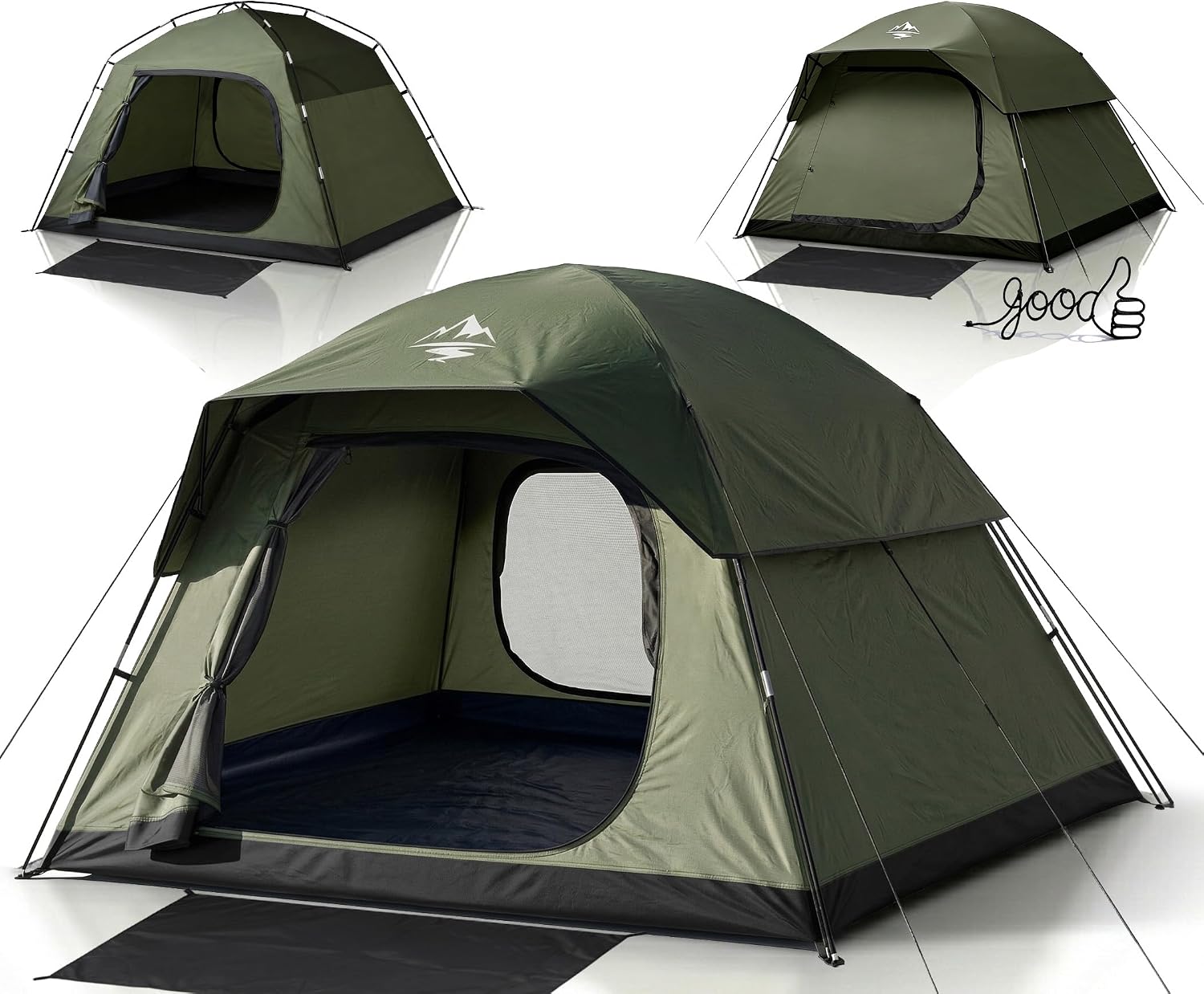
Our pick: Purebox Tent 4 Person Tents for Camping with 2 Doors & Rainfly
 Visit on Amazon →
The two-door layout is the reason this one fits the criteria. Each sleeper gets their own exit and their own vestibule for boots, which means no climbing over a sleeping partner at 3 a.m. and no wet shoes inside the sleeping area. The rainfly covers the body of the tent rather than just the top, which is the feature that decides whether a tent sheds a real storm or just a sprinkle.
Before you commit, check three things. First, the floor dimensions against your actual sleep setup, because a four-person rating is a floor area, not a promise about how two adults and two duffels will fit. Second, the stakes. Stakes that bend on the first rock are the single most common complaint about tents at this price, and a set of steel replacements costs almost nothing. Third, whether you want a footprint under it, which is cheap insurance for a floor that lives on gravel and pine needles.
Two things I would do on day one. Pitch it in the yard in daylight so the first dark pitch is not a puzzle, and seam seal the fly before a wet trip. Factory sealing is a promise that expires. And be realistic about the category: a four-person tent with this much interior volume is a car camping tent. It is not the thing you carry on a multi-day trip, and it should not be sold to you as one.
The sleep surface: why a cot beats the ground
The cot is the piece people skip, and it is the piece that changes the trip.
Sleeping on the ground costs you twice. Mechanically, every lump and root transfers straight into your hips and shoulders, so you wake up stiff even after a full night. Thermally, the ground is a heat sink. It pulls warmth out of whatever touches it, all night, and no sleeping bag rating accounts for that because the bag's rating assumes you are on an insulated pad.
A cot lifts you off that surface entirely. Air moves underneath, which keeps condensation from pooling under your bag, and your body is no longer in direct contact with cold earth. The trade is that moving air is not warm air, so a pad still goes on top. That is not a flaw in the cot. It is how cots work.
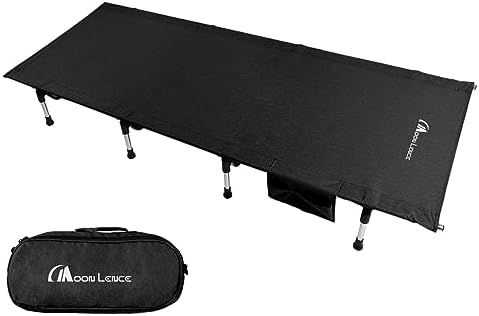
Our pick: MOON LENCE Camping Cot, Height Adjustable with Cot Leg Extenders, Strong Support 330lbs, Lightweight Comfortable Folding Bed for Camping, Hiking, Travel, Truck, Beach, Office Nap,Backpacking
 Visit on Amazon →
The height adjustment with the leg extenders is the feature I care about most, and it has nothing to do with sleeping. It decides whether you can sit on the edge of the cot and dress in the morning, or whether you are doing a floor routine in a tent at 6 a.m. in 40 degree air. The listing rates the frame at 330 lbs of support, which is the kind of margin that matters for a frame that gets sat on, dropped on, and leaned on, not just slept on. It folds, so it lives in the trunk without eating the whole cargo space.
What to check before you buy. Measure the interior height of your tent against the cot height with the extenders installed, because a tall cot in a low tent puts your face in the ceiling. Confirm the folded dimensions fit your trunk alongside the tent and the cooler. And shake the frame on the ground where you actually plan to sleep, not on the carpet at home, because a cot that rocks on gravel will rock all night.
Then add the pad. A closed-cell foam pad or a self-inflating pad on top of the cot is what keeps you warm, and the R-value of what you sleep on is the number that decides your night, not the air temperature on the forecast. The cot gives you the flat, stable platform. The pad gives you the insulation. You need both.
The setup, step by step
Step one: scout the site in daylight. Look for level ground, no dead branches overhead, and no low spot that will collect water. Stay 200 feet from water, per Leave No Trace, and keep your door facing away from the prevailing wind.
Step two: lay out the tent body. Stake the four corners first and check the shape before you thread a single pole. A tent staked crooked pitches crooked.
Step three: raise the body. Assemble the poles on the ground, never by snapping them together inside the tent. This is where tents get punctured.
Step four: put the rainfly on immediately. Not when it starts raining. The fly is not just waterproofing, it is the layer that keeps condensation off your inner wall, and putting it on in the dark during a storm is a miserable job.
Step five: guy it out. Stake the vestibules and run the guy lines. A fly that touches the inner tent wicks water straight through, and an unguyed fly in wind turns into a drum.
Step six: set the cot up inside. Unfold the frame, set the legs, then install the extenders and choose your height. Sit on it once before you put anything on it.
Step seven: pad, bag, and gear. Pad on the cot, bag on the pad, duffels in the vestibule, boots upside down under the fly, headlamp at the head end where your hand will find it.
Step eight: storm mode. If the wind picks up, re-check every stake, tighten the guy lines, close the vents on the windward side, and open the leeward ones for airflow. Ventilation is what keeps the inside of a tent dry, even in rain.
What goes wrong, and how to fix it
Condensation on the inner wall. This is breath, not a leak. Leave a vent open, keep the fly off the inner wall, and do not cook or boil water inside the tent.
You wake up sliding. The site is not level, or the cot is not. Move the tent before you inflate anything, or put the cot's feet against the downhill wall.
Bent stakes. Replace the included set with steel before the trip. This is the cheapest fix in camping.
The cot does not fit the tent. Measure both before you buy. Interior height and floor width, with the extenders installed.
A puddle under the cot. You pitched in a low spot. A footprint under the tent helps, but the real fix is site selection, and that happens before you unload the car.
The first pitch takes 25 minutes. That is normal. The fourth one takes eight, and the reason is that you stopped reading the instructions.
What to buy first, and what to add later
If you are building this over two seasons, start with the shelter. A bad tent ruins every trip, rain or shine, and it is the piece that protects everything else you own. The tent also sets your size limits: once you know the interior dimensions, you know which cot fits.
Add the cot next, because it is the upgrade that changes how you feel at 7 a.m. on day two of a trip. Then add the small stuff in this order: a pad for the cot, steel stakes, a footprint, and a proper stuff sack setup so the trunk stays organized.
The two pieces in this guide are the whole spend. Check current Amazon price on each, do the per-night math against a motel room, and remember that a car camping setup is amortized over years, not trips. Fifty nights in a tent you already own costs you nothing extra.
The order matters more than the gear list. Shelter, then sleep surface, then the details that keep weather out of both. Do that, and the nights that go wrong stop being the ones you remember.