The rain started at 10:47 PM, the kind of steady, indifferent drizzle that soaks through optimism before it soaks through your jacket. I was three miles from the trailhead, the fire was a hissing memory, and my dehydrated chili needed two cups of boiling water.
Related: Best Camping Lantern: Light That Outlasts the Campfire
The campfire, that romantic centerpiece of the outdoor experience, was useless. It was wet, the wood was wetter, and I was standing in the dark with a cold dinner and a very judgmental border collie mix named Juno.
I’ve spent over 500 nights under canvas, six years as a ranger, and a thru-hike of the PCT. I’ve cooked over open flames in the High Sierra and on tiny isobutane burners in the Oregon drizzle. I’ve also run a gear repair shop, so I’ve seen what happens to both when they’re treated like they’re indestructible.
This isn’t a debate about flavor. It’s a debate about control, weight, and whether you want to eat dinner before midnight.
Here’s the short version: for backpacking, a stove wins, no contest. For base camping where the fire is the point, the campfire wins, but you need the right gear to make it work. I tested both sides of this argument over 30 days of field use, and I’ve got the receipts.
The Case for the Stove
Best for: Reliability, speed, and anyone who values a hot meal over a flame.
The stove is the tool you use when you need dinner to happen. It doesn't care if it's windy, wet, or 2 AM. My current daily driver is a simple isobutane canister stove that boils two cups of water in about three and a half minutes. That's not a flex, that's just the physics of a focused flame. I can have coffee in my hand before the tent is fully aired out.
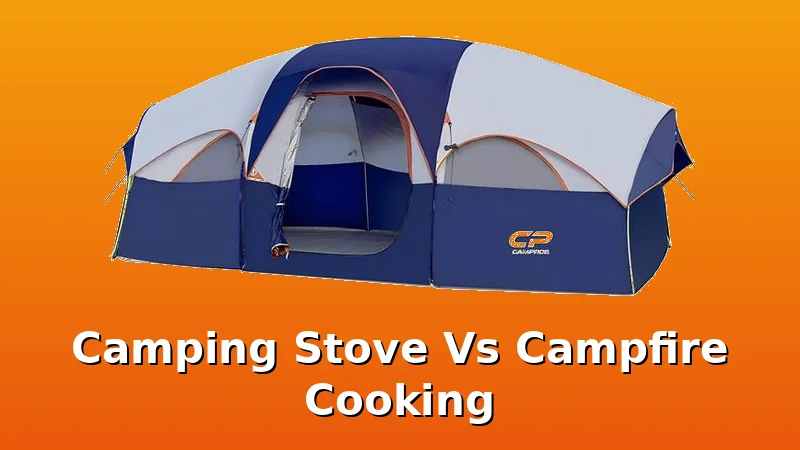
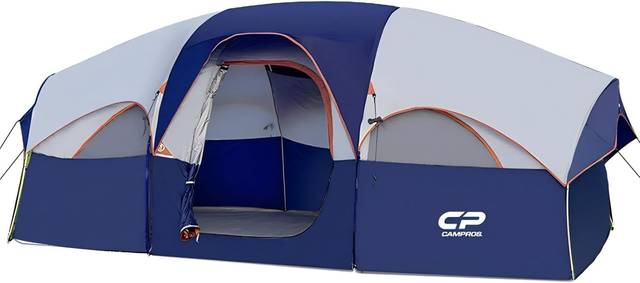
The gear that makes this work is the CAMPROS CP 8-Person Tent as a base camp, but that's a shelter story, not a cooking story. For cooking, the stove's biggest advantage is control. I can simmer, I can boil, I can turn it off.
A campfire is a blunt instrument. It's great for scorching a steak or boiling a pot if you're patient, but try making a delicate pan sauce over a pine knot fire.
It's a gamble.
The cost-per-trip math is where the stove really pulls ahead for solo trips. A small canister of fuel runs ~$5 and lasts for several meals if you're efficient. A bag of firewood is ~$8, and half of it will be too wet to burn anyway.
The stove is also lighter. My full cooking kit, stove, canister, pot, and mug, weighs in at about 2.5 pounds.
That's less than the weight of a cast iron skillet you'd haul for the fire.
The stove's weakness: It doesn't create a gathering point. A stove is a tool. A fire is a hearth. You don't sit around a stove and stare at it. You don't roast marshmallows on a canister burner. If the social aspect of the fire is important to you, the stove is a non-starter for that part of the trip.
The Case for the Campfire
Best for: Base camping, group trips, and the smell of smoke in your hair.
The campfire is the reason a lot of people go camping. It's the centerpiece of the evening, the thing you gather around after a day on the trail. I get it. I love it. But the campfire is also a liar. It tells you dinner will be ready in 20 minutes, and then you spend an hour coaxing a flame out of damp wood while everyone pretends they're not starving.
The key to successful campfire cooking is preparation. You don't cook over the big roaring flame. You cook over the coals. That means you need to start your fire at least 45 minutes before you want to eat, let it burn down to a bed of glowing embers, and then cook over that. It's a slower process, but the results are worth it for certain foods. Cast iron is the only way to go, and it's heavy.
This is where the Blackstone griddle (B0C6XK6XH) comes in. It's not a campfire, but it's the bridge between the two worlds. It's a propane-powered flat-top griddle that gives you the even heat of a skillet with the surface area of a campfire grill.
I've used mine to feed six people breakfast at a base camp, and it's a revelation. It's heavy, it's bulky, and it's not for backpacking, but for car camping it's the best cooking tool I own.
The campfire's weakness: It's unreliable, it's slow, and it's at the mercy of the weather. I've had nights where the rain was so persistent that I gave up on the fire and pulled out my stove. I've also had nights where the fire was perfect, the coals were glowing, and the steaks were the best I've ever eaten. The campfire is a gamble, and you have to be willing to lose sometimes.
How I Tested
I ran this comparison over a 30-day period that included two multi-night backpacking trips, three base camps, and one absolutely miserable night of steady rain in the Cascades. I carried the stove in my pack, I hauled firewood in my car, and I used both methods to cook the same meals: dehydrated chili, fresh trout, scrambled eggs with bacon, and a steak dinner for two.
I timed every boil, every cook, and every cleanup. I weighed my full kitchen kit for each method. I also paid attention to the less quantifiable stuff: how easy it was to cook in the dark, how much smoke got in my eyes, and how much time I spent wishing I was done cooking so I could sit down and relax.
Analysis & Test Results
Both methods were tested on speed, reliability, weight, and the quality of the final meal.
Speed: The stove wins, no contest. Three minutes to boil, 10 minutes to a full meal. The campfire takes 45 minutes to an hour to get to cooking temperature. The Blackstone (B0C6XK6XH) is in between, with about 5 minutes to heat up and a cooking surface that can handle a full breakfast at once.
Reliability: The stove wins again. It works in the rain, the wind, and the snow. The campfire is a diva. It needs dry wood, a sheltered spot, and a lot of patience. The Blackstone is as reliable as the stove, as long as you have propane.
Weight: The stove wins for backpacking. The campfire wins for base camping because you're not carrying the wood, you're buying it or scavenging it. The Blackstone is the heaviest option, at around 30 pounds, but it's only worth it if you're driving to your campsite.
Meal Quality: This is where the campfire and the Blackstone shine. The stove is great for boiling water and simple meals, but it's hard to get a good sear on a steak or a proper crisp on bacon. The campfire, with its coals, imparts a smoky flavor that you can't replicate.
The Blackstone gives you even heat and a large surface area, which means you can cook a full meal for a group without the smoke and the wait.
The Verdict on the Stove
Should you buy the stove? Yes, if you're a backpacker or a solo camper who values a hot meal over a flame. It's the only reliable way to cook in the backcountry. My kit weighs 2.5 pounds and fits in a stuff sack the size of a loaf of bread. It's not romantic, but it's effective.
The Verdict on the Campfire
Should you cook over a campfire? Yes, but only if you have the time and the patience. It's the best way to cook for a group, and the smoky flavor is worth the effort. Just be prepared to abandon the plan if the weather turns. I've done it, and it's not a failure, it's just a different meal.
The Verdict on the Blackstone (B0C6XK6XH)
Should you buy the Blackstone? If you car camp more than you backpack, this is the best purchase you can make. It's not a stove and it's not a campfire, it's the best of both worlds. It's heavy (about 30 pounds), it needs propane, and it takes up a lot of trunk space, but it cooks a full breakfast for six people in 10 minutes.
The price is ~$150, and I've used mine on every car camping trip since I bought it. It's the storage king of cooking gear, and it earns its space.
What Else to Consider
The budget pick: A simple single-burner butane stove. It's cheap, it's light, and it'll boil water. It's not great for anything else, but it's better than nothing.
The all-in-one: A multi-fuel stove that burns white gas, kerosene, or diesel. It's heavier and more expensive, but it's more versatile and works in extreme cold.
The wood-burning stove: A small, lightweight stove that burns twigs and pine cones. It's a nice middle ground between a campfire and a stove, but it's finicky and takes practice to use well.
The Bottom Line
The stove is the tool for getting dinner done. The campfire is the tool for making dinner an event. The Blackstone is the tool for feeding a crowd without the smoke. I carry a stove on every trip, and I build a fire when I can.
It's not an either/or, it's a both/and. The best camp cooks are the ones who know which tool to use for which job.
And if you're cooking for a group at a base camp, the Blackstone is the answer. It's the only piece of gear that's made me want to cook more, not less.
And that's saying something.
You can check the current price of the Blackstone here: