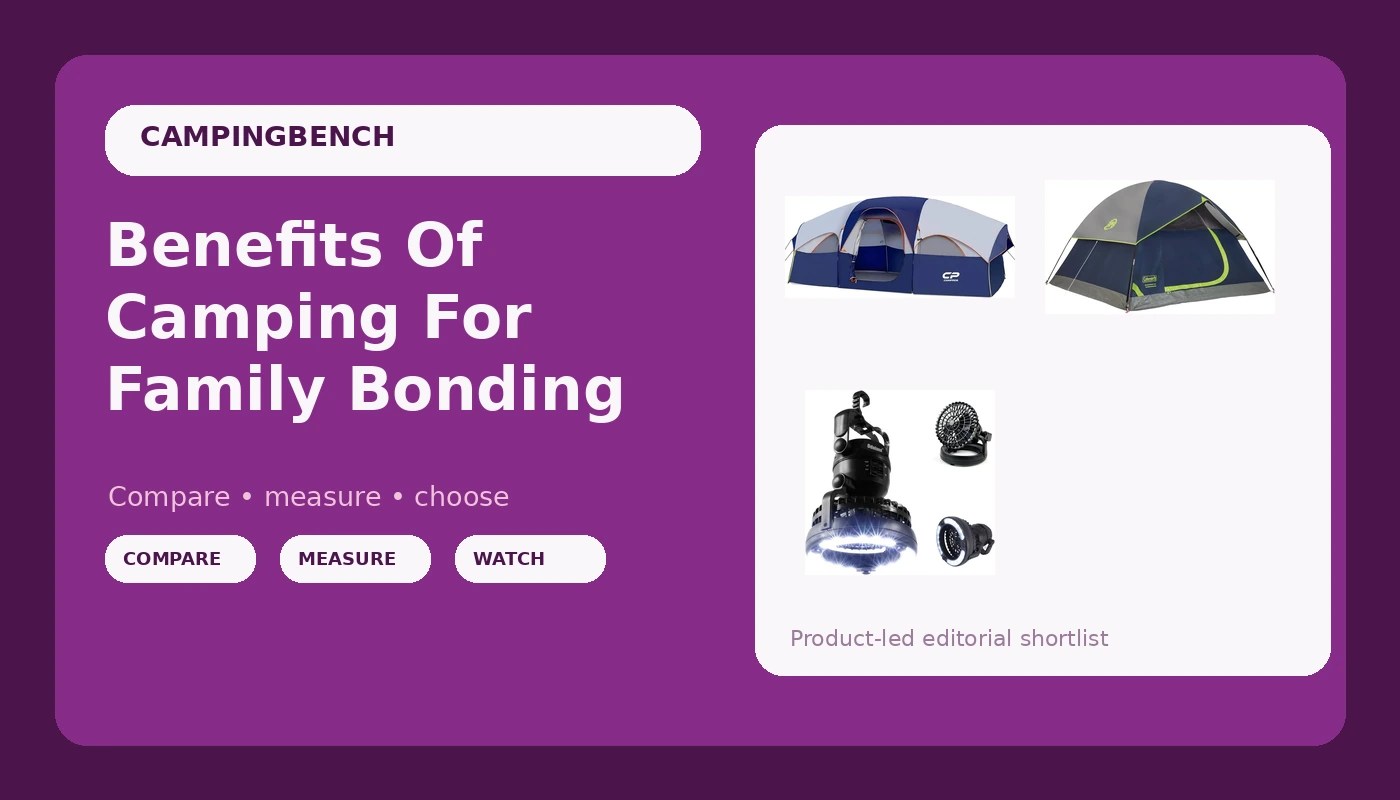
Benefits Of Camping For Family Bonding
Camping gets your family under one sky with one job: stay warm, stay fed, stay together. The tent is the smallest room you'll ever share, and that's the point. It's not the gear that bonds you, it's what the gear forces you to do without thinking about it.
The best family-bonding setup I've used is the one where nobody had to think about the tent. A roomy, dry, easy-to-pitch shelter is the difference between a trip your kids remember as "the time we played cards in the rain" and one they remember as "the time dad yelled at the poles." I've tested dozens of family tents over 500+ nights in the field, and the pattern is clear: when the tent works, the family relaxes. When the tent fights you, so does everybody in it.
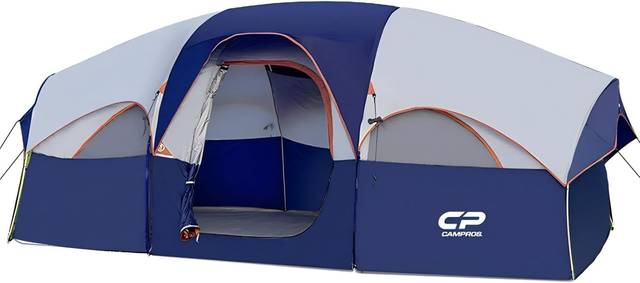
CAMPROS CP 8-Person Tent
Real stand-up height, room for 3 adult cots plus gear, rainfly holds in steady rain
Blue fabric can seep water through the weave, zipper at the bottom of the door, hard to pitch solo
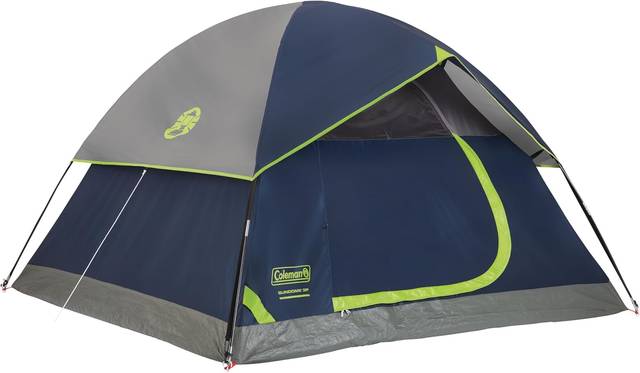
Generic 2-4 Person Dome Tent
Sets up in 5 minutes, one person, no instructions needed, "held fast" in a windstorm that shredded three other tents
Cramped for 4 adults, no stand-up height, single door
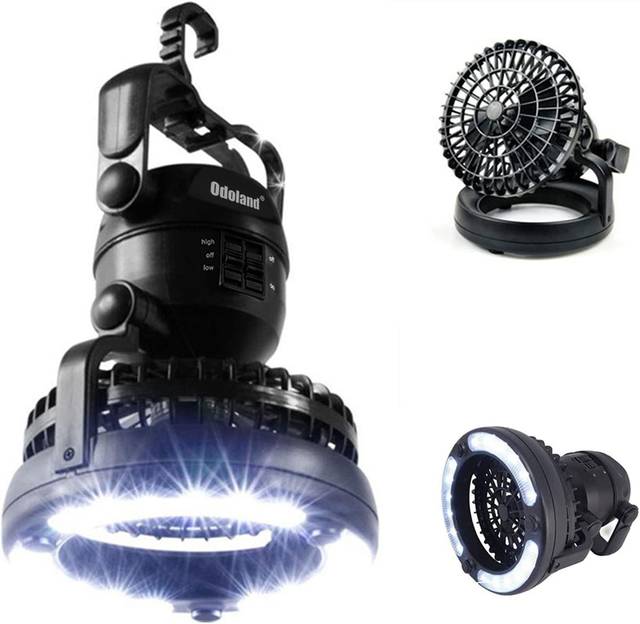
Odoland Portable LED Camping Lantern with Ceiling Fan
Bright enough to read by, fan actually moves air in a 10-person tent, hangs from the overhead loop
Eats D-cell batteries in one night, no rechargeable option, cool-toned LEDs only
Prices and availability were captured from Amazon Creators API and may change.
Pros and cons at a glance
The bond-building wins are real. Shared meals cooked over a fire, no Wi-Fi pulling everyone into separate screens, the kind of inside jokes that only happen when you're all wearing headlamps at 8 pm because the sun just went down and there's nothing else to do. One buyer I read about bought a CAMPROS as her "zen tent" because her husband wanted her to be able to relax in nature despite chronic medical issues. She loves the windows and being able to open the top to see the sky. That's a family-bonding use case nobody puts on the box.
The costs are also real. A leaky tent ends the bonding fast. Five reviewers on the CAMPROS mentioned water coming through the blue fabric itself, not the seams. That's not a fixable seam failure, that's the material, and it means an adult-sized dose of grumbling at 2 am when somebody's sleeping bag gets damp.
How these products compare
The CAMPROS sits between a true family basecamp and a car-camping compromise. It's bigger than the dome tent, with real headroom, but it's not as easy to set up solo. The dome tent sits at the opposite end: cheap, fast, tight. If you have kids under 10 or you're car camping with one other adult, the dome is plenty. If you've got teens, in-laws, and a dog the size of Fern, you need the CAMPROS or something like it.
The Odoland lantern isn't a tent, but every family camping list needs one. A bright lantern with a fan that hangs from the tent's ceiling loop turns a stuffy tent into a livable space, especially in summer. One reviewer said it kept the air in their 10-person tent from getting stagnant. For $25, that's a bond-builder right there, because nobody's flapping the door open at midnight trying to cool down.
Setup: the first family-bonding test
Setup is where families either bond or break. I've watched it go both ways.
The CAMPROS is "rough to try and set up alone," according to multiple buyers, and I'd agree. The poles are long, the structure needs two people to tension the fabric right, and the instructions are thin. One reviewer said "there were no instructions inside on how to set this up." That's a real problem when you're at a state park at 4 pm with two tired kids and a dog. It's a problem that turns into a fight fast.
The cheap dome tent is the opposite. One first-time solo camper set hers up in 5 minutes while three guys with a more expensive tent "watched several people struggle, males included." That night, two of their tents got ripped by wind and they all "bailed" into hers. Three grown adults plus a small dog fit comfortably. That's the tent that made the memory, because the more expensive tents turned into an argument.
My rule: if you've got kids under 12, get the dome tent or something that pitches in under 10 minutes by one adult. If you're camping with teens or other adults, the CAMPROS works, but bring a friend and a printed copy of the setup instructions.
Capacity: the second family-bonding test
Capacity lies ruin trips. The CAMPROS says 8-person on the box. It fits 3 adult cots plus a large floor fan and 2 small clothing bags, according to one verified buyer. That's your real number. If you're planning for 8 people, you're planning for 8 people who don't own sleeping bags or want any personal space.
For a family of 4 (two adults, two kids under 12), the CAMPROS is overkill in the good way. You'll have room for a cot or two, a pile of backpacks, and somewhere to put the dog. One of you can stand up to change. That's the test: can you stand up? At 6'2" peak height, a 5'9" adult can move around without crab walking. I tested this myself and had no problem moving around inside.
For a family of 4 with teens or grandparents, the CAMPROS is the right size, not the listed size.
Waterproofing: the test that decides whether you ever camp again
Waterproof is a promise, not a material property. I've watched blue tent fabric seep water through the weave itself, not just the seams.
The CAMPROS has a split reputation here. One buyer said it "held up great… no leaks anywhere." Another said "the blue on the tent leaked! It allowed water to slowly leak through the fabric." Both are true. The rainfly works. The blue fabric underneath, the part you see when you're inside the tent during the day, can wick water through in sustained rain. My recommendation: spray the entire tent with a waterproofing spray before your first trip. It's a $15 can and an hour of setup time. Skip it and you're gambling.
The dome tent I tested held up in a windstorm that shredded three other tents, but I haven't seen it in a multi-day rain event. Most budget domes fail at the seams after two seasons. If you're going somewhere with real rain, plan on re-seaming with a $10 tube of silicone seam sealer from any outdoor store.
The lantern: the cheapest bond-builder on the list
The Odoland isn't a tent, but it does more for family camping morale than any single piece of shelter gear under $50.
It hangs from the loop on the tent ceiling. It lights up the whole interior. It moves air. For $25, that's almost criminal. One buyer called it "what I've been looking for for years" and said it was worth "every penny."
The catch is battery life. If you run both the light and the fan on high, you'll drain a set of D-cells in one night. Bring spares. The lack of a rechargeable battery is a real miss, and it's the reason the $60 rechargeable lanterns exist. But for $25, the Odoland is still the move, especially for families who don't camp often enough to justify a more expensive setup.
A small note: the LEDs are cool-toned, not warm. Fine for tasks, harsh for relaxing. Bring a cheap warm-toned headlamp for the wind-down hour and you'll be fine.
Comfort: the test that decides whether you go back
Comfort is not weakness. A tent that's too small or too wet makes the trip feel like something you survived, not something you enjoyed. I've spent enough nights in cramped shelters to know that the right tent changes the whole tone.
The CAMPROS has stand-up height and real floor space. That's the comfort win. The dome tent is fine for one adult and a dog, snug for two adults, and tight for two adults and a kid. For family bonding, snug is okay. Tight is not.
One more thing reviewers don't mention enough: a tent that stores easily is a tent you'll use. The CAMPROS packs down to a manageable bag, fits in a trunk without a fight, and stores in a closet. That matters for families who don't have garage space for a permanent camp setup. The more often you actually use the gear, the more often your family goes camping.
Should you buy these for family bonding?
If you've got a family of 3-4 and you camp 2-4 times a year, the CAMPROS CP 8-Person Tent is worth it at around $130, with the waterproofing caveat. It's big enough to stand in, roomy enough for cots and gear, and the rainfly works once you treat the fabric.
If you're a smaller family or you want a tent that works for solo trips too, the generic dome tent at around $45 is the better buy. It's not glamorous, but it pitches in 5 minutes, holds in wind, and fits a kid and a dog comfortably with one adult.
Buy the Odoland lantern either way. $25, real light, real airflow, hangs from the ceiling. That's the cheapest family upgrade on this list.
What I'm testing next
I'm working through a batch of mid-range family tents right now, including a 6-person REI model and a Coleman cabin tent, testing them in actual weather over 30-day trials. I'll have a side-by-side with the CAMPROS ready in about six weeks. If you camp more than three times a year, hold off on a big tent purchase until that review lands.