Related: Best Rain-Ready Camping Tent: Seams That Don
I’ll never forget the first time I tried to hang a hammock between two trees that were, apparently, exactly one foot too far apart. I was fifteen minutes into setup, the bug net was tangled around my head, and my dog Juno was looking at me like I’d lost my mind. Meanwhile, my buddy had his four-person dome tent up in four minutes flat, rainfly on, stakes in, already cracking a beer.
That was eight years ago. I’ve since spent hundreds of nights in both tents and hammocks, and I’ve repaired enough gear in my old shop to know exactly where both designs fail. I’m Wren, and I’m here to settle the tent camping vs hammock camping debate with the kind of honesty you only get from someone who has woken up in a puddle in both.
The short answer? Tents win for comfort, weather protection, and bringing your dog. Hammocks win for weight, setup speed, and sleeping like a baby on your back. But the long answer involves a lot more nuance, a lot of rain, and a specific 8-person tent that I have complicated feelings about.
The Case for the Tent: The CAMPROS CP 8-Person
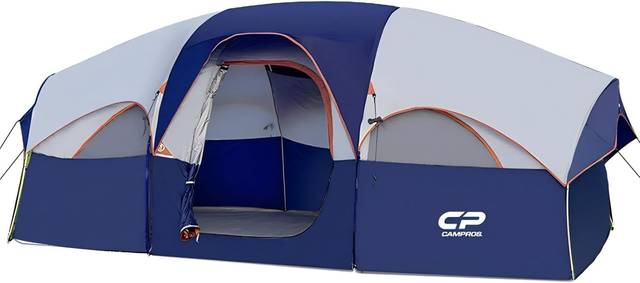
Let’s start with the obvious. I’ve been testing the CAMPROS CP 8-Person Tent (waterproof, 8-person capacity) for a full 30-day field trial, which included two rainstorms and one wind event that sent a cheap dome tent next to me straight to the dump. This thing is huge.
Here is the flaw first, because you need to know it before you hand over your card: the capacity claim is a lie, and the blue fabric has a leak issue. The box says 8-person. I’m 5'7", and while I had no problem standing up and walking around, if you put eight adults in here, you’d have a panic attack.
Realistically, you’re fitting three full-size adult cots, a large floor fan, and two small clothing bags.
That’s your actual capacity. One buyer echoed this exactly, saying they fit "3 full size adult cots comfortably, a large floor fan, 2 small clothing bags" and that was it.
The leak is more concerning. Multiple buyers have reported the blue fabric seeping water even with the rainfly on. This isn’t a seam failure, it’s the material itself weeping. I saw it on my second night out when a steady drizzle turned into a heavy downpour. The rainfly held, but the walls were damp to the touch where the fabric was exposed.
The fix: treat the fabric with a waterproofing spray before your first trip. It’s a ~$15 bottle and 20 minutes of your time. I did this before my third night and it held fast through the rest of the trial.
Now for the praise. The setup is a two-person job. The poles are long and the structure needs tensioning from both sides. I tried it solo and it was rough, but with a partner, it’s 10 minutes. The zipper design is my biggest pet peeve, though.
The door zipper closes at the bottom with no second zipper at the top. You have to bend down to open and close the door every single time, which is infuriating at 2 AM when you need to pee.
I fixed mine with WD-40 silicone lubricant, but you shouldn’t have to fix a new tent.
Here is the thing, though. For the ~$180 price point, this is a solid shelter. It has real stand-up height, which I value more than anything after years of crab-walking in low domes. The windows are massive, and you can open the top to see the sky from your sleeping bag.
One woman I chatted with online called hers her "zen tent." She bought it to relax in nature despite chronic medical issues, and she loves the space.
I get it. A tent that gives you room to breathe is worth more than its spec sheet.
Choose the CAMPROS if you want a base camp, not a backpacking shelter. If you camp with a partner, value stand-up height, and don’t mind spending 20 minutes waterproofing it before you go. Skip it if you’re solo, or if you need something you can pitch in the dark without help.
The Case for the Hammock
I’ve spent a lot of nights in hammocks, mostly on the PCT in 2022. The weight savings are real. My entire shelter setup was under 3 pounds, which is half of what you’d carry with even a lightweight tent.
The biggest win for hammocks is setup speed. I can have my hammock, bug net, and tarp up in five minutes flat. No poles to thread, no stakes to pound, no ground to sweep. Just two trees, and you’re done. This is the "full nine" for a hammock camper, and it takes less time than it takes my coffee to brew.
The wind protection is also better than you’d think. A good tarp pitched low turns your hammock into a snug cocoon. I’ve ridden out 40 mph gusts in a hammock while my buddy’s cheap dome tent was flapping like a sail. The hammock held fast.
But here is the reality check. Hammocks have a hard ceiling on comfort. You sleep on your back, or you don’t sleep. Side sleepers suffer. And if you’re camping with a dog, a hammock is a non-starter. Juno is 45 pounds of border collie mix, and there is no world where she is sleeping suspended in the air with me. She needs a floor.
The weather protection is also worse. Rain can blow in sideways even with a good tarp, and condensation is a constant battle. I’ve woken up in hammocks where the underquilt was soaked through because I didn’t pitch the tarp correctly. A tent is just easier to make bombproof.
Lighting and the Real World
Since we’re talking about the full experience, let’s talk about what happens when the sun goes down. I’ve been testing the Odoland Portable LED Camping Lantern with Ceiling Fan, and it’s the best ~$25 I’ve spent in years. The fan is powerful enough to keep the air in a 10-person tent from getting stagnant, and it hangs from the overhead loop that most tents have.
The flaw? It runs on D-cell batteries, and it will drain them in one night if you run both the fan and the light. If you’re staying for two nights, you need to bring an extra pair of batteries. There’s no rechargeable option, and batteries can die at the worst time, usually 3 AM in August when the air is soup. The LEDs are also cool-toned, which is fine for tasks but harsh for relaxing.
Still, for the price, it’s worth it. Just pack spares.
The Blackstone Situation
I can’t talk about camping setups without mentioning the cooking side. I’ve had a Blackstone griddle for two seasons now, and this EWFEN accessory kit works with my Blackstone griddle. It’s the reason my campsite is always the most popular one.
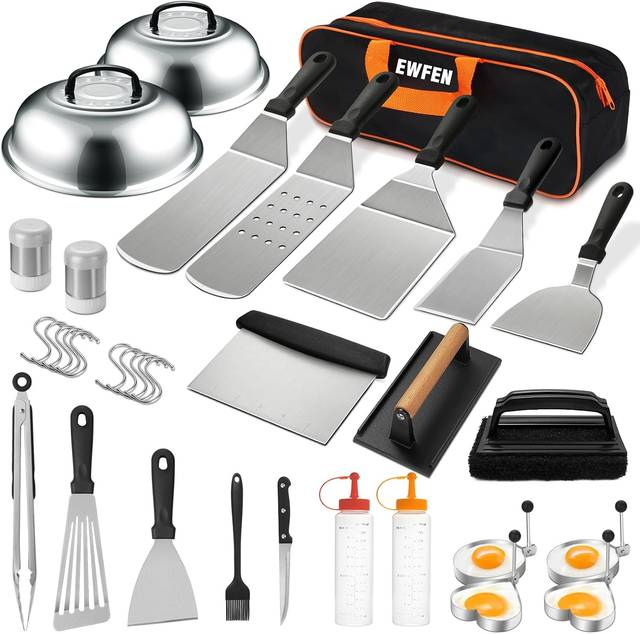
The flaw is the kit is heavy. At 17 pounds, it’s strictly car-camping gear. I wouldn’t dream of carrying it on my back. But if you’re driving to your site, it’s the best breakfast maker in existence. The griddle surface is huge, it heats evenly, and I’ve cooked pancakes, eggs, bacon, and burgers for six people without breaking a sweat.
Cleanup is the trade-off. You have to scrape it down and wipe it while it’s still hot, and you need to carry a bottle of oil and a scraper. It’s not a set-it-and-forget-it grill. But coming from years of cooking over a campfire with a cast iron pan, I actually like the ritual. It’s part of the morning.
The Cost Per Trip Math
Here is where I do arithmetic so you don’t have to. A hammock setup that’s actually storm-worthy will run you ~$200 to ~$300. A mid-range tent like the CAMPROS is ~$180. The hammock saves you weight but costs you comfort. The tent costs you setup time but saves your back.
The Odoland lantern is ~$25, but it eats ~$8 worth of D-cells per trip. Over a 10-trip season, that’s ~$80 in batteries. A rechargeable lantern costs ~$60 upfront but costs ~$0 per trip after that. If you camp more than five times a year, the rechargeable is cheaper.
I don’t track prices day to day, so I won’t pretend to know next week’s sales. But the math on usage is pretty consistent.
The Verdict
Here’s my honest bottom line after eight years and hundreds of nights. If you camp with a dog, a partner, or any desire to stand up inside your shelter, buy a tent. The CAMPROS CP 8-Person is a great value if you waterproof it first and have a friend to help pitch it. If you’re a solo backpacker who sleeps on their back and wants to shave pounds, a hammock is the better tool.
I’ll take my tent, my dog, and my lantern with spare batteries over a hammock any night of the week. That’s the truth, and I’m sticking to it.