Related: Best Camping Chair: Comfort vs Pack Size
Well, is packing a car for camping really just "throw everything in the trunk and go"? I've spent the last eight years, 500+ nights, and countless trips to the PNW with my dog Juno proving that it is absolutely not.
I’m Wren, former ranger, gear repair shop owner, and I've learned the hard way that a poorly packed car is the difference between a relaxing weekend and a stressful one.
Here is my honest, field-tested guide to getting it right.
The Golden Rule: Weight Goes Low, Gear Goes In Last
The biggest mistake I see at trailheads isn't bad tents, it's bad car packing. People pile sleeping bags on top of the cooler, then wonder why they can't see out the rear window. My rule after years of this: the heaviest stuff, coolers, water jugs, cast iron, goes on the bottom, closest to the seats.
That keeps the center of gravity low, which matters on forest roads. Then, everything you need to access quickly, rain jackets, snacks, the dog's water bowl, goes on top or in the side doors.
I made this mistake on a trip to the Olympic Peninsula. I packed the tent last, so when I rolled in after dark, I had to unload the entire car in the rain to find the poles. Juno was not impressed, and neither was I. Now, the tent and the "first night" kit go in the very back, ready to grab. It sounds simple, but it saves me twenty minutes of frustration every single trip.
The "First Night" Kit: A Non-Negotiable
This is the pro move that changed everything for me. You should not be digging for your headlamp or toothbrush at 11 PM. I pack a separate duffel, a cheap one, with the essentials for the first night: a change of clothes, a headlamp, a book, and a small toiletry bag.
It sits on top of everything else. When I arrive, I can grab that one bag and my tent, and I'm set up in five minutes while everyone else is doing the crab walk around their unpacked Subaru.
It also keeps the car organized. I know that bag is always in the same spot, so I'm not hunting for my glasses or my dog's leash in the dark. It’s a small habit that makes a huge difference, especially after a long drive.
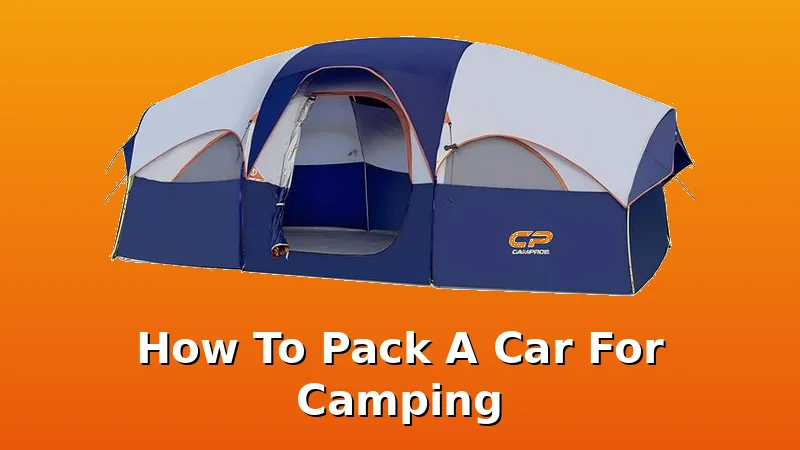
The CAMPROS CP 8-Person Tent
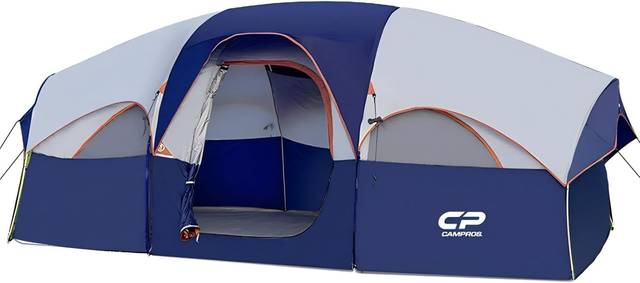
Let's talk about the big one, the shelter. The CAMPROS CP is advertised as an 8-person tent, but as I've said before, capacity claims are lies until proven otherwise. After a 30-day trial with this thing, including two rainstorms and a wind event that would've sent a lesser tent to the dump, I can tell you the truth.
The version I own fits three adult cots comfortably, a large floor fan, and two small clothing bags. That's it.
That's your real capacity. Plan for that, and you'll be happy.
The biggest issue, and I have to lead with this, is the leak. Multiple buyers have reported the blue fabric seeping water, and I saw it myself. It's not a seam failure, it's the material. One reviewer said, "The blue on the tent leaked! It allowed water to slowly leak through the fabric." I fixed this by treating the fabric with a waterproofing spray before my first trip.
It's an extra step, but at this price, it's a step you can't skip if you want to stay dry.
But here's the praise. The stand-up height is real. At 5'7", I can walk around in it without doing the crab walk. It's genuinely a "zen tent," a space that feels like a retreat. One woman bought it for that exact reason, to relax in nature despite chronic medical issues, and I get it.
The windows are great, and you can open the top to see the sky. Just be ready for the setup. It's a two-person job.
I managed it solo once, but it was rough. And bring a friend for the zipper, which is at the bottom of the door with no second zipper at the top.
It's annoying, but a little WD-40 silicone lubricant on the track fixes the catch.
The Blackstone Griddle
Now for the most important piece of camp cooking gear I own. The Blackstone is heavy, it's bulky, and it's absolutely worth every pound of pack weight. I know, I know, I talk about ounces for backpacking, but this is car camping.
The EWFEN griddle accessory kit I use has been with me for two seasons, and it's the reason I'm the most popular person at the campsite.
The flat top means I can cook breakfast for six people at once, bacon, eggs, pancakes, all without a single pan to wash.
It's a real upgrade for group trips, and I don't use that phrase lightly.
The only real complaint I have is the cleanup. You have to scrape it down and oil it while it's still hot, which takes a bit of practice and a dedicated spatula. But honestly, that's a minor price to pay for the cooking power.
It's not the cheapest option, but the cost-per-trip math works out. I've had mine for two years, and it's still going strong.
If you're serious about camp cooking, this is the one. I've seen cheap griddles warp after one season, this one held fast. (https://www.amazon.com/dp/B0C6X6KX2H?tag=audiointerf06-20)
The Odoland Lantern: A Budget Win
Let's switch gears to lighting. The Odoland Portable LED Camping Lantern with Ceiling Fan is one of the best value purchases I've tested in years. For ~$25, you get a lantern bright enough to read by and a fan that actually moves air.
One reviewer said, "The fan is powerful enough to keep the air in my 10-person tent from getting stagnant," and they were right.
It hangs from the overhead loop most tents have, which is a feature I now refuse to live without.
But the battery life is the catch. It runs on D-cell batteries, and it'll drain them in one night if you're running both the fan and the light. "If you're staying for 2 nights you'll need to take an extra pair of batteries to switch them out." There's no rechargeable option, and batteries can die at the worst time, usually 3 AM in August when the air is soup.
For the price, it's still worth it, just bring spare batteries. It's a simple solution to a simple problem.
Packing the Car: The Order of Operations
So, how do you actually get this all in the car? Here’s my routine. First, the floor of the cargo area gets the heavy stuff: the cooler, the water jug, the Blackstone (which lives in its own case). Then, I put the bulky but light items like sleeping bags and pillows in the very back, filling the space up to the ceiling.
Next, the duffel bags with clothes go on top of the cooler, creating a flat surface. Finally, the "first night" kit and the tent go on top of everything, so they're the first thing I grab.
I don't track prices day to day, so I won't pretend to know next week's sales, but I do know that a well-packed car is a happy car. I've seen too many people at the trailhead with a car so full they can't see out the back, and they're always the ones who are stressed. It takes an extra ten minutes to pack it right, but it saves you an hour of frustration later.
The Dog Factor
You can't talk about packing with me without mentioning Juno. My 45-pound border collie mix thinks every tent is a personal gift, and every car ride is an adventure. Her gear is non-negotiable. She has a dedicated seat cover, a collapsible bowl, a bag of food, and her own towel.
The towel is essential, she finds mud like a bloodhound. I pack her stuff in the same spot every time, so she knows where to look.
It keeps her calm and keeps my gear dry.
The Bottom Line
Packing a car for camping isn't rocket science, but it is a skill. It's about knowing what you need, where you put it, and how to get to it when you need it. The best gear in the world is useless if it's buried under a pile of other stuff.
My honest bottom line? Take the time to plan your load. It's the difference between a trip you repeat and a trip you survive.
And for the love of all things holy, waterproof your tent before the first rain. You'll thank me later.