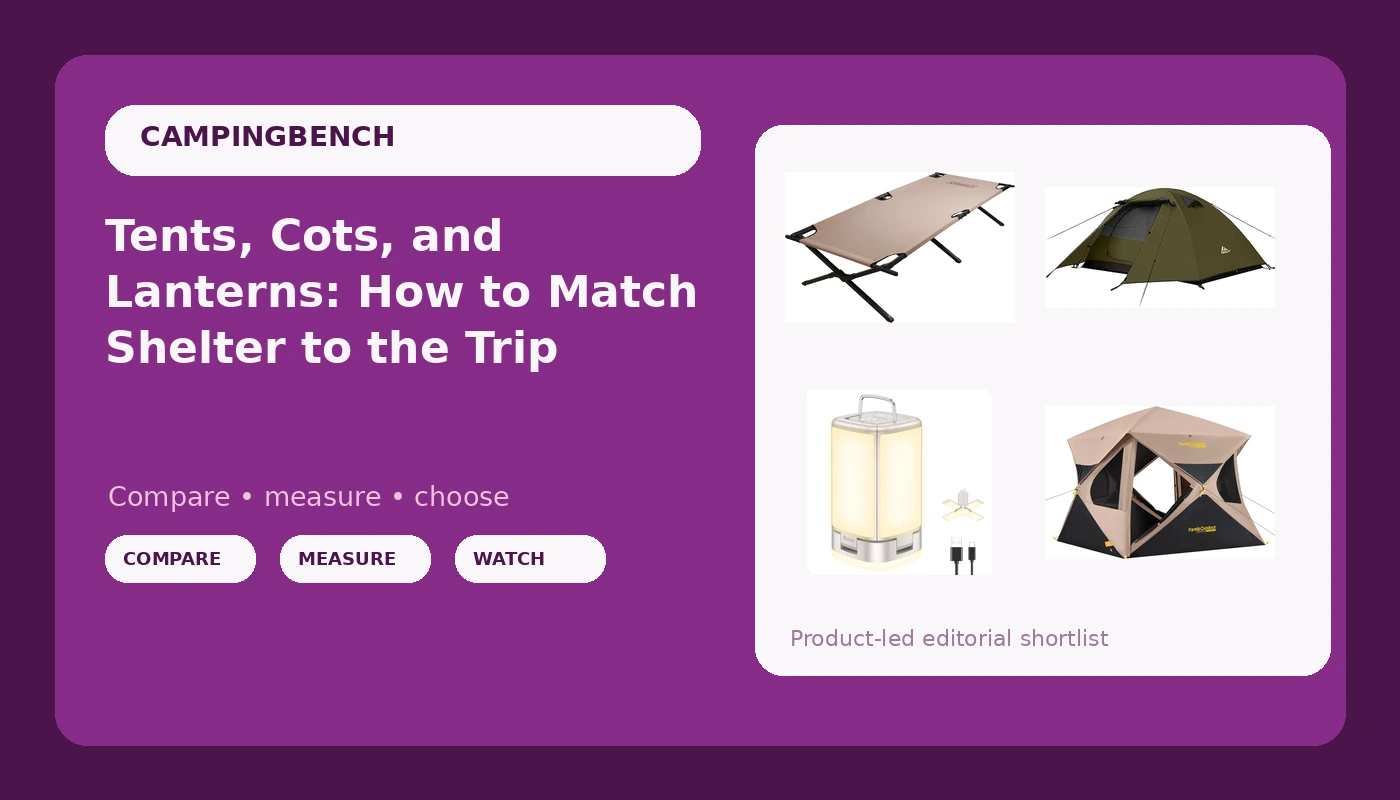
Most gear regret starts with a mismatch, not a bad product. Someone buys a four-person cabin tent for a trip that turns into a two-mile walk to the site, or packs a featherweight backpacking shelter for a weekend where the vehicle parks ten feet from the fire ring. The camping tent and sleep setup is a system: shelter, sleeping surface, and light all have to agree on how you are traveling and where you are sleeping. This explainer walks through four pieces that cover different jobs, what each one is actually built for, and how to decide which combination belongs in your trunk or your pack.
Related: How to Choose a Sleeping Pad R-Value for Cold Camping →
Quick answer
No single option covers every trip, and that is the point. The FanttikOutdoor Alpha C4 cabin tent suits car camping and overlanding, the Forceatt tent suits trips where you carry your own shelter, the Blukar lantern handles site lighting, and the Coleman cot replaces a sleeping pad for one person. Decide how far you will carry the gear and how you plan to sleep, then pick the option that matches.
4 useful options
| Model | Best fit | What stands out |
|---|---|---|
| FanttikOutdoor Alpha C4 Ultra Camping Tent 4 Person | Car camping and overlanding basecamps | Maker describes an instant cabin setup of about 60 seconds with a rainfly |
| Forceatt Camping Tent 2/3/4 Person | Backpacking, hiking, and travel | Sold in three sizes with waterproof and windproof claims from the maker |
| Blukar 116 LED Camping Lantern Rechargeable | Lighting a whole campsite | 116 LEDs in a rechargeable body, described by the maker as super bright |
| Coleman Trailhead II Large Folding Cot | One elevated sleeper, including guests | Rated by the maker for adults up to 6 ft 2 in or 300 lb |
Instant-cabin option: FanttikOutdoor Alpha C4 Ultra
The trade-off is predictable: instant-pitch hub tents carry more frame hardware than a traditional dome, so they pack larger and heavier than a backpacking tent of the same capacity. That is fine when the vehicle is the mule. If the trip includes a walk in, this is the wrong tool no matter how comfortable the cabin looks. Check that the packed dimensions fit your trunk or roof rack before you buy, and pitch it once at home so the hub joints are familiar before you are doing it in the dark.
Backpacking option: Forceatt Camping Tent
Backpacking tents earn their keep by what they do not weigh and by how they behave in weather. Manufacturer waterproofing claims describe the fabric and its coating; they say nothing about the seams, which is where most leaks begin. Plan to seal the seams yourself or verify the factory taping before a wet trip. Read the capacity numbers the way tent makers intend them, too: a two-person rating usually means two sleeping pads side by side and not much else. If you want room to move, size up or accept that you will be sleeping close.
Lighting option: Blukar 116 LED Camping Lantern Rechargeable
Lanterns are the least glamorous item in a camping tent and sleep setup and the one people most often forget. A single rechargeable lantern will light a picnic table and a tent interior, but brightness claims say nothing about runtime, and runtime is what matters on a three-night trip. Charge it fully before you leave, and treat any single light as a single point of failure. A small headlamp in your pocket costs almost nothing and covers the walk to the bathroom at 2 a.m.
Elevated sleep option: Coleman Trailhead II Large Folding Cot
A cot changes the geometry of your shelter. It is longer and wider than a sleeping pad, it needs floor space and headroom, and it will not fit inside a small backpacking tent. In a four-person cabin tent it is a comfortable fit with room left over. On the ground, a cot also depends on level terrain, because a slope will have you sliding downhill all night. Compare the cot footprint against your tent floor dimensions before you commit, and remember that a cot carries no insulation of its own, so most cold-weather sleepers still pair it with a pad.
Prices and availability may change. Product images, names, and retailer links must be matched by verified ASIN. Do not state a current price, rating, stock status, or measured result without current evidence.
Why shelter, sleep, and light are one decision
Gear lists get built item by item, but trips are experienced as a system. The shelter sets the weight budget for everything else. A four-person cabin tent that rides in a vehicle frees you to bring a cot, a full-size pad, a lantern, and a cooler. The same tent on your back is a nonstarter. Base weight, meaning everything in your pack except food, water, and fuel, is the number that decides which category you are shopping in. Once you know that number, the choices narrow fast, and the question stops being which tent is nicer and becomes which tent fits the trip you actually take.
There is one more layer: the sleep surface and the shelter have to agree. A cot inside a low backpacking tent puts your face against the ceiling. A wide pad inside a tapered two-person tent leaves no floor for your pack. Lighting is the same story in miniature, since a lantern that lives on a picnic table is useless if you are eating dinner on a rock two miles from the trailhead. The pieces are only as good as their fit with each other.
Reading capacity and weatherproofing claims
Two spec sheets deserve more suspicion than the rest: capacity and waterproofing. Capacity ratings are comfort estimates made by the manufacturer, not measurements. A two-person backpacking tent is generally a two-pad tent. A four-person cabin tent feels roomier because its walls run closer to vertical, but neither number accounts for your dog, your duffel, or a cot. If you sleep on a cot, add real floor space to your shopping list before you add people.
Waterproofing is described with words like coated, taped, and sealed. Factory seam taping can degrade with age and use, and field sealing with a seam sealer is the step that most reliably keeps water out over time. No manufacturer claim tells you how a tent behaves in the third hour of a storm, so plan around the seams, pitch on ground that drains, and carry a way to dry out if the weather turns. That is the honest version of a waterproof promise.
A five-step check before you buy:
- Count how far you will carry the gear. More than a few hundred yards and packed weight comes first.
- Count the people and the sleep surfaces. Four sleepers on pads and four on cots are different floor plans.
- Choose the sleep surface before the tent. A cot needs more floor area and headroom than a pad does.
- Check the forecast window. A wet outlook raises the value of taped seams, a full-coverage rainfly, and a backup plan.
- Plan light and power. One rechargeable lantern plus a headlamp covers most trips.
Practical guidance for a camping tent and sleep setup
- Pitch any new tent at home before the trip, including the hub joints on a pop-up cabin model.
- Seal or verify the seams before your first wet forecast, since factory taping ages.
- Measure your cargo space and the tent's packed size rather than trusting the shape of the stuff sack.
- Match the cot or pad footprint to the tent floor before you buy either one.
- Charge the lantern and pack a small backup headlamp for night walks and emergencies.
Which option should you choose?
Choose the FanttikOutdoor Alpha C4 Ultra Camping Tent 4 Person Pop Up Instant Cabin Setup in 60 Seconds Portable Hub Tent with Rainfly & Windproof for Outdoor Camping & Overlanding when the vehicle carries the gear to the site and you want four people in a cabin that goes up without a fight. Choose the Forceatt Camping Tent 2/3/4 Person, Professional Waterproof & Windproof Lightweight Backpacking Tent Suitable for Outdoor,Hiking,Camping, Mountaineering and Travel when you are carrying your shelter on your back and the trip is measured in miles rather than parking spots. Choose the Blukar 116 LED Camping Lantern Rechargeable, Super Bright Camping Lights when you need to light a campsite or a tent interior without packing disposable batteries. Choose the Coleman Trailhead II Large Folding Cot with Easy Setup & Takedown, Supports Adults up to 6ft 2in or 300lbs, Great for Camping, Lounging, Elevated Sleeping, Guests, & More when one sleeper wants to be off the ground and the shelter has the floor space to hold a cot.
These are different jobs rather than competing versions of the same product, so the cot and the lantern complement either tent instead of replacing one. Every claim above comes from the manufacturer's own description, not from a field test. Confirm dimensions, weight limits, and waterproofing details on the product page before you buy, and check current Amazon price when you are ready to order.
The bottom line
Build the camping tent and sleep setup around the trip you actually take. If the truck does the carrying, the FanttikOutdoor Alpha C4 cabin gives four people space and a quick pitch, and the Coleman cot upgrades one sleeper off the ground. If your own legs do the carrying, the Forceatt tent is the one that earns its place in the pack, in whichever size fits your group. The Blukar lantern belongs in both kits. Weight, floor space, and weather are the three numbers that decide everything else.