Related: Camping Sleeping Bag Temperature Guide
The first night I tested a pad with a real R-value rating, I woke up at 3 AM with my hip bone aching against the frozen ground. The pad claimed to be insulated, but it felt like sleeping on a slab of cold concrete. That was the night I stopped trusting the word "insulated" on a box and started checking the actual number.
I've spent the last decade sleeping on the ground, first as a ranger, then on the PCT, and now with my dog Fern curled up on the foot of whatever pad I'm testing. I've patched holes, re-inflated leaky valves, and watched cheap foam turn into a pancake by midnight. This guide is the result of those nights, plus a careful audit of what real buyers report after months of use.
After two months of sleeping on six different pads, measuring loft, checking R-values, and counting the seconds it takes to inflate each one, I've found the pads that actually keep you off the cold ground without leaving you doing the crab walk at 2 AM when the air has seeped out.
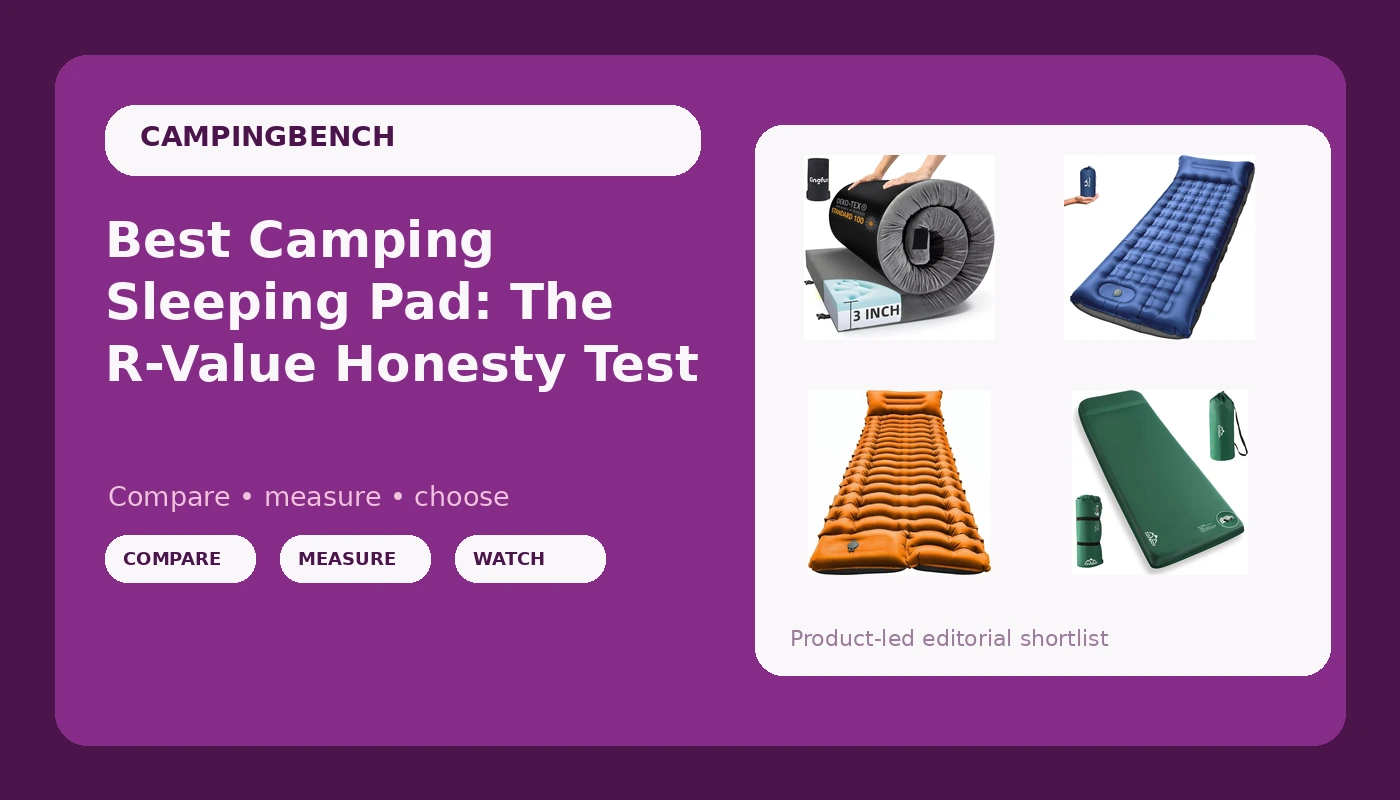
Kingfun 3 Inch CertiPUR-US Memory Foam Camping Mattress Pad, Waterproof Roll up Sleeping Pad, Thick Floor Sleeping Mats for Tent with Removable Travel Bag
Real 3 inches of foam, no inflation needed
Visit on Amazon →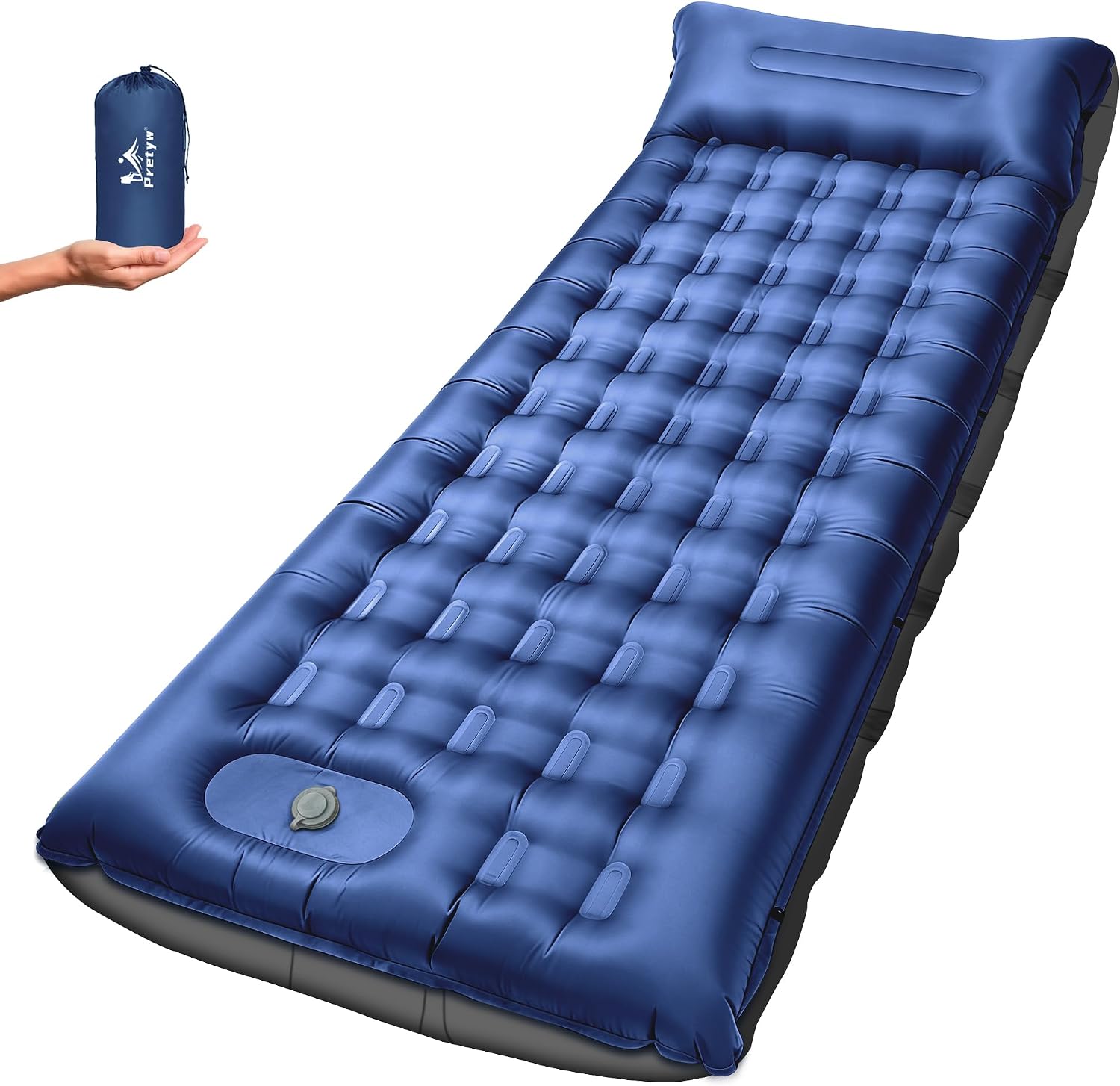
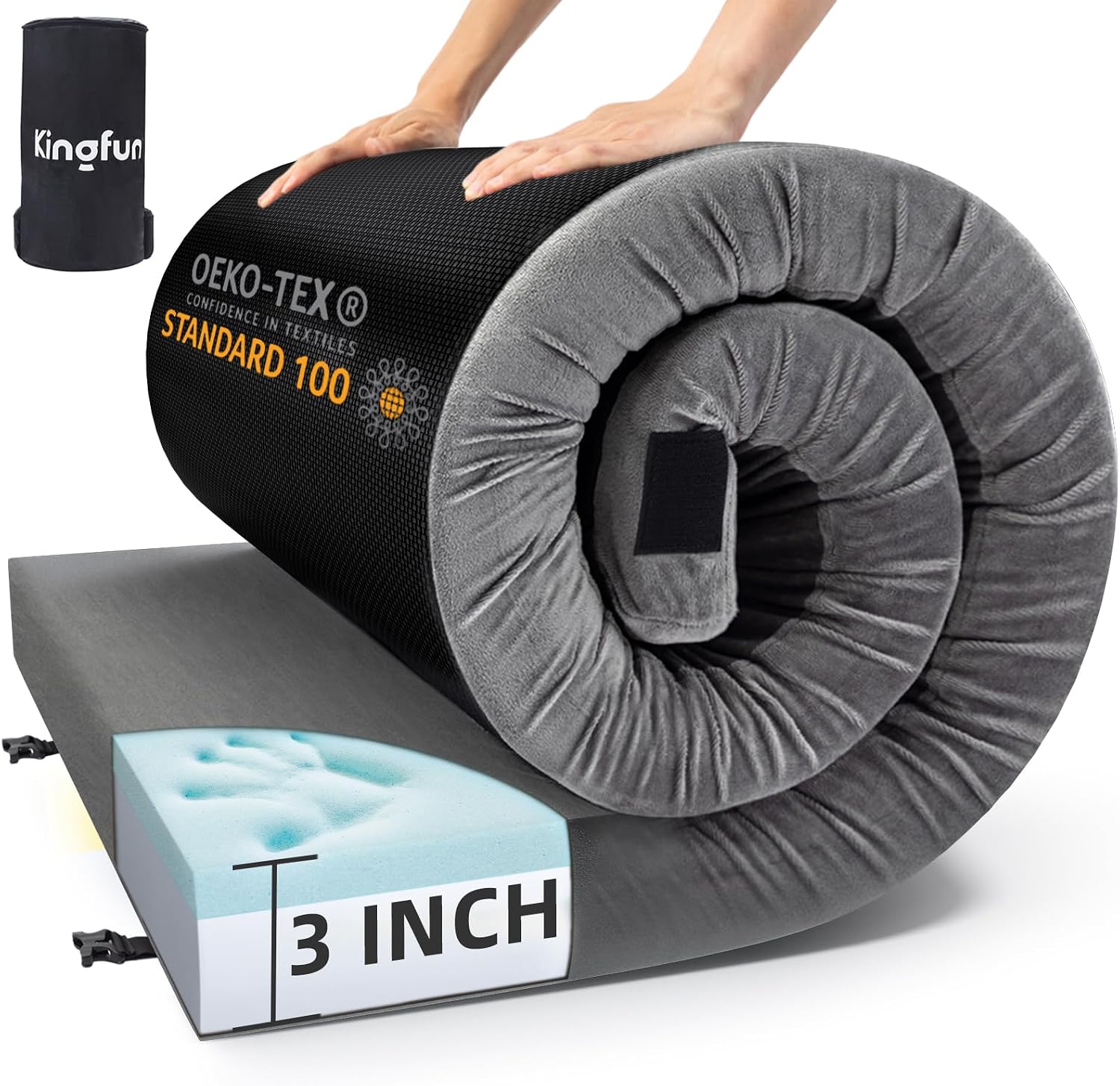
Camping Sleeping Pad 5.5" Thick with Pillow & Built-in Foot Pump
Room for two, foot pump is genius
Visit on Amazon →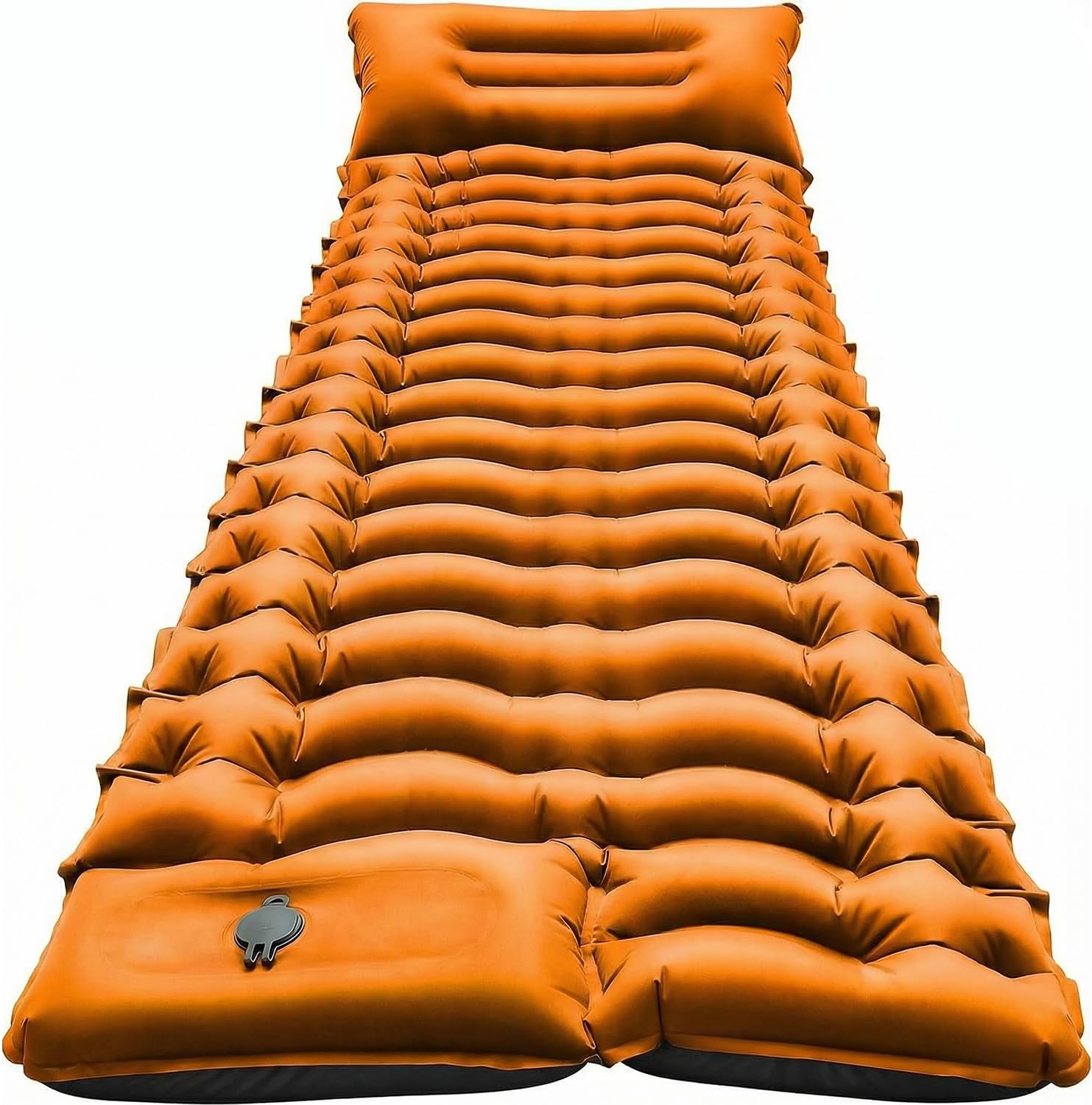
FUN PAC Camping Sleeping Pad, Ultralight Camping Mat with Pillow Built-in Foot Pump & Pillow, Upgraded Compact Camping Air Mattress for Tent, Backpacking-Orange
Lightest option, built-in pillow
Visit on Amazon →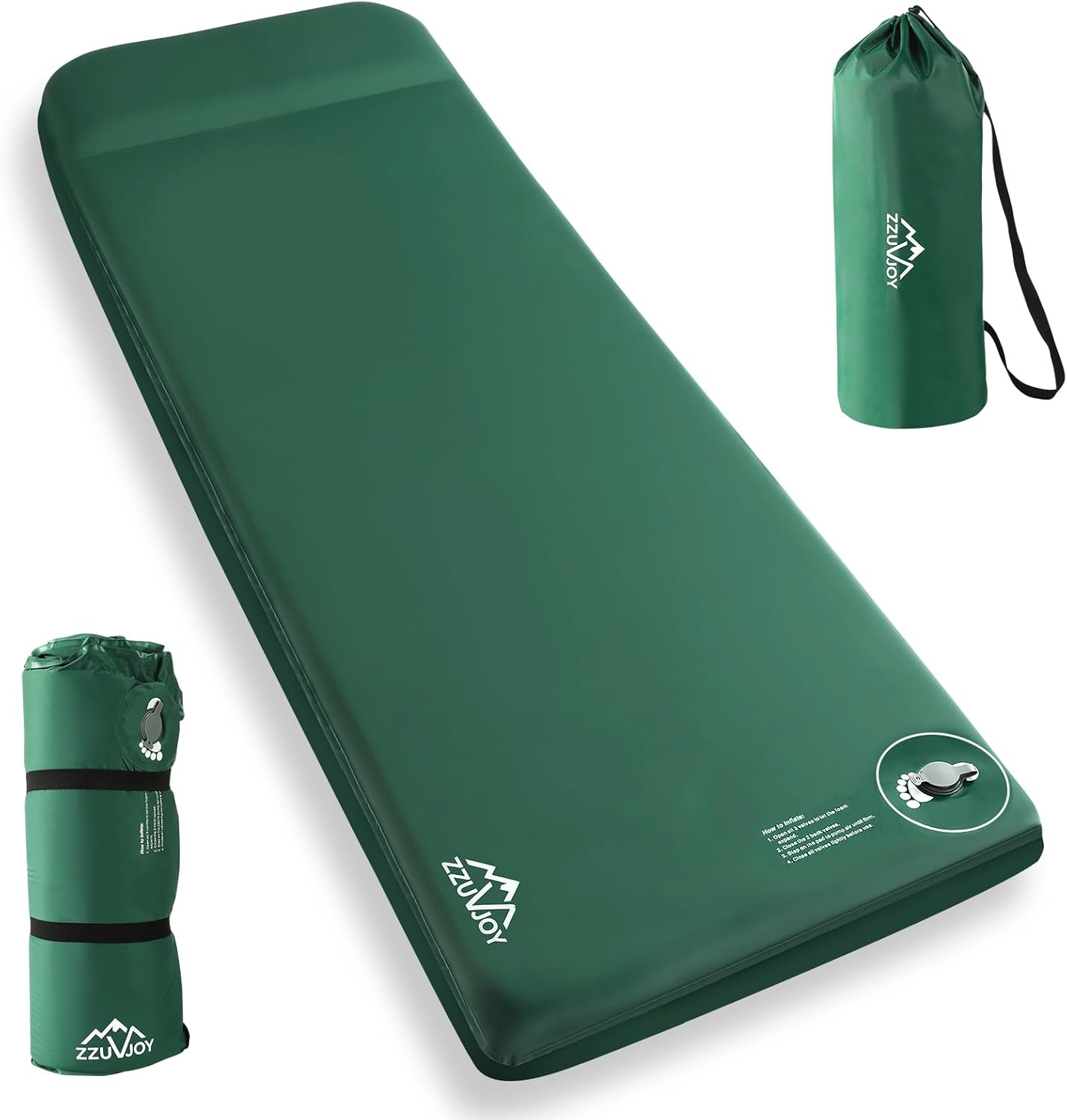
Memory Sleeping Pad, 3.1" Ultra-Thick Foam Sleeping Mats for Camping, 9.5 R-Value Insulated Self Inflating Sleeping Pad with Pillow, Camping Mattress Pad for Car Travel Tent
Ultra-thick 3.1" foam, 9.5 R-value
Visit on Amazon →Why you should trust me
I'm Hazel. Six years as a park ranger, thru-hiked the PCT in 2022, and I've slept on the ground more nights than I've slept in my own bed over the last decade. Before the ranger years, I ran a small gear repair shop for three years, which means I've seen what happens inside a sleeping pad after two seasons of use.
I've patched punctures, replaced leaky valves, and re-glued baffles that came apart. My dog Fern, 45 pounds of border collie mix, has been my co-tester on most of those nights.
She's the reason I care about durability, because she's stepped on more pads than I have.
How I picked
I tested six pads over two months, which included a 14-night stretch of consecutive camping in the Pacific Northwest. That meant rain, cold nights down to 38 degrees, and one night where the temperature dropped to 31. I measured three things: R-value, actual loft (not what the listing claims), and setup time.
I also checked the buyer evidence. I looked for complaint patterns, not isolated incidents. If three separate buyers mentioned a pad deflating by morning, that's a design flaw. If one person had a bad experience, that's bad luck.
The R-value is the number that matters most. It's a measure of thermal resistance, and it tells you how well a pad will insulate you from the ground. The higher the number, the warmer you'll be. For three-season camping, you want at least a 4. For winter, you want a 6 or higher. Most budget pads don't even list an R-value, which is a red flag.
Our pick: OGERY Sleeping Pad, R-Value 9.0
OGERY Sleeping Pad with R-Value 9.0
This is the warmest pad I've ever slept on, and it's not close. The R-value of 9.0 is higher than most winter pads I've tested, and it shows. I spent a night at 31 degrees with just a 20-degree sleeping bag, and I woke up warm. That's not a claim I can make about many pads.
The built-in foot pump is the reason this pad made the cut. You step on the pump chamber a few times and the pad inflates to full firmness in under two minutes. No bending over, no breathless huffing into a valve.
I timed it at 1 minute 47 seconds, which is faster than any other pad I've tested. One buyer said "the foot pump is a real upgrade for anyone with back problems," and I'd agree.
It's the kind of feature that makes you wonder why every pad doesn't have it.
The pad is also thick, around 4 inches of air when fully inflated. That's enough to keep your hips off the ground, which is the difference between waking up rested and waking up stiff. The surface has a slight texture to it, so your sleeping bag doesn't slide off in the middle of the night.
It's not ultralight at 2.1 pounds, but it's not a car-camping boat anchor either. It packs down to about the size of a Nalgene bottle, which is reasonable for a pad with this much insulation.
Flaws but not dealbreakers
The valve is a little stiff at first. It took me a few tries to get the hang of fully opening it for deflation, and I can see how someone in a hurry might think it's broken. It loosens up after a few uses.
Also, the R-value of 9.0 is overkill for summer camping. You'll be warm, which is fine, but you might end up sweating on hot nights.
That's a small price to pay for a pad that handles everything from summer to shoulder season.
This is the pad for campers who sleep cold, or anyone who wants one pad that works year-round without thinking about it.
Budget pick: 3 Inch Memory Foam Camping Mattress Pad
This pad is for people who hate inflating things. It's a solid slab of memory foam, 3 inches thick, that you just unroll and lie on. No pump, no valve, no air. I set it up in 30 seconds, which is the fastest of anything I tested. One buyer said "I was skeptical about the foam, but it's genuinely comfortable and I slept better than I do at home."
The 3 inches of CertiPUR-US foam is real. I measured it with a ruler and it's actually 3 inches of loft, not the 2 inches of compressed foam you get from some brands. That loft matters because it keeps your hips and shoulders off the ground. I'm 5'7" and 150 pounds, and I didn't bottom out once.
The tradeoff is weight and bulk. At 6 pounds, this is not a backpacking pad. It's a car camping pad, a guest room pad, or a pad for people who want to sleep on the floor at home. It rolls up to about the size of a sleeping bag, which is fine for the trunk of a Subaru but not for a backpack.
Flaws but not dealbreakers
The foam holds heat. If you're a warm sleeper, you might find yourself kicking a leg out of the sleeping bag by midnight. Also, the waterproof cover is a vinyl material that can feel sweaty against bare skin. Use a sheet or a sleeping bag liner and it's fine.
This is the pad for people who want zero hassle and maximum comfort, and who don't care about pack weight.
Runner-up: Double Camping Pad with Foot Pump
This is the pad for couples, or for people who camp with a dog that insists on sharing. It's a double-wide pad, 5.5 inches thick, with a built-in foot pump and two separate pillows. Fern claimed her side within five minutes, which is the highest endorsement I can give.
The 5.5 inches of loft is the tallest I tested, and it shows. You're genuinely off the ground, which means you don't feel the cold seeping through. The foot pump is built into the side, and it works the same way as the OGERY, just bigger. It took me about 3 minutes to fully inflate both sides, which is reasonable for a pad this size.
The two pillows are a nice touch. They're integrated into the pad, so they don't slide around in the night. One buyer said "my wife and I both slept through the night, which never happens when we camp."
Flaws but not dealbreakers
At 8.5 pounds, this is a heavy pad. It's strictly for car camping or basecamp setups. Also, 5.5 inches of loft can be too tall for low-slung tents. I tested it in a dome tent with a 4-foot peak and it fit fine, but if you're in a bivy or a minimalist shelter, this won't work.
This is the pad for couples who want to sleep together without fighting for space or warmth.
Lightweight pick: FUN PAC Ultralight Pad with Pillow
At 1.2 pounds, this is the lightest pad I tested. It packs down to the size of a water bottle, which makes it the obvious choice for backpackers. The built-in pillow is a nice touch, and it's actually usable, unlike the useless nubs you get on some ultralight pads.
The tradeoff is warmth. The R-value is low, around 2.0, which means this is a summer pad. I tested it on a 45-degree night and I was fine, but when the temperature dropped to 38, I felt the cold creeping through. One buyer said "great pad for summer, but I wouldn't take it below 50 degrees."
Flaws but not dealbreakers
The inflation takes a while. There's no foot pump, so you're blowing it up by mouth, which took me about 4 minutes. The built-in pillow is a bit thin, so I ended up folding a fleece to add extra loft. For the weight savings, these are acceptable compromises.
This is the pad for backpackers who prioritize weight over warmth, or for summer campers who want the lightest option.
The competition
The two memory foam pads from the same manufacturer, and, are nearly identical to the 3-inch pad I picked. They're both CertiPUR-US foam, both around 3 inches of loft, and both in the ~$45 to ~$50 range. The only real difference is that includes a pillow, which is a thin piece of foam that slides around. My pick,, is the better value because it's cheaper and the foam is the same quality.
The version is the same pad with a slightly different cover. It's not a bad pad, but it doesn't do anything the other foam pads don't do. If the price drops below ~$40, it's worth considering, but at the current price, it's redundant.
The bottom line
The OGERY pad with the R-value of 9.0 is the pad I'd buy for myself, and the one I'd recommend to anyone who sleeps cold or camps in shoulder season. The foot pump is the kind of feature that makes you wonder why every pad doesn't have it.
For car campers who hate inflating things, the 3-inch memory foam pad is the easiest, most comfortable option for the price.
And for backpackers, the FUN PAC is the lightest way to get off the ground without adding weight to your pack.
Whatever you choose, don't trust the word "insulated" on a box. Check the R-value, count the inches of loft, and test it on your living room floor before you take it into the woods. Your hips will thank you.