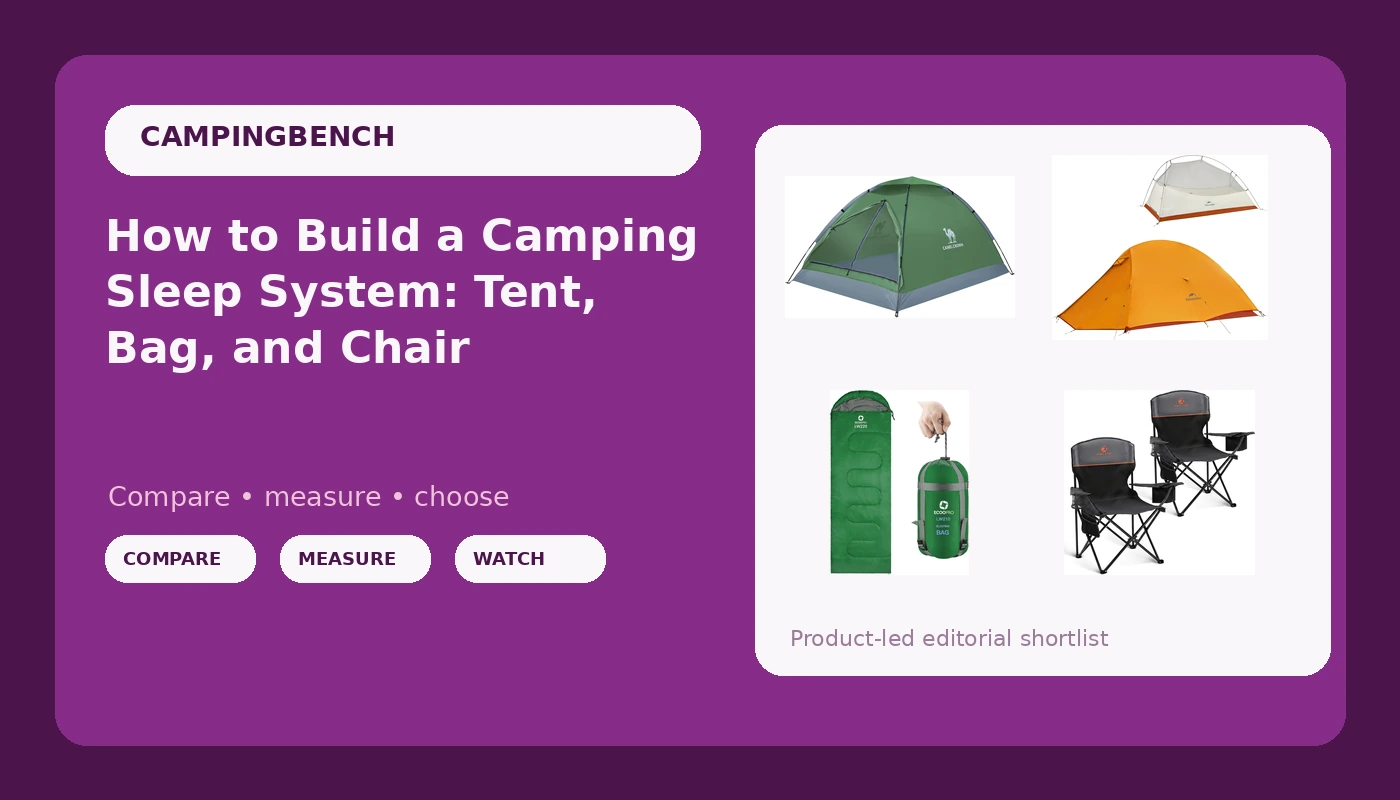
Most people buy a tent, then a sleeping bag, then a camp chair, and only find out at the trailhead that the three do not agree with each other. A camping tent and sleeping bag have to be chosen as one system, because the shelter decides how much floor space and weather protection you get, and the bag decides whether you sleep or lie there shivering. The chair decides whether the evening is comfortable or a slow argument with a wet log. This guide walks through four pieces of gear that cover the most common trip types, explains what each one is actually for, and shows how to check the details that matter before you commit. No single item here is right for every trip, and that is the point.
Related: How to Pick a Backpacking Tent Without Overpaying →
Quick answer
Pick the shelter first, because it sets the style of the trip. The CAMEL CROWN dome tent comes in two, three, four, and five person configurations, which makes it a family and car camping option. The Naturehike Cloud-Up 2 is a two person backpacking tent that ships with a footprint. The ECOOPRO sleeping bag is a warm weather bag sized 83 by 30 inches with a compression sack. The ALPHA CAMP two-pack folding chair is camp furniture with a cooler bag and lumbar support. Buy in that order: shelter, sleep layer, then comfort items. Weight matters most on the shelter, warmth matters most on the bag, and the chair is the piece you leave home when you are counting ounces.
4 useful options
| Model | Best fit | What stands out |
|---|---|---|
| CAMEL CROWN Tents for Camping 2/3/4/5 Person Camping Dome Tent | Car camping, family trips, mixed group sizes | Multiple capacity options in one dome design with a waterproof and lightweight portable build |
| Naturehike Cloud-Up 2 Person Tent with Footprint | Two person backpacking and hiking | Free standing, ultralight two person design with the footprint included |
| ECOOPRO Warm Weather Sleeping Bag | Summer and warm weather camping | 83 by 30 inch size that fits adults, waterproof shell, compression sack included |
| ALPHA CAMP 2-Pack Folding Camping Chair | Car camping and base camp comfort | Two chairs with a cooler bag and lumbar support |
Flexible group shelter: CAMEL CROWN Tents for Camping 2/3/4/5 Person Camping Dome Tent
The reason capacity options matter more than almost any other tent feature is that capacity labels describe sleeping bodies, not gear. A four person dome that sleeps four adults shoulder to shoulder is a comfortable two person tent once you add pads, duffels, and a dog. If you are shopping this line, think about the trip you take most often, then decide whether you want the version that fits your group exactly or the version one size up that swallows the gear. The trade-off is straightforward: a bigger dome means more interior volume, more floor area, and more packed size and weight to move around. On a car camping weekend that trade is free. On a backpacking trip it is not, so the largest size in a family dome is usually the one that stays home when you are hiking in.
Two person backpacking: Naturehike Cloud-Up 2 Person Tent with Footprint
The footprint is the quiet selling point here. Tent floors are the first thing to fail on rocky, gritty ground, and a footprint is the cheapest insurance you can buy for a shelter you plan to keep. Free standing matters too, because it means you can pitch on a granite slab, a wooden platform, or hard packed ground where stakes simply will not go in, then stake out the vestibule afterward for weather protection. The honest trade-off with any two person backpacking tent is interior space. Two adults on wide pads fill the floor, and the gear lives in the vestibule or under your legs. If you mostly hike alone, a two person tent is a generous solo shelter. If you hike as a pair with big pads and bulky bags, expect to sleep close and pack deliberately.
Warm weather sleep layer: ECOOPRO Warm Weather Sleeping Bag
Warm weather is the key phrase, and it should shape how you plan around this bag. A summer bag is designed for nights where the air stays mild, which is exactly when a heavy bag becomes a sweaty, miserable mistake. The compression sack lets you shrink the packed volume, which matters if the bag is riding in a backpack rather than a car trunk. The trade-off is range: this is not the bag you take into a cold mountain night, and no bag is a substitute for insulation underneath you. The ground pulls warmth out of a sleeper faster than the air does, so pair any sleeping bag with a pad that matches the conditions you expect, and treat the bag's stated comfort range as a starting point for planning rather than a guarantee.
Camp comfort for two: ALPHA CAMP 2-Pack Folding Camping Chair with Cooler Bag & Lumbar Support
Chairs are the gear category that backpackers sneer at and car campers refuse to leave behind, and both groups are right. A folding chair with lumbar support changes an evening from balancing on a cooler to actually sitting down, and the cooler bag means you are not getting up every ten minutes. The honest trade-off is weight and packed size. This is a two-pack of full size folding chairs, so it belongs in the car camping and base camp column, not in a pack you are carrying twelve miles. If your trips split between drive-up sites and backcountry routes, this is the item you leave in the vehicle, and that is not a compromise. It is the correct call.
Prices and availability change. Confirm current details on the retailer listing before you buy.
How tent capacity numbers actually work
Tent capacity is one of the most misunderstood specs in camping gear, and the confusion costs people money twice: once when they buy too small, and again when they buy too big. A capacity number counts sleeping bodies lying side by side on the floor. It does not count pads, packs, boots, dogs, or the space you want between your shoulder and the wall. Two people in a two person tent is a real thing, but it is a snug thing, and if either sleeper uses a wide pad the floor fills up fast.
The practical rule most experienced campers use is to add one capacity slot for gear on car camping trips, and to accept a tight fit on backpacking trips where weight is the priority. A three person tent for two campers gives you room for duffels and a dry corner. A four person tent for two campers is a palace, and it weighs like one. Peak height matters as much as floor area, because a tent you can sit up in feels twice as large as one you have to crawl through, and vestibule space decides whether wet gear sleeps with you or outside the door.
Then there is the weather side of the spec sheet. Waterproof fabric and sealed seams are two different promises. A coated fabric sheds rain, and the seams are where water finds its way in, which is why seam sealing is worth understanding before your first storm. A footprint protects the floor from abrasion and from groundwater wicking through. None of these details are glamorous, and all of them decide whether the shelter is still usable after a season of real trips.
Matching the sleeping bag to the night, not the season label
Season labels on sleeping bags are shorthand, not standards. A bag marketed for warm weather is built for mild nights, and a bag marketed as three season is built for a wider range. The label tells you what the manufacturer had in mind, not what you will feel at 3 a.m. on a specific ridge in a specific month. The only way to shop well is to start from the conditions you actually expect and work backward to the gear.
Insulation under you matters as much as insulation over you. A sleeping bag compresses under your body weight, which removes most of its loft exactly where you need it most, so the pad underneath is doing the heavy lifting on warmth. That is why pad ratings exist and why campers talk about them the way backpackers talk about base weight. Bag shape, length, and width also matter more than most shoppers expect: a bag that fits your body has less dead air to heat, and a bag that is too short will leave your shoulders cold no matter what the label says.
Before you commit to a sleep system, run this five step check:
- Write down the lowest overnight temperature you realistically expect on your trips, then plan for a margin below it.
- Count your sleepers, then add one capacity slot if you are car camping and gear needs a home.
- Weigh the packed shelter and decide who is carrying it, then compare that against your honest base weight.
- Confirm whether the tent is free standing or needs stakes, and whether your usual campsites allow stakes at all.
- Set up the whole system at home once: shelter, pad, bag, and the compression sack, so nothing is a surprise in the dark.
Practical guidance for the first trip out
- Pitch the tent at home before the trip. A dry run in the yard finds missing stakes and confusing pole sleeves while you still have daylight and a phone signal.
- Check the seams and seal them if needed. Factory sealing can fail over time, and a tube of seam sealant costs far less than a wet night.
- Use the footprint every time. It keeps the floor clean, reduces abrasion on rough ground, and adds a barrier against ground moisture.
- Store the sleeping bag uncompressed. Long term storage in a compression sack shortens the life of the insulation, so hang it or keep it loose between trips.
- Leave the chairs in the car on backpacking trips. Camp furniture earns its place at a drive-up site and costs you dearly on a long hike.
Which option should you choose?
Choose the CAMEL CROWN Tents for Camping 2/3/4/5 Person Camping Dome Tent when you need one shelter that covers family trips, car camping weekends, and group sizes that change from trip to trip. Choose the Naturehike Cloud-Up 2 Person Tent with Footprint when the trip involves carrying your shelter and you want a two person, free standing design with the ground sheet already handled. Choose the ECOOPRO Warm Weather Sleeping Bag when your camping happens in mild conditions and you want an adult sized bag that packs into its own sack. Choose the ALPHA CAMP 2-Pack Folding Camping Chair when you are setting up a base camp for two and want seating with a cooler bag and lumbar support.
One caveat worth stating plainly: these four items are not interchangeable, and the right answer depends on how you camp rather than on which one looks best on a page. Capacity, packed weight, and warmth range are the three specs that decide whether gear works for you, and none of them can be judged from a product photo. Read the current listing details, confirm the capacity size you are ordering, and check that the bag's intended conditions match your actual trips. If your trips range from summer car camping to cold shoulder season backpacking, no single setup covers both, and buying for the harder trip first is usually the smarter order.
The bottom line
A camp sleep system is a set of decisions, not a shopping list. The shelter sets how many people sleep comfortably and how much weight moves with you, the bag sets how warm the night is, and the furniture sets how pleasant the hours before sleep are. The CAMEL CROWN dome tent covers the group and family end of that range with several capacity sizes. The Naturehike Cloud-Up 2 handles the carried shelter job for two with a footprint in the box. The ECOOPRO bag handles mild weather nights with a compression sack and an adult size. The ALPHA CAMP two-pack handles the sitting part of camping for a pair of campers. Match each one to the trip you actually take, check the current listing before you buy, and the system will hold together.