I have spent more than 500 nights in tents, six seasons as a park ranger in Bend, Oregon, and one long summer of 2022 walking from Mexico to Canada on the PCT. That history makes me a snob about some things and unusually relaxed about others. When I am comparing family camping tents and coolers, I am not looking for the lightest option. I am looking for the setup that survives a four hour drive, a gravel site, a kid who is hungry, and a forecast that flips at 9 p.m.
One caveat, because it is the rule I hold myself to: this is a design and spec comparison, not a field report. I have not logged 15 nights in any of these four products, so I will not pretend I have. What I can do is read the design honestly, tell you what each piece is built for, and name the places where it will probably let you down. That is more useful than a fake star rating anyway.
The short answer: for a family base camp, the WildFinder 10 Person tent covers the most trips, the UNP tunnel tent is the one to buy if you want a screened porch to sit in, the hammock tent is the solo and second shelter pick, and the Igloo Trailmate roller cooler is the piece that stops you from dreading the walk from the car.
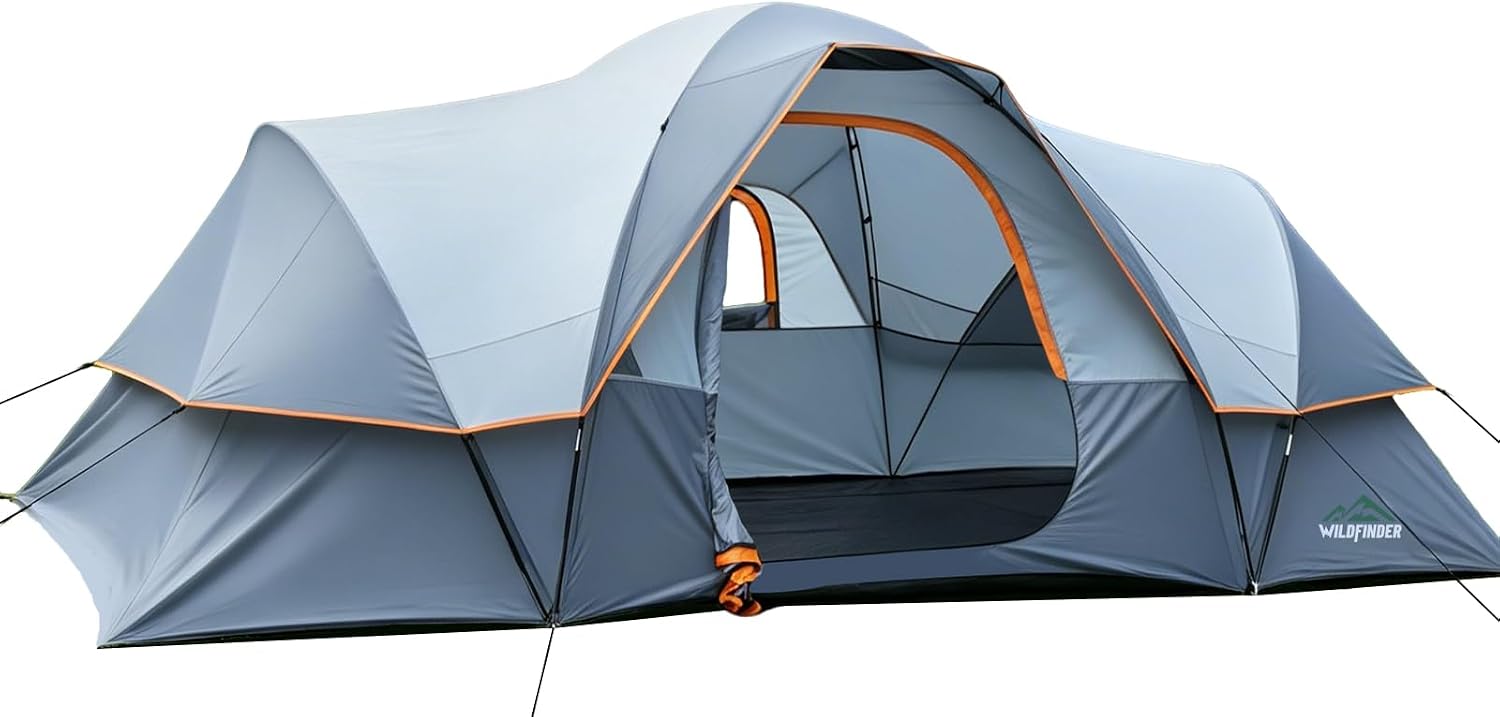
WildFinder Camping Tent 10 Person, Family Tent for Camping with Rainfly
The largest sleeping capacity in this group, with a rainfly included, and the most obvious answer for a family base camp
The footprint is enormous, and a 10 person rating never means ten adults sleep comfortably
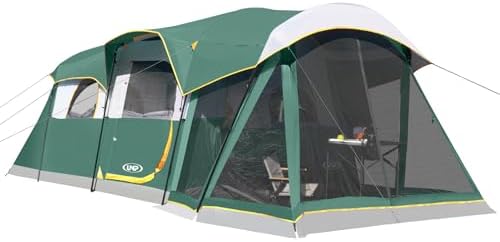
UNP Camping Tent 8 Person Waterproof Big Tunnel Tent with Screen Porch
The screen porch is the one feature the other shelters here cannot match, and it keeps bugs out of your sleeping area
A tunnel needs a long, straight stake line, and any waterproof claim is only as good as its seams
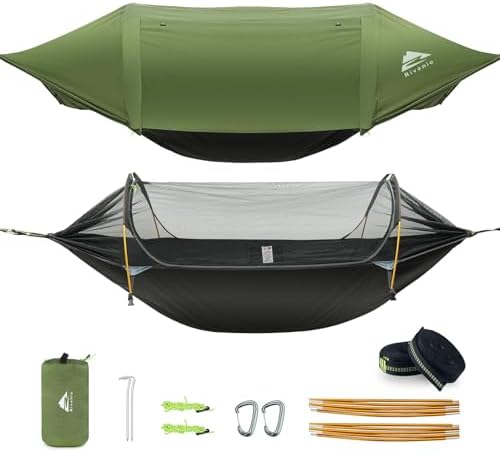
Camping Hammock Tent with Mosquito Net & RainFly, 3 in 1 Waterproof Portable Sleeping Hammock (Dark Green)
Sleep space, mosquito netting, and a rainfly in one package, and it does not care whether the ground is flat
It needs two trees at the right spacing, so it is a solo or second shelter, never a family solution
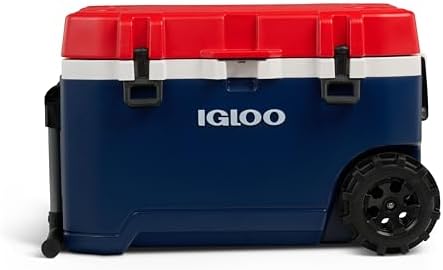
Igloo Trailmate 52 Qt Roller Cooler, Sportsman
Wheels and a long handle solve the worst job in car camping, moving a loaded cooler from trunk to table
It is heavy once it is full, and 52 quarts sets a hard limit on how many days you can feed a group
Prices and availability were captured from Amazon Creators API and may change.
How I judge car camping gear
Car camping flips the ultralight math upside down. On a thru hike, base weight is everything, and every ounce you do not carry is a mile you do not feel. On a car trip, the number that decides whether you enjoy yourself is cargo volume and pitch time. A tent that takes 20 minutes to set up is a tent you will sleep next to in the rain, not inside it.
So I look at four things first. Pitch sequence, meaning can it go up as one unit or does it require feeding poles through sleeves in the wind. Pole count and guy out points, because a big tent is a sail. Ventilation, because condensation is the thing that actually soaks your sleeping bag. And the packed footprint, because a shelter you cannot fit on your site is a shelter that stays in the car.
Waterproofing is a promise that expires. Every tent in this comparison will arrive with some hydrostatic head number on the box, and that number is a lab result, not a forecast. Seam sealing is the real test. Taped seams buy you a couple of seasons before the tape starts to lift. Stitched seams mean you should seal them yourself before the first trip and plan on redoing it every year or two. If a manufacturer will not tell you how the seams are finished, that silence is information.
For a cooler, the questions are different. Ice retention is the headline claim, and it is also the claim most likely to be measured in a lab at 70 degrees with the lid closed. What matters at a real site is lid gasket quality, drain plug design, and whether you can move the thing by yourself when it weighs 40 pounds before you add a single bag of ice.
WildFinder Camping Tent 10 Person: the roomiest way to sleep a family
This is the shelter in the group built for the trip where everyone comes along. A 10 person rating with a rainfly included puts it squarely in base camp territory, and the design intent is clear: one big room, one pitch, everyone under the same roof.
The rainfly is the part I would study before buying. A full coverage fly that reaches low on the walls keeps wind driven rain off the body of the tent. A fly that stops short leaves the lower walls exposed, and that is where water wicks in. When you look at the listing photos, check how far down the fly drops and whether the guy out points line up with the pole crossings.
The honest limitation is footprint. A tent rated for 10 people needs a site roughly the size of a small parking space, and plenty of established campsites cannot give you that. Measure before you commit. If your usual sites are tight or heavily treed, a 10 person tent becomes a headache rather than a luxury.
UNP Camping Tent 8 Person: the screen porch changes the trip
The tunnel shape and the screen porch are the two things that set this tent apart from the WildFinder. A tunnel tent pitches along one axis, which usually means a straightforward pole run and a shelter that stands up well in wind when it is staked properly. That is a real advantage at an exposed site.
The screen porch is the feature I would pay for. It gives you a place to sit after dark without donating blood to the mosquitoes, and it keeps wet gear and sandy shoes out of the sleeping area. For a family trip in black fly or mosquito season, that is not a luxury. It is the difference between hiding in your sleeping bag at 8 p.m. and actually enjoying the evening.
The trade-off is stake line. A tunnel wants a long, clear run of ground, and it wants every stake to hold. If your site is rooty, rocky, or small, this design fights you. Treat the waterproof claim the same way you would treat any other: check the seam finish, seal what needs sealing, and never trust a rating over a real storm.
Camping Hammock Tent 3 in 1: sleep, net, and rainfly in one
The 3 in 1 design bundles the three things a hammock camper normally buys separately: the hammock body, the mosquito net, and the rainfly. As a package it is a clean answer for solo trips and for the second shelter you bring when one person wants to sleep out while the rest of the group is in the big tent.
The obvious constraint is trees. You need two anchor points at roughly the right spacing and height, and you need them to be legal to hang from. That rules out desert sites, alpine treeline, and a lot of developed campgrounds with small, young trees. If you camp mostly in the Pacific Northwest, that is rarely a problem. If you camp in the high desert, it is a dealbreaker.
The other thing to verify is packed weight and packed size. The listing describes it as lightweight and portable, and that is exactly the kind of claim I want numbers behind. Look for a stated packed weight before you assume this replaces a tent in your pack.
Igloo Trailmate 52 Qt Roller Cooler: the one that saves your back
The Trailmate is not competing with the tents. It is competing with the version of you that has to carry a loaded cooler 80 yards from the parking spot to the picnic table, twice, because you forgot the butter.
Wheels and a long handle are the whole argument. On gravel, packed dirt, and the kind of uneven ground that exists at every real campsite, a roller cooler beats a dead lift every time. The 52 quart capacity is a sensible middle size: big enough for a long weekend of food and drinks for a family, small enough that it still fits in a trunk next to a 10 person tent.
Two things to keep in mind. First, capacity math. Ice takes up volume, and a cooler packed half with ice holds far less food than the number suggests. Plan on roughly a third of the interior going to ice if you want it to last through a hot weekend. Second, drain plug and lid gasket. Those two details decide real world ice retention far more than the marketing copy does.
The trade-offs nobody puts on the box
Here is the part the product pages leave out. A 10 person tent and an 8 person tent plus a 52 quart cooler plus sleeping bags, pads, a stove, and a cooler full of food is a lot of vehicle. If you drive a sedan, that load is a puzzle. If you drive a small SUV, it is a tight but workable puzzle.
The second trade-off is setup time versus comfort. Bigger shelters take longer to pitch, and pitch time is the metric that ruins trips. A shelter that takes 20 minutes in calm air can take 40 in wind, and nobody is at their best after that.
The third is the one I care about most: the shelter you bring has to match the trip. A hammock tent is brilliant for one person in the trees and useless at a site with no trees. A screen porch is a gift in bug season and dead weight in a dry, windy place. A 10 person tent is the right call for a family reunion and the wrong call for a solo weekend where you want to be gone by 7 a.m.
What I would check before checkout
Read the seam description and the fly coverage on any tent before you buy it. Taped seams and a full coverage fly are worth more than any hydrostatic head number.
Check the packed weight and packed size, not just the capacity. Capacity tells you how many people fit. Packed size tells you whether the tent fits in your car along with everything else.
Confirm the pole material and count. Aluminum poles outlast fiberglass, and fewer poles usually means a faster pitch.
For the cooler, look at the drain plug and the lid gasket, then think about how far you actually have to move it. Wheel size matters more than most people expect on gravel.
And measure your site. This is the step everyone skips, and it is the one that sends tents back to the store.
The bottom line
If you are outfitting a family base camp and you want one shelter that handles the most trips, the WildFinder 10 Person is the pick, with the caveat that you need a big site. If your trips happen in bug season and you want somewhere to sit that is not your sleeping bag, the UNP tunnel tent with the screen porch earns its place. If you camp solo or want a second shelter, the 3 in 1 hammock tent covers sleep, bugs, and rain in one package, as long as you have trees. And whatever tent you choose, bring the Igloo Trailmate roller, because the worst part of car camping has always been the cooler walk.
Buy for the trip you actually take, not the one in the catalog photo. That is the whole test.