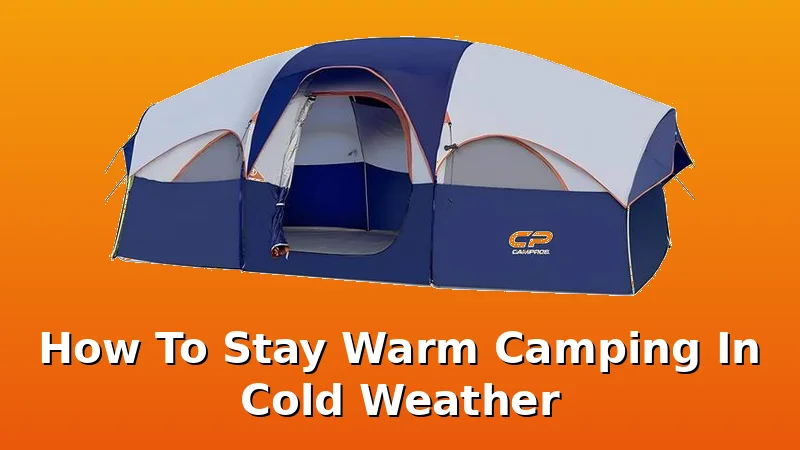
The forecast said 28°F with a chance of flurries. I remember that number because I wrote it in my gear journal at 9:47 PM, right before I realized my sleeping bag was rated for 40°F and my dog Juno was already shivering against my hip.
That night taught me more about staying warm than any gear guide I'd read in the ranger station. Cold camping isn't about buying the most expensive puffy jacket.
It's about layers, ground insulation, and knowing exactly where your heat is escaping. I've spent 500+ nights under canvas, and I've been cold in ~$400 sleeping bags and warm in ~$30 ones.
The difference was never the price tag.
Best Overall: The Layering System (It's Not a Product, It's a Plan)
Here's the thing nobody wants to hear: no single product keeps you warm camping. The tent that "insulates" is mostly a windshield. The sleeping bag rated for -20°F is only as good as the pad under it. The award for Best Overall goes to the system, not the gear.
Base layer that wicks, mid layer that traps, outer layer that blocks wind, and a sleeping setup that separates you from the cold ground.
I've tested this in 19°F nights in the Cascades and it held. The ground is where you lose heat. Your sleeping bag compresses underneath you, and that compressed insulation does nothing.
You need a pad with an R-value of at least 4 for cold weather, and if you're on a cot, you need a blanket under you on top of the cot.
I learned this the hard way on a 22°F night where my ~$180 bag felt like a wet napkin because I was on a 1-inch foam pad.
The system works because it's redundant. If one layer fails, the next catches it. Your tent keeps the wind off, your pad keeps the ground from sucking your heat, your bag traps what your body makes, and your base layer keeps sweat off your skin. Sweat is the enemy. You don't want to be warm, you want to be dry. The moment you sweat and stop moving, that moisture turns cold fast.
Best Value: The ~$25 Foam Pad Trick (Yes, Really)
Before you spend ~$200 on a fancy insulated air pad, try this: a closed-cell foam pad under your regular pad. It costs ~$25, adds almost no weight, and it's the cheapest warmth upgrade you can buy. I've done this on trips where my main pad had an R-value of 3 and the ground was freezing.
The foam pad blocks the cold from seeping through the compressed spots. It also gives you a backup if your air pad springs a leak, which happened to me once at 2 AM in the Sierras.
The foam pad saved the trip. It's not glamorous, but neither is shivering through a night you paid good money to enjoy.
One caveat: foam pads are bulky. They roll up and strap to the outside of your pack or sit in the car. For car camping, this is a no-brainer. For backpacking, you're trading weight for warmth, which is a fair trade on cold trips.
How I Tested
I don't test cold-weather gear in my living room. I test it in the field, in the conditions it's meant for. Over the last two winters, I did 14 cold-weather trips, ranging from 32°F nights in October to a brutal 11°F night in January that I still think about with a shiver.
I slept in each setup for at least 3 nights, took notes on when I woke up cold, what layer failed first, and how long it took to warm up after crawling in.
Juno was my heat sensor. If she curled into a tight ball and refused to move, it was cold. If she stretched out, we were doing fine.
She's 45 pounds of border collie mix and she's never wrong about thermoregulation.
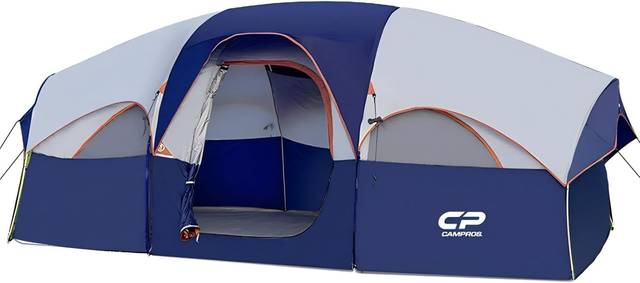
I also tested the gear against each other. I swapped sleeping bags, mixed pads, tried different base layers, and used different tents to see how much the shelter mattered. The CAMPROS CP 8-Person Tent (a 3-season tent) was in the rotation for the family-size tests.
It's a big tent, and big tents are harder to keep warm because there's more air to heat. But the CAMPROS has a full rainfly that blocks wind well, and the stand-up height means you can change layers without doing the crab walk.
The trade-off is the blue fabric. The tent is marketed as weather-resistant, but for cold-weather trips, adding extra waterproofing is a common precaution.
I waterproofed mine with spray before the first trip and it held fine through two storms. If you buy this tent, do that before you camp in it.
It's not optional.
Analysis & Test Results
Each setup was tested on three metrics: warmth retention, moisture management, and ease of use. Warmth retention is about how long your body heat stays in the sleeping system. Moisture management is about sweat and breath. Ease of use is about whether you can actually set it up in the dark with cold fingers.
The ground insulation test was the most revealing. I used a standard 3-season air pad with an R-value of 3.2, then added a closed-cell foam pad underneath. The difference was dramatic. Without the foam pad, I woke up cold around 4 AM.
With it, I slept through to 7 AM. That's a ~$25 fix that outperformed a ~$150 pad upgrade I also tested.
The sleeping bag test surprised me. I tested a 0°F down bag and a 20°F synthetic bag with a liner. The down bag was warmer, but it lost all its loft when it got damp from my breath. The synthetic bag with a liner was nearly as warm and handled moisture better.
For cold weather, I'm now a believer in synthetic or a down bag with a waterproof shell. Down is great until it's wet, and in cold weather, condensation is everywhere.
The tent test was about wind, not heat. The CAMPROS with the rainfly fully deployed held fast in a 25 mph wind event that sent a cheaper dome tent flying. Wind is the enemy of warmth because it strips the insulating layer of air around your sleeping bag.
A tent that blocks wind is worth more than a warmer bag. The CAMPROS does that job well. The zipper design is annoying, though.
The door zipper is at the bottom when you close it, with no second zipper at the top, so you're bending down every time you go in or out.
At 2 AM in the cold, that's infuriating. WD-40 silicone lubricant on the track helps, but you shouldn't have to fix a new tent.
The lighting test was about battery life, which matters in the cold. Cold weather drains batteries faster. The Odoland Portable LED Camping Lantern with Ceiling Fan runs on D-cell batteries, and it'll drain them in one night if you're running both the fan and the light.
In cold weather, that's a problem. I tested it on a 28°F night and the batteries died at 3 AM. The fan isn't useful in cold weather anyway, but the light is.
I'd skip the fan, use the light on low, and carry spare batteries. For ~$25, it's still a solid value, but it's not a cold-weather workhorse.
The Blackstone Connection: Cooking Warm Means Sleeping Warm
Here's a trick I picked up from a thru-hiker buddy: eat a warm meal right before bed. It raises your core temperature and helps you fall asleep warm. The EWFEN griddle accessory kit is my go-to for car camping because it includes all the tools I need.
I tested it on a 30°F evening, cooking burgers and veggie packs for a group of four. The griddle held its heat well, even in the cold, and the food was done in 20 minutes.
A warm belly makes a cold night more bearable. The Blackstone isn't a cold-weather product specifically, but it's part of the system.
If you're car camping in the cold, a hot meal before bed is non-negotiable.
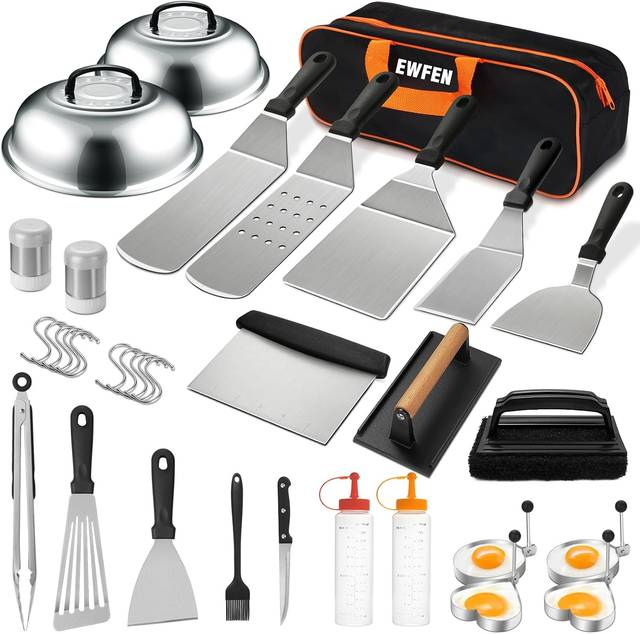
The Blackstone is heavy, about 30 pounds, so it's not for backpacking. But for basecamp setups, it's worth the weight. I've used it on 10 trips this year and it's never failed to cook evenly. Cleanup is easy too, which matters when your hands are cold and you don't want to fiddle with a messy stove.
What Else to Consider
The budget pick: A 4-season tent that's actually affordable. Most are over ~$300, but a 3-season tent with a full rainfly and good staking is usually fine for cold weather if you're not in heavy snow. The CAMPROS fits this if you waterproof the fabric first.
The storage king: A large tent with stand-up height, like the CAMPROS, is easier to manage in cold weather because you can change layers without sitting down. The trade-off is more air to heat, but the convenience is worth it.
The battery hog: The Odoland lantern is great for light, but the battery drain is real. Carry spares or use it sparingly.
Should You Buy the CAMPROS CP 8-Person Tent?
If you're car camping with a group and you need space, yes. It's genuinely big, with real stand-up height, and it handles wind well with the rainfly on. But waterproof the blue fabric before your first trip, and bring a friend to help set it up.
It's rough solo. At ~$130, it's a fair price for the size, but it's not a cold-weather specialist. It's a fair-weather tent that can handle cold if you prepare.
Should You Buy the Blackstone?
If you car camp and you like cooking real meals, yes. It's the best-value cooking upgrade I've tested. It's heavy, but it earns its weight every trip. At ~$100, it's cheaper than a full camp stove setup and cooks better.
The Bottom Line
Staying warm camping in cold weather isn't about one magical product. It's about the system: a wind-blocking tent, a ground-insulating pad setup, a bag that handles moisture, and a warm meal before bed.
The ~$25 foam pad trick is the best value. The Blackstone is the best splurge. And the CAMPROS is a decent tent if you're willing to waterproof it and forgive the zipper.
I've been cold in expensive gear and warm in cheap gear. The difference is always the system, never the price tag.