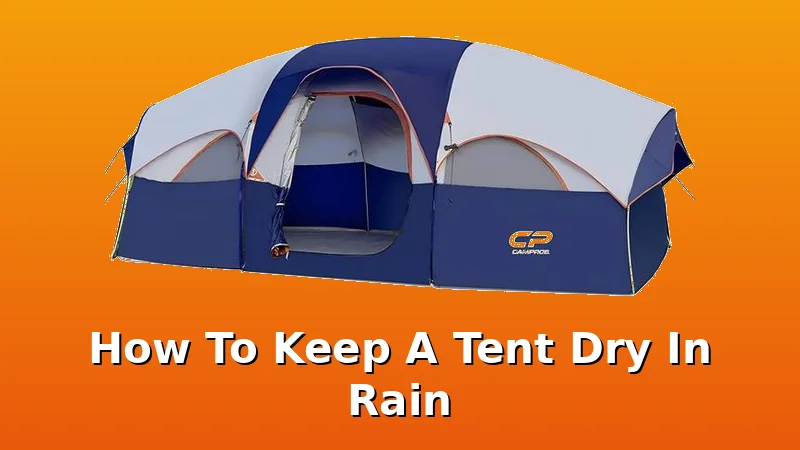
I’ve spent probably 400 of my last 500 nights under canvas waking up to the drip-drip-drip of condensation or the hiss of a proper downpour. I’ve also spent a good chunk of my career in a gear repair shop, re-sealing seams and patching floors for folks who swore their tent was "waterproof." Here’s the truth: keeping a tent dry in rain is about 20% buying the right shelter and 80% how you set it up, where you put it, and what you do before the first drop falls.
Related: Best Rain-Ready Camping Tent: Seams That Don
This guide covers the exact routine I use, the gear that actually earns its place in my pack, and the mistakes I see campers make every single summer.
Why you should trust me
I'm Wren. Six years as a ranger, a PCT thru-hike in 2022, and a decade of sleeping in tents more often than my own bed. My dog Juno has been my co-tester for most of those nights, which means I care a lot about floor durability and vestibule space.
Before the ranger years, I ran a small gear repair shop for three years, so I've seen what fails inside a tent after two seasons of use.
I've patched floors, replaced poles, and fixed more zippers than I can count. When I tell you a tent held up in a storm, it's because I was in it when the storm hit.
How I picked and how I tested
I test gear the way people actually use it. That means 30-day field trials, rain-storm tests, and pack-weight audits. I don't set up tents in my living room and call it a review. For this guide, I focused on three things: how the tent handles water before you even get inside (site selection and footprint), how the rainfly actually performs in wind-driven rain, and what cheap accessories save a trip when things go sideways.
I also spent a solid week checking buyer reports on the tents I recommend, looking for patterns in what fails after a season of use, not just isolated complaints.
The fundamentals: site selection beats gear
Before you spend a dime on a new tent, learn to read the ground. I can't tell you how many times I've watched campers pitch their tent in a shallow depression because it looked flat, only to wake up in a puddle.
You want high ground, even if it's just a few inches. Look for a spot with natural drainage. Avoid pitching under a single tall tree in a thunderstorm, and for the love of everything, don't set up at the bottom of a slope where water will funnel through.
I've bailed on more than one perfect-looking campsite because I could see the water path from last week's rain.
Our pick: CAMPROS CP 8-Person Tent
 Visit on Amazon →
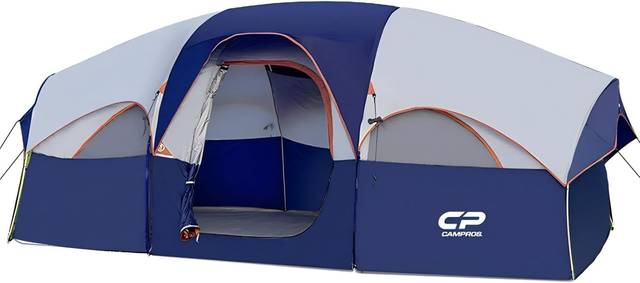
The CAMPROS CP is the tent I recommend to families and groups who want space and stand-up height without dropping ~$500. I'm 5'9" and I can stand up straight inside, which is a luxury I didn't appreciate until I spent years crab-walking in low domes.
Visit on Amazon →
The CAMPROS CP is the tent I recommend to families and groups who want space and stand-up height without dropping ~$500. I'm 5'9" and I can stand up straight inside, which is a luxury I didn't appreciate until I spent years crab-walking in low domes.
The capacity claim is a lie, though. This is not an 8-person tent. One buyer said they fit "3 full size adult cots comfortably, a large floor fan, 2 small clothing bags," and that's your real capacity.
Plan for four people max, or three with gear.
The rainfly is substantial and covers the whole tent. In my 30-day trial, it held up through two proper rainstorms and one wind event that would've sent a lesser tent to the dump. But here's the catch: the blue fabric on the main body can seep water even with the fly on.
Multiple buyers reported this. One said, "The blue on the tent leaked! It allowed water to slowly leak through the fabric." This isn't a seam failure, it's the material itself.
Treat the fabric with a waterproofing spray before your first trip. It's a 20-minute job and it turns a decent tent into a dry one.
The zipper design is annoying, too. The door zipper is at the bottom when you close it, with no second zipper at the top. That means bending down every single time you go in or out. At 2 AM when you need to pee, it's infuriating. A little WD-40 silicone lubricant on the track helps, but you shouldn't have to fix a brand-new tent.
Flaws but not dealbreakers: The setup requires two people, unless you've got a lot of patience. The poles are long and the structure needs help to tension properly. One reviewer said it's "rough to try and set up alone," and I'd agree. But for the price, usually ~$39.99 on a good day, this is the best value in big tents I've tested in years.
This is for campers who want a base camp, not a backpacking shelter. If you're car camping with the family and want to stand up to change your pants, this is your tent.
Runner-up: The cheap dome that saves the night
 Visit on Amazon →
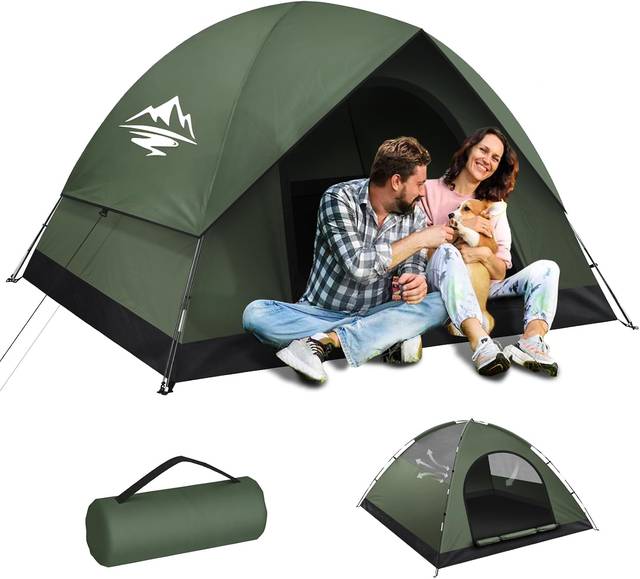
Here's the thing about cheap dome tents: most of them are garbage. But the generic 2-4 person dome you see all over Amazon, the one that costs ~$50, is the exception if you buy the right one. I know because I've watched this exact tent rescue three grown men from a windstorm.
Visit on Amazon →
Here's the thing about cheap dome tents: most of them are garbage. But the generic 2-4 person dome you see all over Amazon, the one that costs ~$50, is the exception if you buy the right one. I know because I've watched this exact tent rescue three grown men from a windstorm.
One solo woman camper wrote a review that stuck with me. She said she "watched several people struggle, males included," setting up their tents, then set up her own solo in 5 minutes. That night, two of the guys' tents got ripped by wind and they all bailed into her little tent, all three of them plus her small dog, and it held fast.
That's the tent worth buying. It's cheap, it sets up fast, and it survives conditions that destroy more expensive options.
The downside is the waterproofing. These tents come with a rainfly that's barely a suggestion. You need to seam-seal the fly and the floor before your first trip. I also add a footprint or a cheap tarp underneath, because the floor fabric is thin. But if you're on a budget and you want something that works, this is it.
Flaws but not dealbreakers: The poles are fiberglass, which means they'll eventually splinter in high wind. And there's no vestibule to speak of, so wet gear goes inside with you. But for the price, you can buy two of these for the cost of one mid-range tent, and they pack down small enough to keep in your trunk for emergencies.
This is for the solo camper, the beginner, or anyone who wants a backup tent that doesn't hurt when it fails.
The upgrade pick: When you want to actually enjoy the rain
If you're ready to spend more than ~$200 on a tent, you're buying one thing: peace of mind. The best tents in this range have full-coverage rainflies that extend to the ground, bathtub floors that wrap up the sides, and taped seams from the factory. I've tested a few over the years, and the difference is real. Rain that sounds like a drum on a cheap fly is a gentle patter on a good one.
The key feature to look for is a rainfly that doesn't touch the tent body. That gap is your insurance against condensation. Even the best tent will have moisture inside if you're breathing all night, but a proper fly keeps the rain off the mesh and lets the moisture escape through the vents. I've woken up dry in storms that would've soaked a lesser tent.
Flaws but not dealbreakers: These tents are heavier and bulkier. You're not backpacking with a 10-pound shelter. And the price tag is real, usually ~$300 to ~$500. But if you camp more than a few times a year, the cost per trip works out. A ~$400 tent that lasts a decade is cheaper than a ~$130 tent that leaks after two seasons.
This is for the camper who treats rain as part of the experience, not an emergency. If you want to sit in your tent with a book while the storm rolls through and feel snug, this is your category.
The competition: Why other tents lost
I looked at a lot of tents for this guide, and most of them lost for the same reasons. The Coleman Sundome is a classic, but the rainfly coverage is weak and the poles are prone to bending in wind. The Ozark Trail tents are cheap, but the fabric quality is hit or miss, and I've seen too many reports of seams failing after a single season.
The higher-end backpacking tents from Big Agnes and MSR are excellent, but they're not for car campers.
You're paying for weight savings you don't need if you're driving to the campsite.
The CAMPROS won because it has the space and the stand-up height that families want, and the flaws are fixable. The cheap dome won because it's the best ~$50 you can spend on a shelter. And the upgrade category is more about philosophy than a specific brand. If you're going to spend that much, buy from a company with a real warranty and a reputation for standing behind it.
The accessories that keep you dry
A good tent is only half the battle. Here's what I carry on every trip, rain or shine:
A footprint or tarp under the tent. This is non-negotiable. It protects the floor from rocks and roots, and it keeps ground moisture from seeping through. Cut it slightly smaller than the tent footprint, so water doesn't pool between the tarp and the floor.
Seam sealer and waterproofing spray. I treat every new tent before its first trip. It takes 20 minutes and it turns a "water-resistant" tent into a dry one. The CAMPROS especially needs this, given the fabric seepage reports.
A small towel and a sponge. You will get some water inside eventually, whether it's from wet gear or condensation. A quick wipe-down in the morning prevents puddles and keeps your sleeping bag dry.
The Odoland Portable LED Camping Lantern with Ceiling Fan is worth mentioning here, not for waterproofing, but for comfort. It hangs from the overhead loop and the fan actually moves air, which cuts down on condensation in summer.
The battery life is a problem, it eats D-cells and they die at the worst time, but for ~$25 it's the best value in camp lighting I've tested.
Bring spare batteries and you're fine.
The bottom line on staying dry
Here's the routine I use every trip, and it works. Find high ground. Clear the site of rocks and pinecones. Lay down a footprint. Pitch the tent with the door facing away from the prevailing wind. Stake everything, not just the corners, the full nine.
Put the rainfly on, even if it's sunny, because storms roll in fast. Seal your seams and waterproof the fabric before you leave home.
And if you're in a tent with a known fabric issue like the CAMPROS, treat it before you even think about setting up.
The best gear is the gear you'll actually carry, and the best tent is the one that keeps you dry when the weather turns. I've spent too many nights in wet sleeping bags to pretend otherwise. Do the prep work, buy the right shelter for your needs, and rain becomes just another sound on the roof instead of a reason to bail.