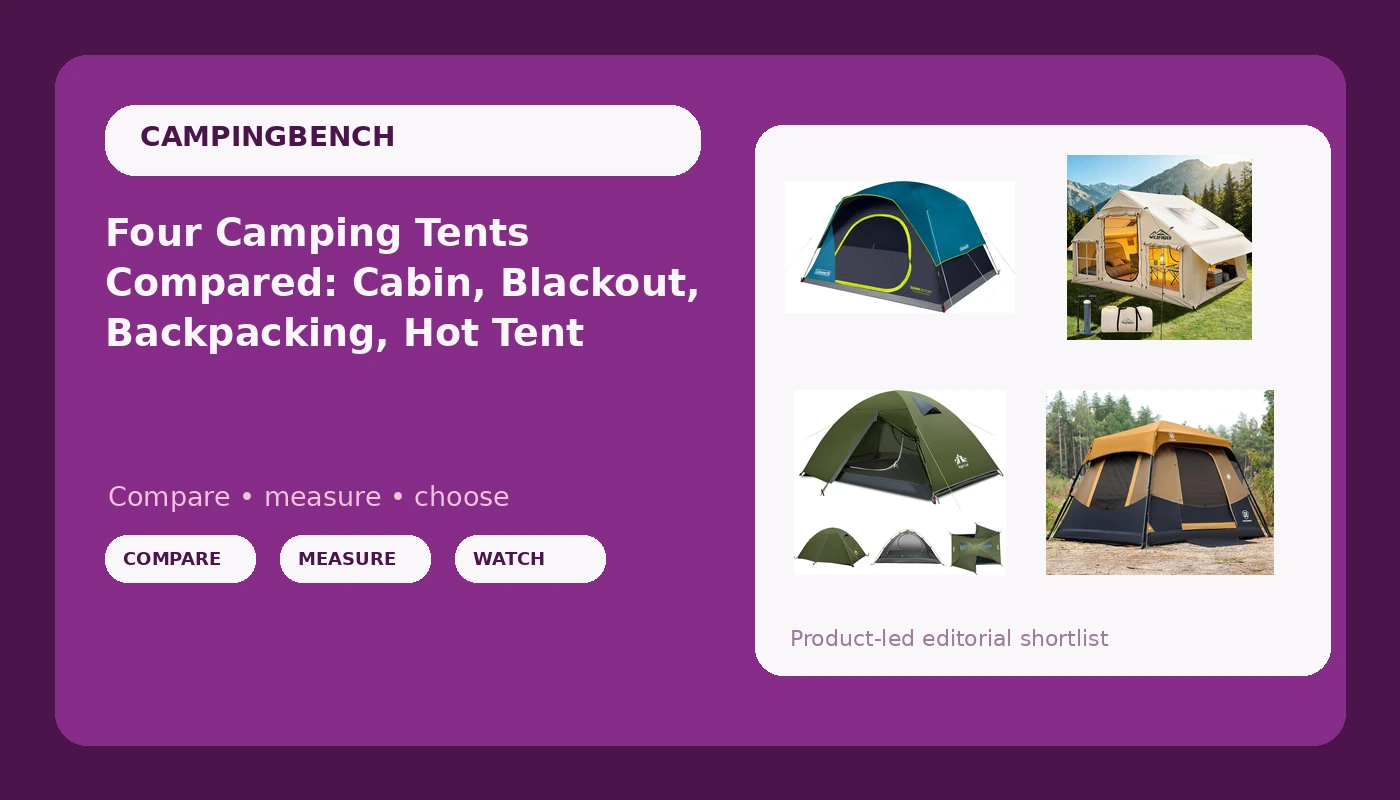
I have logged more than 500 nights in tents, six seasons as a park ranger in Central Oregon, and one PCT thru-hike, and the same question keeps arriving in my inbox: which tent should I actually buy? This comparison of camping tents for every trip is the answer I keep typing out one email at a time. These four tents are not interchangeable, and treating them as if they were is how people end up miserable. They solve four different problems: sun that wakes you at 5:40 a.m. in July, a family of four with too much gear and not enough floor, a two-person backpacking trip where every pound is felt at mile 12, and a shoulder-season camp where you want a wood stove inside the walls.
The first thing I tell anyone shopping is to match the tent to the trip, not to the price tag and not to the review count. A cabin tent that pitches in about a minute is a wonderful thing at a drive-in campsite and a terrible thing on a 12-mile day. A two-person backpacking shelter is a wonderful thing on that 12-mile day and a cramped, damp disaster for a family of four on a holiday weekend. The mountain does not care about your gear list, but your trip does care about your shelter.
For most people reading this, the Coleman Skydome Dark Room is the safest buy, because it solves the two problems that ruin summer car camping: early sunlight and a tent that takes longer to pitch than dinner.
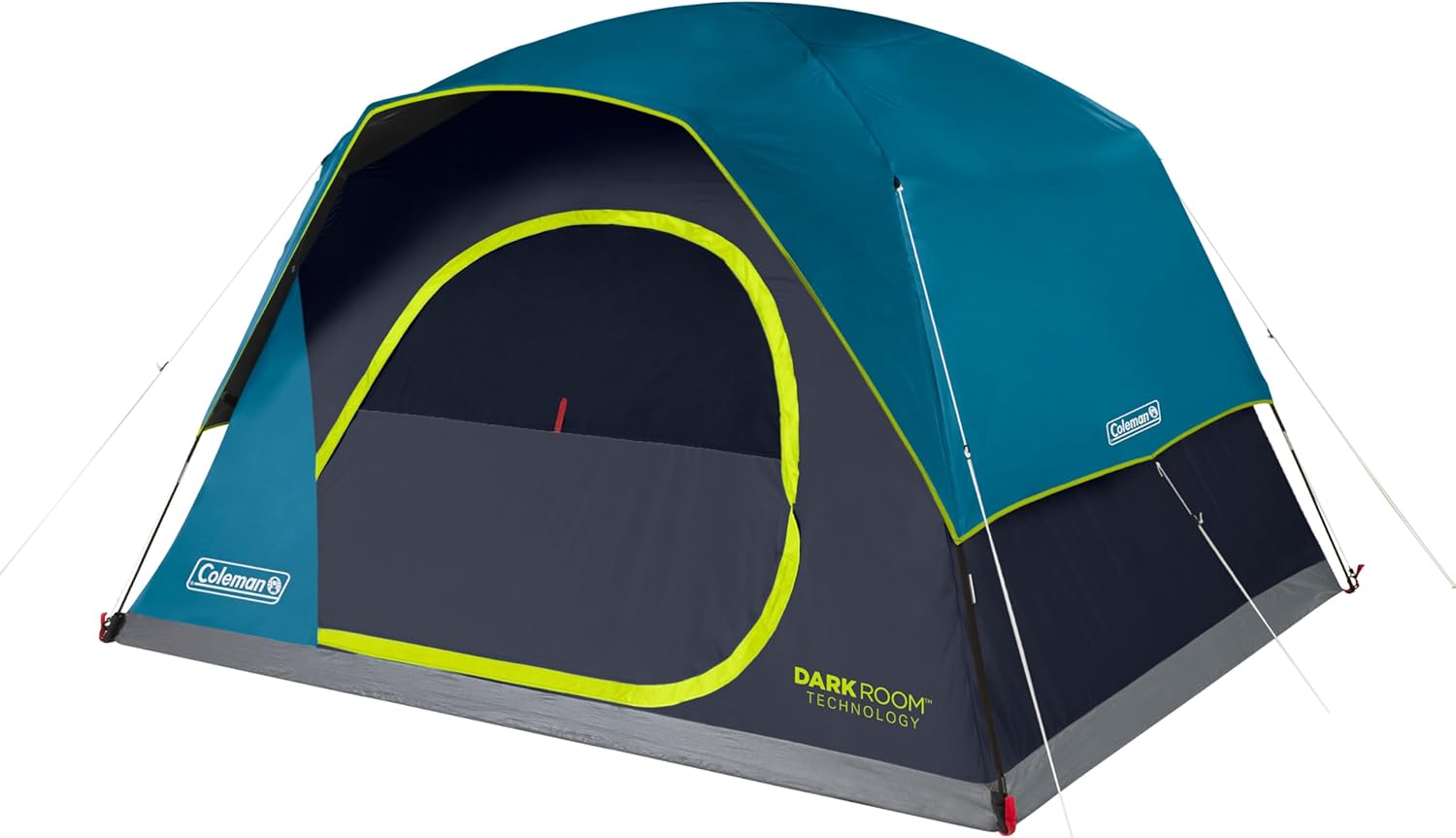
Coleman 4/6/8/10 Person Skydome Dark Room Tent with Rainfly
Dark Room fabric is rated to block 90% of sunlight, the dome is listed with 20% more headroom than traditional tents, and the setup claim is about five minutes
It is a car camping tent first: bulky packed size, and a dome shape never gives you the standing room of a cabin
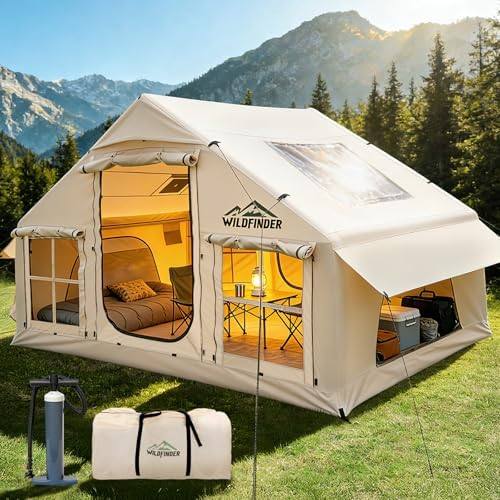
Inflatable Tent with Skylight & Stove Jack, Blow Up Tents, Hot Tent
A stove jack changes the season, the skylight adds light without adding a window you have to seal, and inflation removes pole assembly from the equation
The specialist of the group: you need a pump and calm conditions to inflate and deflate, and there is far less of a track record to lean on
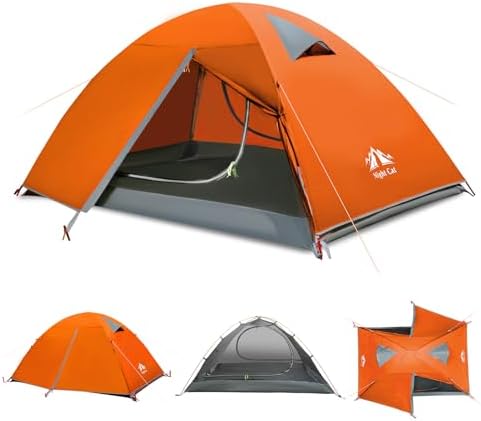
Night Cat 2-Persons Backpacking Tent with Aluminum Poles and Rainfly
The only tent here built to be carried: aluminum poles, two-person capacity, and a rainfly included rather than sold separately
Two people in a two-person tent means two people and nothing else; it is a shelter, not a basecamp
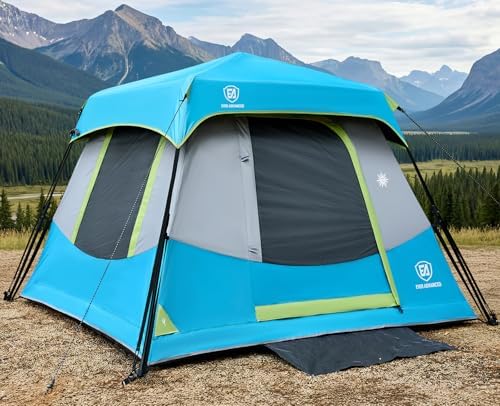
EVER ADVANCED 4 Person Blackout Camping Tent, 60s Easy Setup Instant Cabin
A 4000mm water-resistance rating, light-blocking blackout fabric, and an 8' x 7' x 59" cabin footprint you can stand up inside
Four sleepers plus gear in that footprint is snug, and instant-cabin frames pack long and heavy
Prices and availability were captured from Amazon Creators API and may change.
How I judge a tent
I do not hand out recommendations without a weight audit, and I do not call anything waterproof without a real rain test. Those two rules have saved me more misery than any spec sheet. When I look at a tent, I am asking four questions in order.
First, will I actually carry it? A tent that stays in the garage because it is too heavy to load is a tent you do not own in any meaningful sense.
Second, does it survive a storm? Not the manufacturer's storm. A real one, with wind that changes direction and rain that comes in sideways for six hours. That is where seam sealing, fly coverage, and guy-out points matter more than any hydrostatic head number printed on a box.
Third, does it work at mile 12 on day three? By then your hands are tired, your patience is gone, and a tent that pitches from the inside or needs eight stakes and a specific wind direction is a tent you will hate.
Fourth, would I trust it on a multi-day trip with someone else's family in it? That is the honest bar. Not "is it nice," but "would I hand it to a friend and drive home."
Cabin tents: headroom, light blocking, and room to stand
The Coleman Skydome Dark Room and the EVER ADVANCED 4 Person Blackout are solving the same problem from two directions: summer camping in a tent that turns into an oven at sunrise.
Coleman's Dark Room fabric is rated to block 90% of sunlight, and the dome is listed with 20% more headroom than traditional dome tents. If you have ever tried to pull on pants while bent double under a low dome, you understand why that number matters. The brand also claims about a five-minute setup, and Coleman has been building this shape long enough that the claim is not marketing fiction. The family sizing runs from four people up to ten, which is the real reason this tent keeps showing up at group campsites: there is a version for almost any group.
The EVER ADVANCED takes the cabin approach. An 8' x 7' x 59" footprint means an adult can stand up inside, which changes how a rainy afternoon feels. The 4000mm water-resistance rating and light-blocking blackout fabric put it in the same conversation as the Coleman, and the 60-second instant setup claim is aimed at people who arrive at camp after dark. The trade-off is that instant-cabin frames are long and heavy when packed, and four people in an 8' x 7' floor is snug once sleeping pads and duffels move in.
If your trips involve a car, a cooler, and a fire ring, this is the category that makes sense. Neither of these is a backpacking tent, and neither pretends to be.
The inflatable hot tent: a stove jack changes the season
The Inflatable Tent with Skylight and Stove Jack is the odd one out here, and that is the point. A stove jack is a heat-resistant port in the wall or roof that lets a stovepipe exit the tent, which turns a three-season shelter into something you can heat. That single feature is what separates a hot tent from a tent you simply wear more layers inside.
Inflation replaces poles. You stake it out, inflate the air beams, and the structure stands up. That is genuinely faster than threading poles in the dark, and it means fewer parts to lose. The skylight adds daylight without adding a window you have to seal against rain.
The honest criticism: inflatable shelters depend on a pump, on calm conditions while you inflate and deflate, and on a level of care that pole tents do not demand. A puncture in an air beam is a different repair than a bent pole. And a hot tent is only worth the complexity if you actually camp in cold weather, because a stove you do not use is just a hole in the wall you have to seal.
The backpacking tent: where weight decides the trip
The Night Cat 2-Persons Backpacking Tent is the only tent in this comparison built to be carried on your back. Aluminum poles, a two-person capacity, a rainfly included rather than sold as an accessory, and a design aimed at hiking and mountain trips.
Weight is not a number. It is how you feel at mile 12 on day three. That is why the backpacking category is judged differently: a slightly tighter interior and a slightly thinner floor are acceptable trades for a shelter that disappears into your pack. The rainfly being included matters more than it sounds, because a fly is not optional in real weather, and buying one later costs you money and a trip.
The criticism is the same one I level at every two-person backpacking tent: two people in a two-person tent means two people and nothing else. There is no room for a duffel, no room for a dog, no room for the gear of a family of four. It is a shelter for a specific job, and it does that job well. If you want a basecamp, look at the cabin tents above. If you want to walk somewhere and sleep there, this is the category.
Pitch time in real conditions
Pitch time is the spec that gets quoted and never tested. In a storm, it is the difference between dry and miserable, so here is how I think about the claims in this table.
Coleman claims about five minutes for the Skydome, and EVER ADVANCED claims about 60 seconds for the instant cabin. Both numbers assume you have read the instructions once and that the wind is not actively fighting you. The inflatable tent's pitch time depends on your pump. The Night Cat, with aluminum poles and a fly, is a standard backpacking assembly: a few minutes once you have done it twice.
The number I care about is not the first pitch. It is the fifth pitch, at night, in wind, with cold hands. That is when a simple design beats a clever one.
Waterproofing is a promise with an expiration date
The EVER ADVANCED tent is rated to 4000mm, which is a serious number. The Night Cat is described as waterproof, and it ships with a rainfly, which is the part that actually keeps rain off the walls.
Here is the thing nobody tells you at checkout: factory seam sealing fails. It fails on expensive tents and cheap tents, usually in the second or third season, usually on the seam right above your head. The rain test that matters is not the one in the brochure, it is the one you run yourself, in your yard, with a hose, before a trip you care about. If water beads on the fabric, you are fine. If it darkens and soaks, you have work to do, and a tube of seam sealer costs less than a ruined night.
The weight audit
Run this before you buy anything. Add up the tent, the stakes, the footprint or ground sheet, and the pump if the tent needs one. Then ask whether you are carrying that load or your vehicle is.
For car camping, the answer is your vehicle, and weight is nearly irrelevant. Take the cabin tent with the headroom.
For backpacking, the answer is you, and every ounce you do not carry is a mile you do not feel. Take the shelter that packs small and leaves the extras at home.
For a hot tent, the answer is your vehicle plus a sled or a short carry, because a stove is not going in a backpack.
Trade-offs the spec sheets hide
Sunlight blocking and ventilation fight each other. A fabric that blocks 90% of light also blocks some airflow, which is why blackout tents need good vents and a fly you can adjust. Expect to manage condensation on cold nights in any of these.
Standing height and pack size fight each other. The 59-inch peak on the EVER ADVANCED is a real comfort win and a real packing penalty. The Night Cat gives up standing room entirely to fit in a pack.
Setup speed and durability fight each other. Instant and inflatable designs trade a small amount of long-term simplicity for short-term convenience. Pole tents are boring, and boring lasts.
Which tent for which trip
If you are camping out of a vehicle with a family, get the Coleman Skydome Dark Room Tent. The light blocking and headroom are the features you will notice every single morning.
If you want to stand up, pitch in about a minute, and sleep past sunrise, get the EVER ADVANCED 4 Person Blackout Camping Tent.
If you camp in cold weather and want a stove inside the walls, the Inflatable Tent with Skylight and Stove Jack is the only one here built for that job.
If you are hiking in and sleeping out, get the Night Cat 2-Persons Backpacking Tent. It is the one you will actually carry.
What I am watching next
The two things I want more field time with are inflatable air-beam construction and stove-jack tents, because both are moving from novelty to mainstream and both still have open questions about long-term repair. I also want to see whether instant-cabin frames keep getting lighter, because the moment a 60-second cabin tent packs like a backpacking tent, the whole category changes.
Until then, buy the tent that matches the trip you actually take, not the trip you keep meaning to take. The best gear is the gear you actually carry.