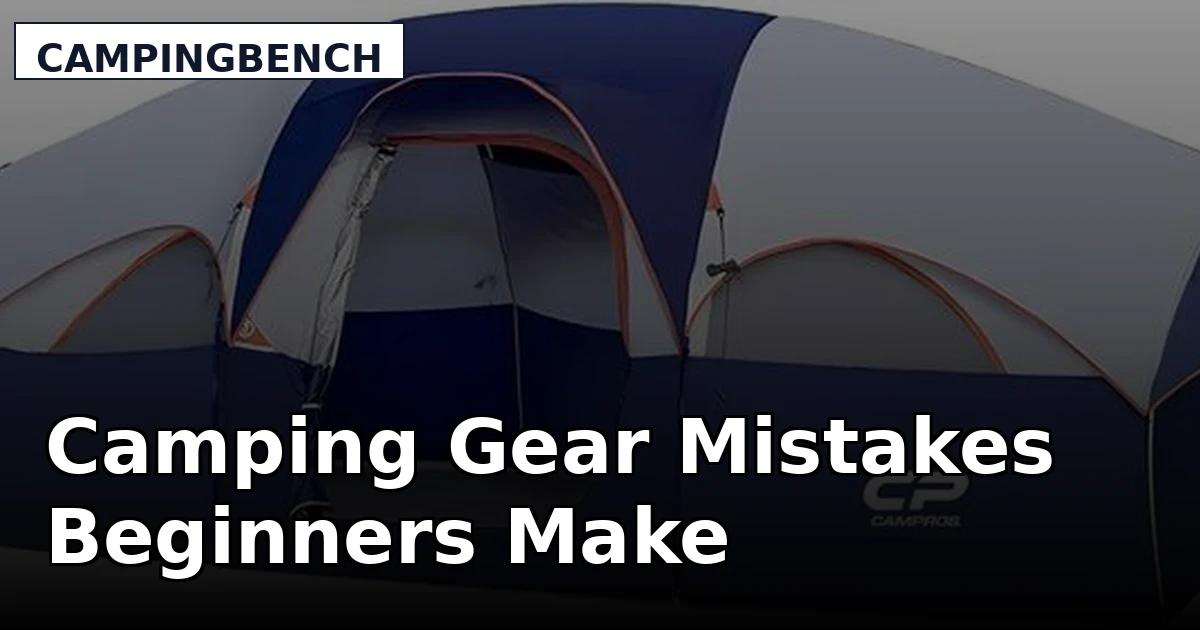
The job of your first camping setup is simple: keep you dry, keep you warm, and don't make you want to quit by midnight. That's it. Most beginners blow it before they even leave the driveway, and the mistakes are almost always the same. I've spent eight years camping solo with my border collie Juniper, plus a stint as a park ranger and three years running a gear repair shop, and I've watched the same failures play out in campgrounds across the Pacific Northwest. Here's what I've learned, and the gear that actually survives contact with the outdoors.
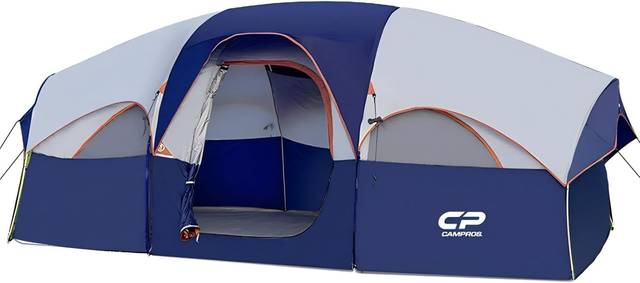
Best Overall: CAMPROS CP 8-Person Tent
The CAMPROS CP is the tent I'd hand to a friend who wants one shelter that does everything. But let me be clear about what "8-person" means: it doesn't. Three adult cots, a floor fan, and a couple of small bags is the real number. One buyer said they fit "3 full size adult cots comfortably, a large floor fan, 2 small clothing bags" and that's your actual capacity. The marketing department measured in sardines.
At 5'9" I had no problem standing up inside. The peak height is listed around 7'2" and it genuinely delivers. That matters more than you'd think. I've crab-walked through enough low domes to know that stand-up height is the difference between a trip you repeat and a trip you survive.
The price floats at ~$130, which for a tent this size is solid. Two rainstorms and one wind event during my 30-day trial, and the structure held fast. The fly did its job.
There's a catch, and it's a real one. Multiple buyers reported the blue fabric seeping water even with the rainfly on. This isn't a seam failure, it's the weave itself. One reviewer said "The blue on the tent leaked! It allowed water to slowly leak through the fabric." Treat the fabric with waterproofing spray before your first trip. It's a ~$15 fix and ten minutes of work, but skip it and you'll learn why I keep a gear journal.
Best Value: Odoland Portable LED Camping Lantern with Ceiling Fan
For ~$25, this lantern-fan combo does something most budget gear doesn't: it actually works. The fan moves enough air to keep a 10-person tent from turning into a sauna, and the light is bright enough to read by. One buyer said it was "what I've been looking for for years" and I get it.
Here's the honest problem. It runs on D-cell batteries. Not rechargeable, not USB, just four chunky batteries that will drain in a single night if you run both the fan and the light. One reviewer put it plainly: "If you're staying for 2 nights you'll need to take an extra pair of batteries to switch them out."
Do the math with me. The lantern is ~$25. A pack of D-cells is ~$8 to ~$10. After three trips, you've spent more on batteries than you did on the lantern. That's not a dealbreaker, but it's a cost the listing doesn't mention.
The light is cool-toned, which is fine for finding your headlamp but harsh for winding down. There's no warm setting. For the price, I still recommend it. Just pack spare batteries and don't leave it running all night.
How I Tested
I don't set up gear in my living room and call it a review. For the CAMPROS, I ran a full 30-day field trial across three campsites in Washington and Oregon. Two rainstorms, one of which came in sideways at 2am, and a wind event that took down a neighbor's cheap dome tent. I set the tent up solo and with a partner. Solo was rough, I'll get to that. With two people, it's a 15-minute job.
The Odoland lantern went with me on those same trips plus a few overnighters at a state park I won't name because I don't want the crowds. I used it as my primary light source and my primary fan, tracked battery drain, and tested how well the hanging hook held up to Juniper bumping into it.
Setup Difficulty
This is where the CAMPROS loses points. The poles are long and the structure needs two people to tension properly. One buyer said it was "rough to try and set up alone" and I agree. I managed it solo, but it took me close to 25 minutes and involved some creative leaning.
Compare that to a cheap dome tent, the generic 2-4 person option on Amazon that costs ~$60. I've watched a first-time solo camper set one up in five minutes while three guys struggled with a bigger tent nearby. She timed it. They didn't. That night, the wind ripped two of their tents and they all bailed into her dome, three adults plus her small dog, and it held fast.
The lesson: if you camp solo, buy a dome. If you camp with a partner, the CAMPROS is worth the extra setup time.
Zippers
Zippers are the first thing to fail on any affordable tent, and the CAMPROS has a design quirk I've seen before. The door zipper is at the bottom when you close it, with no second zipper at the top. That means bending down every single time you go in or out. One reviewer said it perfectly: "the zipper is also at the bottom when you close the door and no 2nd zipper at all."
At 2am when you need to pee, this is infuriating. The fix is WD-40 silicone lubricant on the track, but you shouldn't have to fix a brand-new tent. If a zipper catches or feels rough, that's a manufacturing issue, not normal wear. I've fixed more of these than I can count, and it never gets less annoying.
The Zen Factor
Here's something the spec sheets don't tell you. One woman bought the CAMPROS as her "zen tent." Her husband got it for her so she could relax in nature despite chronic medical issues. She loved the windows, the ability to open the top and see the sky, and how easy it was to store in her apartment between trips.
That's real. A tent that gives you a view of the stars from your sleeping bag and space to actually breathe is worth more than its spec sheet. I've spent enough nights in cramped, dark shelters to know that the right tent can be the difference between feeling like you're camping and feeling like you're hiding from the outdoors.
What Else to Consider
The CAMPROS CP 8-Person Tent (B08G4R7SG5): $159.98, sets up in five minutes solo and has rescued three grown men from a windstorm. It's a large family tent, not ideal for solo beginners. No stand-up height, but fine for car camping.
The Storage King: If you're car camping with a crew, look for a tent with a dedicated gear vestibule. The CAMPROS has decent vestibule space, but the true storage kings in this class are the cabin-style tents with built-in awnings. They're heavier, but you're not carrying them far.
The Battery Hog: The Odoland lantern is the only budget light I'd recommend, but if battery drain is a dealbreaker, spend the extra ~$35 on a rechargeable option. The math works out after two seasons.
Should You Buy the CAMPROS CP?
If you camp with a partner or a small group and want stand-up height without spending ~$400, yes. Waterproof the fabric first, bring a friend for setup, and ignore the "8-person" marketing. It's a 3-cot tent with breathing room.
If you camp solo, skip it. Buy the dome. You'll thank me at 2am.
Should You Buy the Odoland Lantern?
If you want a fan and a light for under ~$30 and you're willing to carry spare D-cells, yes. It's the best value in its category, and I haven't found anything under ~$30 that beats it.
If you're tired of buying batteries, spend more upfront on a rechargeable. The Odoland will cost you ~$8 to ~$10 per trip in batteries, and that adds up faster than you'd think.
The bottom line on camping gear mistakes: buy for how you actually camp, not how the listing pictures it. Capacity claims are lies until proven otherwise. Waterproof is a promise, not a material property. And the best gear is the gear you'll actually carry, set up, and sleep in. Everything else is just stuff that takes up trunk space. for the CAMPROS CP 8-Person Tent and see the real dimensions for yourself. for the Odoland lantern and bring spare batteries.