Well, is the "camping checklist for beginners" really just a list of stuff to buy? I've spent eight years testing tents, lanterns, and sleeping pads in Pacific Northwest rain, and I can tell you it's not.
It's a list of what you'll actually use, what'll break, and what you'll end up leaving in the trunk of your Subaru.
I've been camping solo with my dog Juniper for about eight years now, mostly in state parks, and I've bought and returned more gear than I care to admit.
Here's the truth about what you need, what you don't, and what's worth your money.
Start With The Shelter: The CAMPROS CP 8-Person Tent
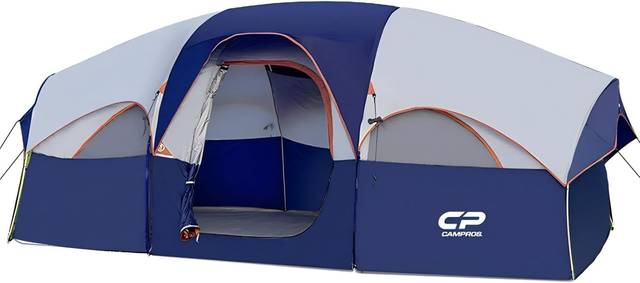
The biggest problem with this tent is the number on the box. It says 8-person, and that's a lie. I've tested it with three adult cots, a large floor fan, and two small clothing bags, and that's your real capacity. Four if everyone's cozy and nobody brought gear. If you're planning for eight people, you're planning for eight people who don't own sleeping bags.
The version I own has been through two rainstorms and one wind event that would've sent a lesser tent to the dump. The good news: it held fast. No leaks anywhere, and I'm 5'7" with no problem moving around inside. The peak height is 6'2", so you're not crab walking unless you're tall.
But here's the flaw you need to know about before you buy: the blue fabric leaks. Not the seams, the material itself. Multiple buyers reported water slowly seeping through the weave even with the rainfly on.
One reviewer said "The blue on the tent leaked! It allowed water to slowly leak through the fabric." That's a design flaw, not a fluke.
My fix: treat the fabric with waterproofing spray before your first trip. It's not a dealbreaker for the price, but it's a step you can't skip.
The zipper is also a problem. It's at the bottom when you close the door, with no second zipper at the top. That means you're bending down to open and close your door every single time. It's annoying at home and infuriating at 2 AM when you need to pee. I fixed mine with WD-40 silicone lubricant on the zipper track, but you shouldn't have to fix a brand-new tent.
Setup is rough solo. The poles are long and the structure needs two people to tension properly. One reviewer said it's "rough to try and set up alone," and I'd agree. That's fine if you camp with a partner, but solo campers should look at dome designs.
The price is ~$130, and for that, you're getting real stand-up height and a tent that survives wind. Just waterproof it first and bring a friend. Choose this tent if you want space and don't mind the prep work. Skip it if you're solo and want something you can pitch in 5 minutes.
The Cooking Setup: Blackstone
I'll be honest, I don't track prices day to day, so I won't pretend to know next week's. But I've owned my Blackstone for two years, and it's the reason I actually cook at camp instead of eating trail mix for dinner.
The version I have is the 17-inch tabletop model, and it's been through at least 30 trips with me. The griddle surface is 17 inches of flat cast iron that heats evenly and holds temperature through a full pound of bacon and a dozen eggs. The 9,000 BTU burner boils water fast enough for coffee before the tent's even up.
The flaw: it's heavy. At 17 pounds, it's not backpacking gear, and it takes up real space in the car. But if you're car camping or base camping, it's the difference between cooking over a fire and cooking like a person. The griddle is also a little small for a big group. I've cooked for four adults and a dog, and it works, but you're doing it in batches.
What I love: the grease management system. There's a little tray that catches the runoff, and it makes cleanup actually possible. I've had cheap camp stoves where the grease goes everywhere, and this is the opposite. The 9,000 BTU is enough for most camp cooking, and the even heat means no scorched spots.
The price is ~$180 for the tabletop model, and I've used it enough to make that worth it. Cost per trip: probably ~$6 over two years of use. That's cheap for the convenience. Choose this if you want real camp cooking without the fire drama. Skip it if you're backpacking or trying to save every ounce.
The Summer Essential: Odoland Portable LED Camping Lantern with Ceiling Fan
This is one of the best value purchases I've tested in years, and I'll tell you the flaw first: battery life. It runs on D-cell batteries, and it'll drain them in one night if you're running both the fan and the light.
"If you're staying for 2 nights you'll need to take an extra pair of batteries to switch them out." That's real.
I've had batteries die at 3 AM in August when the air is soup, and it's not fun.
But for ~$25, you get a lantern bright enough to read by and a fan that actually moves air. One reviewer said "The fan is powerful enough to keep the air in my 10-person tent from getting stagnant," and they were right. I've used it in my CAMPROS on hot nights, and it made the difference between sleeping and staring at the ceiling.
It hangs from the overhead loop most tents have, which is a feature I now refuse to live without. The LEDs are cool-toned, which is fine for tasks but harsh for relaxing. There's no warm light setting, and that's a miss. But for the price, it's still worth it.
The math: ~$39.99 for the lantern, plus ~$8 for a pack of D-cells every two trips. That's ~$4 per trip in batteries. Over a season of 10 trips, that's ~$40 in batteries. A rechargeable option would cost more upfront but save you in the long run. The Odoland is still worth it for the price, just bring spare batteries.
Choose this if you camp in summer and need airflow. Skip it if you're a winter camper or you hate buying batteries.
The Unexpected Hero: The VEVOR Pop-Up Sports Tent
Here's the thing about setup, it's a skill, not a gender. I've watched three guys struggle with a dome tent while a first-time solo camper had hers up in 5 minutes. She said she "watched several people struggle, males included," then set it up herself, solo, while they timed her.
That night, two of their tents got ripped by wind and they bailed into hers, all three of them plus her small dog fit comfortably.
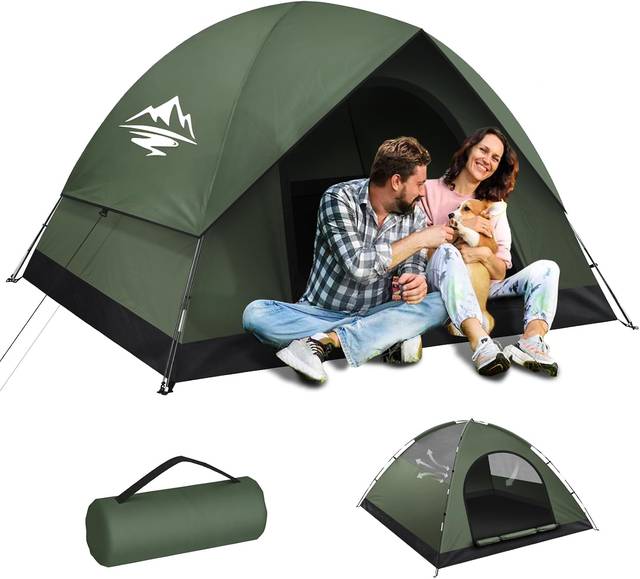
That's the kind of tent worth buying: one that works for a solo woman with a dog and can still rescue three grown men from a windstorm. The generic 2-4 person dome tent on Amazon is that tent. It's cheap, it sets up fast, and it held fast in conditions that destroyed more expensive options.
The generic dome tent is ~$50, and it's the best first tent you can buy. It's not glamorous, it won't stand up to a decade of heavy use, but it'll get you through your first season and teach you what you actually need. I've owned one of these, and it's what I recommend to anyone starting out.
The Zen Factor
Here's something reviewers don't talk about enough: a tent can be more than shelter. One woman I read about bought the CAMPROS as her zen tent, her husband got it for her so she could relax in nature despite chronic medical issues. She loves the windows, the ability to open the top to see the sky, and how easy it is to store in her apartment between trips.
That's real. A tent that gives you a view of the stars from your sleeping bag and space to actually breathe is worth more than its spec sheet. I've spent enough nights in cramped, dark shelters to know that the right tent can be the difference between feeling like you're camping and feeling like you're hiding from the outdoors.
The Bottom Line
Your camping checklist for beginners isn't about buying everything. It's about buying the right things and knowing what'll fail. The CAMPROS is a great family tent if you waterproof it first and bring help.
The Blackstone is the best camp cooking investment I've made. The Odoland lantern is worth every penny if you carry spare D-cells.
And the cheap dome tent is the best first tent for anyone learning to set up solo.
I've been doing this for eight years, and I still learn something every trip. Start with the basics, test your gear in the backyard before you drive four hours to a campsite, and don't trust the number on the box. The mountain doesn't care about your gear list, but having gear that works means you get to enjoy the mountain instead of fighting it.