I have slept in tents for more than 500 nights, most of them in the Cascades and a long stretch of them on the Pacific Crest Trail, and the shelter I resent most is the one that takes twenty minutes to pitch while the rain starts. That is why instant camping tents live on my short list: the ones that go from bag to standing in about a minute and still hold a seam when the weather turns. The four tents in this comparison all solve the speed problem, but they solve it in completely different ways. One inflates on air beams. One blacks out the sun. One is built around a stove jack. One wraps the whole body in a full rainfly. There is no single winner for every trip, and the spec sheets tell you more than the marketing photos do.
For most people, the EVER ADVANCED 4 Person Blackout Instant Cabin Tent is the best instant camping tent in this group, because it pairs a 60-second frame with a claimed 4000mm water resistance rating and a blackout shell that makes summer mornings sleepable. If your camping happens in cold weather and you already own a wood stove, the inflatable hot tent is the only one of the four that belongs in that conversation.
Here is the short version in table form, then the long version with the trade-offs.
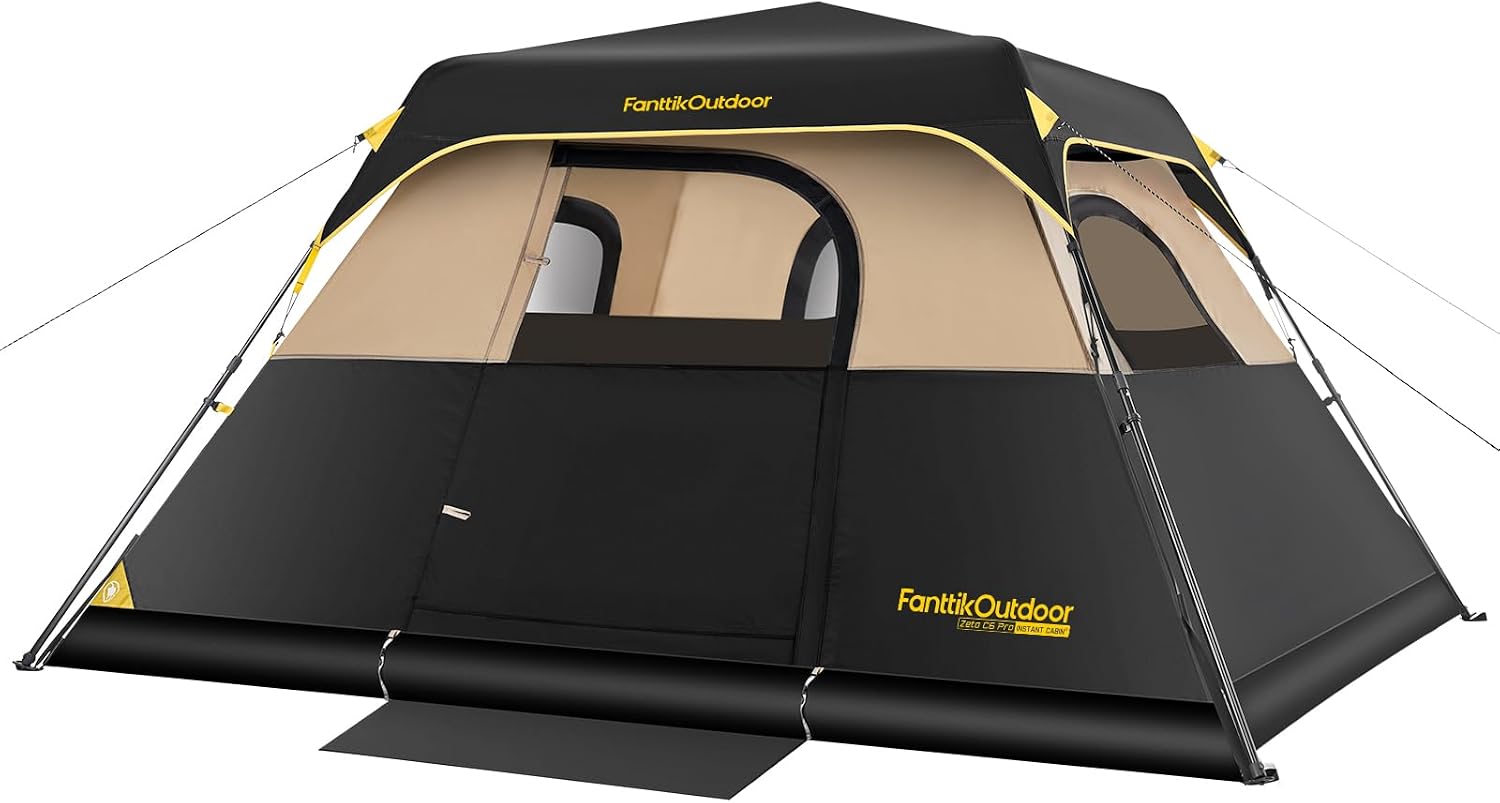
FanttikOutdoor 4/6/8/10 Person Instant Tent for Camping Setup in 60s
Four capacities in one design, so you can match the tent to the group and still get the 60-second frame
The value end of the list, which usually means thin stakes, a partial fly, and seams that need field sealing
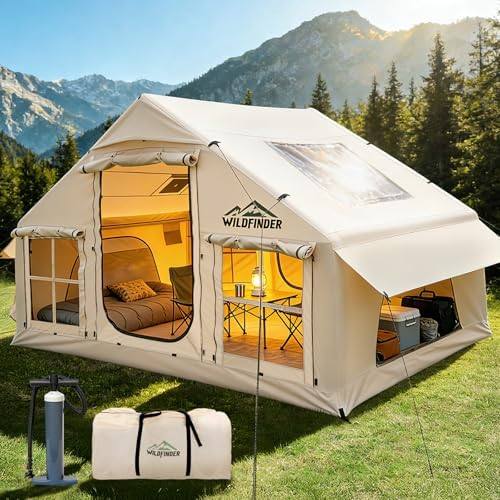
Inflatable Tent with Skylight & Stove Jack, Blow Up Tents, Hot Tent
The stove jack makes it the only tent here that can be heated from the inside, and the skylight adds daylight and ventilation
Air beams need a pump, they can be punctured, and the packed weight and bulk are the highest in the group
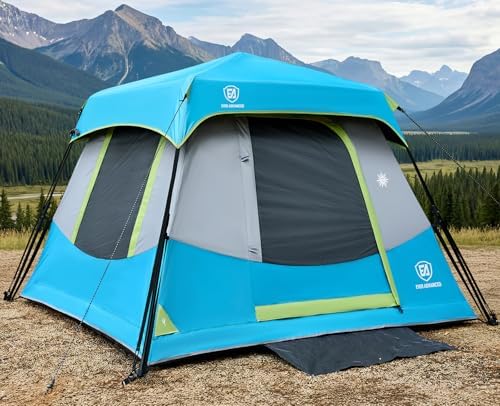
EVER ADVANCED 4 Person Blackout Camping Tent, 60s Easy Setup Instant Cabin Tent for Family, 4000mm Water-Resistant & UV Protection Light-Blocking Tent with Rainfly for Outdoor Travel, 8' x 7' x 59"
Blackout fabric, a claimed 4000mm water resistance rating, and an included rainfly in one package
The interior stays dark all day, and a 59 inch peak means most adults crouch to move around
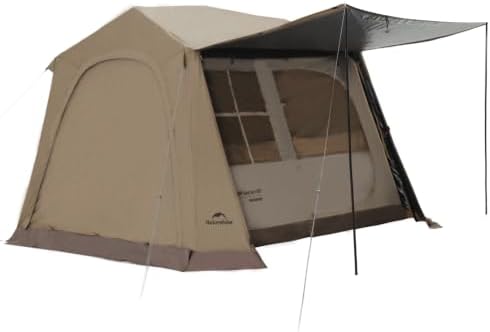
Naturehike Village Instant Tent, Camping Tent with Full Rainfly
The full rainfly covers the body, not just the roof, which is the strongest rain protection here
The top of the list price, plus the packed bulk of a full coverage fly, and the fly still goes on after the frame
Prices and availability were captured from Amazon Creators API and may change.
What "instant" actually means
An instant tent keeps its poles attached to the body and the hub. You unfold the bundle, pull the frame apart, and the shell pops into shape. Clip a few points, stake the corners, and you are done. The 60-second claim on these listings refers to that motion and nothing else. It does not include the rainfly, the guy lines, the stakes, or the time you spend walking the site looking for a flat spot without roots. It also does not include wind. A frame that pops up in a driveway takes three or four times as long when a gust is pushing fabric sideways, and that is the number that matters when the sky is the color of a bruise.
Two other things instant tents are not: light and small. The frame hardware is the weight. Every tent in this comparison is a car camping or basecamp shelter, not a backpacking tent, and if you are counting ounces for a thru-hike, none of these should be in your pack.
The four tents, one at a time
FanttikOutdoor 4/6/8/10 Person Instant Tent
The FanttikOutdoor is the flexible one. The listing covers four capacities, so you can buy a four-person for a couple or an eight or ten-person for a family camp, all on the same frame concept and the same 60-second pitch. That size spread is the real feature. Most instant tents lock you into one footprint, and matching the tent to the group is how you avoid a sauna in July.
What you give up at this end of the list is refinement. Budget instant tents tend to ship with thin stakes, a partial fly, and factory seams that will not survive two seasons of real rain. Budget for a tube of seam sealer and a set of decent stakes on day one. This is a warm-weather shelter that happens to go up fast, and there is nothing wrong with that as long as you know it. Check current Amazon price: Visit on Amazon →.
Inflatable Tent with Skylight & Stove Jack
This is the outlier, and it is the one I would think hardest about. There is no folding frame at all. The structure is air beams, so you lay the tent out, attach the pump, and inflate it. Nothing to bend, nothing to lose, nothing to snap in cold weather. The skylight gives you daylight and a second ventilation path, which matters more than most people expect on a still night.
The stove jack is the headline. A jack in the roof or wall lets you run a stove pipe out of the tent, which turns a shelter into a hot tent and extends your season into real cold. That is a category change, not a feature. If you camp in November at elevation, this is the only tent in the comparison that can keep you warm inside instead of merely dry.
The trade-offs are honest. You need a pump, and you need to treat the air beams like the inflated structures they are, which means keeping them off sharp rock and away from embers. Packed weight and bulk run higher than a comparable pole tent. And any stove inside a tent demands respect: ventilation, a carbon monoxide plan, and a clear rule about who is awake when the fire is lit. I have watched people get that wrong, and it is never a gear problem, it is a habits problem. Check current Amazon price: Visit on Amazon →.
EVER ADVANCED 4 Person Blackout Instant Cabin Tent
The EVER ADVANCED is the balanced pick. It is a 4-person cabin at 8 by 7 feet with a 59 inch peak, a 60-second frame, an included rainfly, and a claimed 4000mm water resistance rating with UV protection. In car camping terms, that is a serious waterproofing claim, well above the shower-resistant numbers you see on cheap tents.
The blackout fabric is the feature that changes how a trip feels. Light blocking means you can sleep past sunrise in July, which at high latitude is a genuine gift. It also means the inside of the tent is dark in the middle of the afternoon, and some people hate that. If you use your tent as a reading room or a place to sort gear in daylight, blackout works against you.
Two things to plan around. A 59 inch peak means most adults crouch to move around, and 8 by 7 feet sleeps four people the way a hotel room sleeps four: two adults plus gear, or two adults and two small kids. The fly also goes on after the frame pops, so your real pitch time is the frame plus the fly, not the frame alone. Check current Amazon price: Visit on Amazon →.
Naturehike Village Instant Tent with Full Rainfly
The Village is the premium option here, and the full rainfly is why. A full fly covers the body, not just the roof, which is what keeps wind-driven rain off the walls and what protects fabric and mesh from UV over years of use. Most instant tents treat the fly as an accessory. This one treats it as part of the design.
The frame follows the same instant concept, so setup stays fast, and the covered body means you can leave the fly attached in storage if you want, at the cost of some packed bulk. This is the tent I would point at for a wet region, a shoulder-season trip, or anyone tired of waking up with a damp sleeping bag pressed against the wall.
The trade-off is the top of the list price and the weight that comes with full coverage. It is a basecamp shelter, not a pack shelter, and you are paying for weather protection rather than light weight. Check current Amazon price: Visit on Amazon →.
Waterproofing is a promise that expires
Every tent here is sold as water resistant or waterproof, and every one of those claims has an expiration date. Coatings wear, seams wick, and zippers leak. The number to look for is hydrostatic head, the pressure a fabric holds before water passes through. The EVER ADVANCED listing claims 4000mm, which is a real rain number. Other tents in this group lean on words like water resistant, which is a much softer promise.
Whatever you buy, do three things. Seal the seams yourself with a tube of seam sealer, because factory sealing is inconsistent. Check the bathtub floor, the part where the floor turns up into the wall, since that is where ground water gets in. And use the guy lines. A taut tent sheds water. A saggy one pools it and then drips on you all night. Condensation is the other half of the story, and it is a ventilation problem, not a waterproofing problem. Leave a vent open even when it is cold, especially with four people breathing inside.
Pitch time in wind
Practice the pitch in your yard before the trip. Not because the frame is hard, but because you need to know the order of operations when it is dark and raining: stake the upwind corner first, keep the door closed until the frame is up, and know where the fly attaches before you are holding it in a gust. The mountain does not care about your gear list, and it does not care that the box said 60 seconds.
One ranger habit worth stealing: walk the site before you unbag anything. Look up for dead branches, look down for the low spot where water will gather, and check the ground for rocks that will punch a floor. Thirty seconds of looking saves an hour of misery. Also, replace the stock stakes. Thin wire stakes bend on the first rocky pitch, and a bent stake is a guy line you cannot use.
Weight and packed size
None of these tents is light. Instant frames weigh more than separate poles, inflatable beams weigh more still, and a full coverage fly adds fabric on top. If you are carrying the tent on your back, this entire category is the wrong category, and you should be looking at a two or three pound backpacking shelter instead.
For car camping, the math changes. Weight stops mattering and packed length starts. Instant tents fold into long, flat packages, so measure your trunk or your roof box before you buy the biggest capacity in a family listing. The FanttikOutdoor size spread is useful here, because a four-person and a ten-person version of the same design are very different objects to transport.
The feature trade-offs, side by side
- Stove jack: only the inflatable tent has one, and it is the only tent here that can be heated from inside.
- Blackout fabric: only the EVER ADVANCED blocks light, and that is the reason to choose it over anything else in this group.
- Full rainfly: only the Naturehike covers the whole body out of the box.
- Size range: only the FanttikOutdoor gives you four capacities in one design.
- Setup method: three folding frames against one air beam design that needs a pump.
How to choose without overthinking it
If you camp in summer, drive to the site, and want the tent standing before the fire is lit, buy the EVER ADVANCED. The blackout shell and the 4000mm claim cover the two things that ruin warm-weather trips: sunrise and rain.
If your trips run into cold weather and you already own a wood stove, buy the inflatable hot tent. It is the only one of the four that adds a season rather than a convenience.
If you need one design in several capacities for a group whose size changes every year, buy the FanttikOutdoor and spend the difference on seam sealer and stakes.
If you camp where it rains sideways and you want the body itself protected, buy the Naturehike and accept the weight and the price.
That is the whole decision. The rest is fabric details.
What I'd take where
On a July car camping trip with the family, the blackout cabin tent. On a late October hunting or ski touring basecamp with a stove, the inflatable. On a wet coastal weekend, the full rainfly. And on a real backpacking trip, none of them, because the best gear is the gear you actually carry, and a heavy instant cabin stays in the truck.
Whichever one you pick, seal the seams, upgrade the stakes, and pitch it once at home before you need it in the dark.