Most tent shopping goes wrong in the same place: people buy the shelter that fits the trip they wish they were taking instead of the trip actually on the calendar. I have spent six seasons as a park ranger in Central Oregon, thru-hiked the PCT in 2022, and logged more than 500 nights in tents, including a few I would rather not repeat. The backpacking vs family camping tents question is not about better or worse. It is about which shelter you will actually carry, and which one you will still like at hour six of a two-day rainstorm.
The short answer: if the tent rides on your back, the two Night Cat listings are the only real contenders in this group. If the tent rides in a trunk and sleeps a crowd, the Naturehike Village instant cabin and the three-room 8-person tent are the two worth comparing side by side.
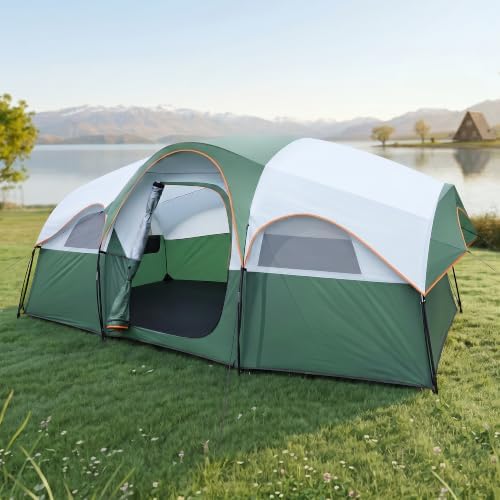
Camping Tent for 8 Person, 3 Room Family Tent with Rainfly
Three separate rooms and room for eight, with dividers that keep a family trip from turning into a turf war
It is a car-camping shelter in every sense, and nothing about a three-room tent goes on your back
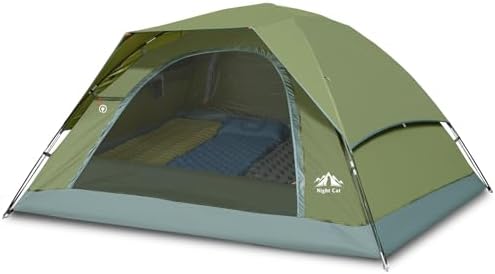
Night Cat Upgraded Backpacking Tents 1 2 Persons Easy Clip Setup Camping Tent Adults Scouts Heavy Rainproof Compact Lightweight
Clip setup and a compact packed size make it the realistic pick for one or two people who have to carry the shelter
Two people in a one-to-two-person tent means sharing every inch, and a second listing carries the identical title
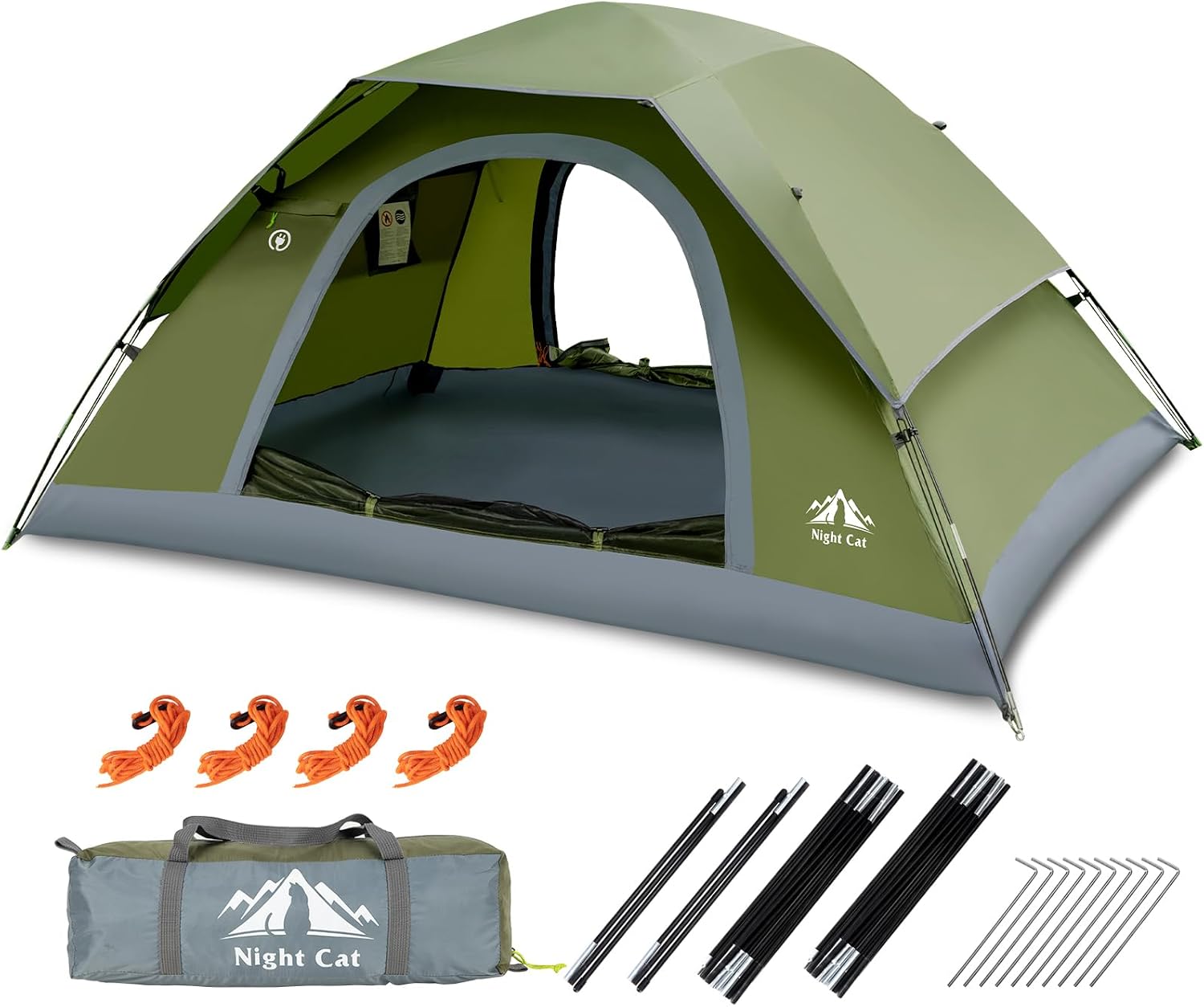
Night Cat Upgraded Backpacking Tents 1 2 Persons Easy Clip Setup Camping Tent Adults Scouts Heavy Rainproof Compact Lightweight
The same design brief from the same brand, so it competes directly on whichever variant is currently in stock
The name matches its twin exactly, so you have to open both pages to see what actually differs
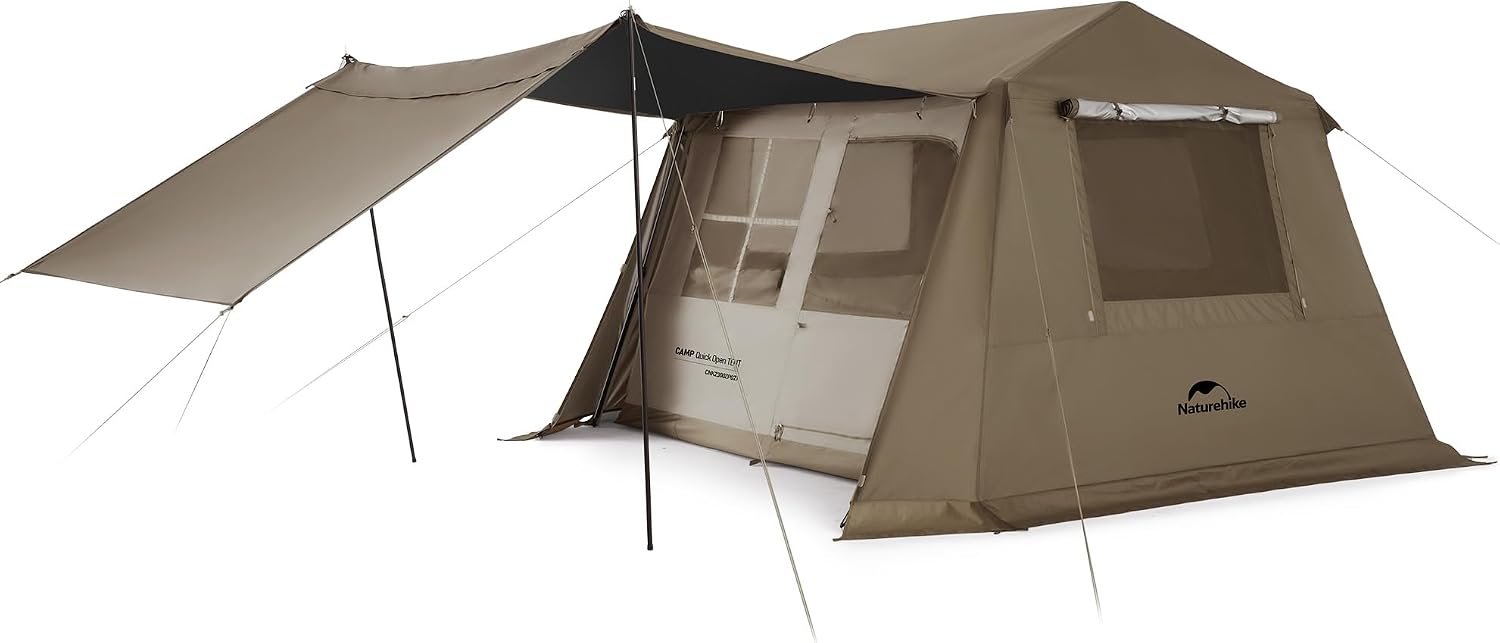
Naturehike Village Instant Tent, 4 Person 8 Person Camping Tent with Full Rainfly, Waterproof Large Cabin Tents for Car Camping
Instant pitch, cabin walls, and a full rainfly that covers the sides instead of stopping at the roof
Cabin tents are heavy and bulky by design, so this is a vehicle shelter, not a pack shelter
Prices and availability were captured from Amazon Creators API and may change.
How I judge a tent before I trust it
Four checks, in this order.
Pitch time comes first. A tent that takes twenty minutes to stand up is a tent you will end up sleeping next to, in the rain, while you fight a pole sleeve in the dark. Clip setups and instant frames solve that problem in different ways, and both show up in this group.
Seam sealing comes second. Waterproofing is a promise with an expiration date. A rainfly is a start, not a finish, and the seams are where the promise usually breaks.
Base weight comes third, which means everything in your pack except food, water, and fuel. A shelter that adds four pounds is a shelter that costs you miles on day three of a trip, whether or not it felt fine in the driveway.
Floor area per person comes last. A "four person" label usually means four sleeping bags and nothing else. No packs, no boots, no dog, no room to change clothes while standing on one leg.
The names on these four listings already tell you the design intent. Two are built to be carried. Two are built to be lived in. That split is the entire comparison.
The backpacking pair: two Night Cat listings
There are two entries here with the same title: Night Cat Upgraded Backpacking Tents 1 2 Persons Easy Clip Setup Camping Tent Adults Scouts Heavy Rainproof Compact Lightweight. That is not a mistake in this article. Amazon genuinely carries two listings under that name, and they do not always match on variant, color, or what comes in the box. If you are choosing between them, open both pages in separate tabs and compare the size option and the included accessories before you commit.
What the name promises is what matters for a shelter you carry. A one to two person capacity, clip setup rather than sleeves, and a packed size small enough to strap onto a pack. Clip setup is the underrated feature here. You pitch the poles first, then clip the body on, which means you are not threading a pole through a sleeve while the wind tries to take your rainfly across the campsite.
Two people in a one-to-two-person tent is a real conversation. It works, and it is how a lot of couples and climbing partners travel, but you are sharing every inch and the duffel stays in the car. For a solo hiker, or a scout on a first overnight, this size class is the sweet spot: enough room to sit up, not enough weight to notice.
The second Night Cat listing is the same design brief from the same brand. Treat the two as a pair and let the current variant decide, because the naming will not do it for you.
The instant cabin: Naturehike Village
The Naturehike Village Instant Tent is the odd one out in the best way. It is a cabin rather than a dome, which means near-vertical walls and a ceiling you can stand under in the taller configuration. The listing covers both a 4 person and an 8 person version, so the first thing to do is confirm which size you are adding to the cart. Those are very different shelters sharing one product page.
Two words in the name are worth flagging. Instant means the frame is designed to pop into shape rather than be assembled pole by pole, which is the difference between a five-minute camp and a twenty-minute one. Full rainfly means the coverage runs over the top and down the sides rather than stopping at the roof, which is what you want for car camping in the Pacific Northwest, where a three-day trip can include two days of sideways rain.
The trade-off is honest and unavoidable. A cabin this size is heavy and bulky, and that is the price of headroom. This is a shelter that lives in a vehicle. It is not going on your back, and no marketing copy will change that.
The basecamp: the three-room 8-person tent
This is the one for a family that has stopped pretending everyone wants to share a room. Three separate compartments, an eight-person capacity, and a rainfly over the top. If you have ever tried to get two kids and two adults to sleep in one open floor plan, you already know why dividers matter. Separate spaces mean separate bedtimes, separate gear piles, and a much lower chance that someone's headlamp wakes the whole tent at 5 a.m.
Three practical questions to answer before buying: how tall is the center, how many doors does each room have, and does the rainfly cover the whole body or just the roof. Check the listing photos for all three. A three-room tent with one door is a maze. A three-room tent with a partial fly is a fair-weather palace.
At this size you are buying floor area and dividing walls, not light weight. Set it up once in the yard before the trip. Every family tent failure I have watched happened because the first pitch took place at the campsite, in the dark, with an audience.
The trade-offs that do not fit on the box
Three trade-offs decide this group.
Carried versus parked. Every ounce you do not carry is a mile you do not feel. The two Night Cat tents are the only shelters here designed around that idea. The other two are designed around space, and space costs weight.
Pitch time versus living space. Instant frames and clip setups both cut setup time. Cabin and three-room designs buy you headroom and separate rooms at the cost of a longer, heavier pitch. If your trips are weekend car camps, that trade is easy to accept. If your trips start at a trailhead, it is not a trade at all.
Rain coverage versus ventilation. A full rainfly keeps water out and traps condensation in. On a cold, wet night you want the fly. On a warm one you want mesh. The tent that handles both has a fly you can vent, and that is a detail worth checking in the photos before you buy.
I will not quote prices in this article, because they move and stale prices are worse than no prices. Check the current Amazon price on each listing on the day you buy, and check the variant selector at the same time. On multi-size listings, the default option is not always the one you want.
Who should buy which
Solo hiker or a pair splitting weight: one of the Night Cat tents. This is the size class where the decision is easiest, because there is nothing else in the group that qualifies.
Scout troop or a first overnight: also the Night Cat pair. Clip setup is forgiving for beginners, and a compact packed size means it actually makes it out of the gear closet.
Couple car camping with a dog: the Naturehike Village in the smaller size. Cabin walls and a full rainfly matter more than grams when the car is carrying the load.
Group of six to eight, or a family that wants separate rooms: the three-room 8-person tent. The dividers are the feature, not the capacity.
Big group that wants standing headroom: the Naturehike Village in the larger size, assuming you have the vehicle space and a second person to help with the pitch.
What I am testing next
My current project is 2026 two-person backpacking tents: four units, a thirty-day field trial each, and a rain test that would make most manufacturers nervous. When that wraps, I will publish the numbers rather than the adjectives.
Two things I want to be clear about here. I have not put fifteen nights into any of the four shelters in this comparison, so I am not going to call them field-tested. And none of the four has been through my storm protocol yet. What I can tell you is what each one is designed to do, where the design intent shows up in the name, and which trips each one fits. That is enough to make a good buying decision. It is not enough to make a claim about durability, and I would rather say so than guess.
The tents that survive a decade are the ones that match the trip. Buy for the nights you actually take, not the ones on your wish list.