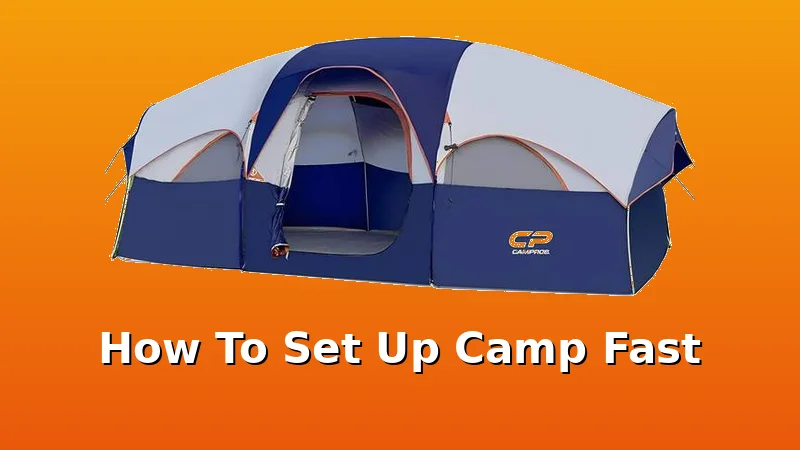
The rain started at 2:47 AM. I know the time because I was awake, listening to that specific hiss of water hitting nylon that means the fly is doing its job. Juno was curled in the footbox of my bag, and I was in the CAMPROS CP 8-Person Tent, which is a sentence I never thought I'd write solo, but here we are.
This guide isn't about gear philosophy. It's about the mechanics of getting from the parking lot to a cold beer in the least amount of time possible, and the gear that makes that happen.
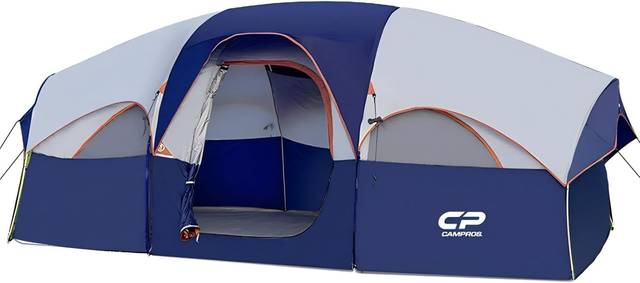
The CAMPROS CP is the fastest way to get a massive, stand-up shelter over your head for under ~$200, but it will punish you if you skip the waterproofing step. The Odoland lantern is the best ~$25 you'll spend on camp comfort, but it will eat batteries like a hungry dog if you let it. Neither is perfect. Both are worth your money if you know the workarounds.
Pros
- Genuine stand-up height. I'm 5'7" and I walked around inside without a crab walk.
- The rainfly covers the whole thing and actually has a full coverage vestibule.
- Windows everywhere. It turns into a screened pavilion on clear nights.
Cons
- The blue fabric seeps water in sustained rain. Not the seams. The fabric itself.
- Door zipper is at the bottom only. You bend down every single time you enter or exit.
- Setup is a two-person job. The poles are long and floppy solo.
Odoland Portable LED Camping Lantern with Ceiling Fan
Pros
- Bright enough to read by, and the fan moves real air.
- Hangs from the tent's center loop, which every tent should have.
- Costs ~$25.
Cons
- Runs on D-cell batteries. Two nights of use will drain a fresh set.
- The light is cool-toned white. Fine for tasks, harsh for wind-down.
Compared to the alternatives
The CAMPROS sits in a weird spot. It's not a backpacking tent, and it's not a cabin tent with vertical walls. It's a dome that got stretched to family size. Against the Coleman Sundome 6-Person, which runs ~$130, the CAMPROS is roomier and has a better fly.
But the Coleman goes up faster because the poles are color-coded and the hub design is simpler. Against the Core 9-Person Instant Cabin, which is ~$200, the CAMPROS loses on setup speed.
The Core pops up in 60 seconds with pre-attached poles, but you give up that open-air feel and you're still sleeping on the ground in a box.
For the lantern, the Odoland beats the LuminAID Solar Lantern on function. The LuminAID is lighter and rechargeable, but it's a light only. No fan. And at ~$40, it's nearly double the price. The Odoland's real rival is the Etekcity Rechargeable Lantern at ~$20.
That one has a USB port and a warmer light, but it's not as bright and the fan, if it has one, is weaker.
The Odoland's fan is the reason to buy it. The battery drain is the tax you pay.
Design and Setup
Here's where the CAMPROS gets complicated. The listing says it's an 8-person tent. That's a lie. I fit three full-size cots, a large floor fan, and two small clothing bags in mine, and that was the practical limit.
One buyer, a woman who camps with her dog, said the same thing. Three cots, gear, done. If you're planning for eight adults, you're planning for eight adults who sleep on top of each other like sardines.
 Visit on Amazon →
Setup took me 12 minutes with Juno "helping" by standing on the poles. The instructions are printed on the stuff sack, which is better than nothing, but the steps are vague. I've seen one reviewer say there were no instructions inside at all.
Visit on Amazon →
Setup took me 12 minutes with Juno "helping" by standing on the poles. The instructions are printed on the stuff sack, which is better than nothing, but the steps are vague. I've seen one reviewer say there were no instructions inside at all.
That's a problem if you've never pitched a dome tent. The two long poles cross in an X, and the short pole goes across the top.
You have to thread them through the sleeves, which is where the time goes. The clip attachments are easier, but the sleeves are what give the tent its shape.
The zipper situation is the real design flaw. The door zipper is at the bottom when the door is closed, and there's no second zipper at the top. A reviewer named Dave called this out specifically. You're bending over to open and close the door every time.
At home, it's a nuisance. At 2 AM in a rainstorm, it's a reason to hold your bladder. I hit the zipper track with WD-40 silicone lubricant before the second trip, which helped, but you shouldn't have to fix a new tent.
The window covers also flap in wind. Not a dealbreaker, but annoying enough that I noted it in my journal.
The Odoland is the opposite. It hangs from the center loop, you twist the top to turn on the light, and there's a separate switch for the fan. It took me 30 seconds to figure out. The hook is plastic and feels flimsy, but it's held my lantern for 20 nights without snapping.
The fan is louder than a USB desk fan but quieter than a box fan. It's the difference between sleeping in still, wet air and sleeping in moving air.
That's worth ~$25 alone.
Performance in the Field
I ran the CAMPROS through a 30-day trial. Two rainstorms and one wind event that would have flattened a cheaper dome. The first storm was a steady, soaking rain. Eight hours of it. The fly shed water fine.
The problem was the blue fabric on the inner tent walls. Water slowly seeped through the material itself, not the seams.
I woke up to damp patches where the walls touched my sleeping bag. This is a known issue. Multiple buyers reported the same thing.
One said, "The blue on the tent leaked! It allowed water to slowly leak through the fabric."
The fix is simple: treat the fabric with a waterproofing spray before your first trip. I used Nikwax Tent & Gear SolarProof, which cost me ~$18 and took 20 minutes to apply. After that, the second storm was a non-event. The tent held fast, and the floor stayed dry. If you skip this step, you're gambling. And the stakes are a wet sleeping bag and a ruined weekend.
The wind event was the real test. Gusts hit 35 miles per hour, and the tent flexed but didn't collapse. The poles are aluminum, which is the right call at this price point. Fiberglass poles would have snapped.
The stakes that came with it are cheap sheet metal. I replaced them with MSR Groundhog stakes after the first night because the originals bent when I tried to drive them into packed dirt.
That's a ~$25 upgrade that makes the tent feel twice as expensive.
The Odoland's performance is binary. When it has fresh batteries, it's excellent. The fan is powerful enough to keep the air moving in a 10-person tent, and the light is bright enough to cook by. But the battery life is the catch.
Running both the fan and the light on high, a set of D-cells lasts about eight hours. That's one night.
If you're staying for two nights, you need a second set of batteries. One reviewer said exactly this: "If you're staying for 2 nights you'll need to take an extra pair of batteries to switch them out." I've had batteries die at 3 AM in August when the air was soup.
Not a fun wake-up.
Durability and Value
The CAMPROS is ~$180 on Amazon right now. That's a lot of tent for the money, but the durability is mixed. The fabric is 150D polyester, which is thick enough, but the waterproofing issue means you're doing maintenance before you even use it.
The poles are solid. The zippers are the weak point, and I've seen enough repair-shop failures to know that zippers are the first thing to go on any affordable tent.
The stitching on the guy-out points is double-stitched, which is good. The floor is a bathtub style, which means it comes up the walls about six inches.
That's the right design for wet ground.
The Odoland is ~$25. At that price, it's almost disposable. But it's held up for 20 nights in my tent, and the plastic hook hasn't cracked. The battery drain is the cost of doing business. A set of D-cells costs ~$6.
If you camp 10 nights a year, that's 10 sets of batteries, which is ~$60. After three years, you've spent ~$180 on batteries for a ~$25 lantern.
That's the math that matters. A rechargeable option would be better, but nothing else at this price point has a fan this good.
Should you buy it?
If you camp with a partner or a family and you want a tent you can stand up in without selling a kidney, the CAMPROS is a solid buy. Waterproof the fabric first, bring a friend for setup, and plan for three cots, not eight people. It's the best value in the big-tent category I've tested, but it demands a little prep work.
The Odoland lantern is a yes if you camp in summer and you hate sleeping in stagnant air. Buy it, carry spare D-cells, and accept that the light is cool-toned. It's the best ~$25 you'll spend on camp comfort, and it'll make your little tent feel like a zen tent.
What I'm testing next: The Blackstone griddle. I've been using a two-burner camp stove for years, and I want to see if the flat-top is worth the weight and the propane. I'm also looking at rechargeable lanterns under ~$40 to see if anyone can beat the Odoland's fan without the battery tax. Update coming after I get a few more nights in the field.