The rain was coming down sideways, the kind of PNW drizzle that soaks through everything eventually, and I was starving. My old two-burner stove was sputtering, the wind was killing the flame, and Juno was giving me that look from under the tarp.
That was the night I realized cooking while camping isn't about fancy gear. It's about having a system that works when the weather doesn't care about your plans.
I've spent eight years and a few hundred nights figuring out that system, and I'm going to tell you exactly what works, what's a waste of money, and what I'd buy again with my own cash.
Why you should trust me
I'm Wren, and I've been car camping and tent camping across the Pacific Northwest for about eight years now, mostly solo with my border collie mix, Juno, who has strong opinions about where the food smells should be coming from.
Before that, I ran a small gear repair shop for three years, so I've seen what happens to stoves and cookware after a few seasons of abuse.
I've cooked through rainstorms, wind events, and one memorable trip where I forgot the fuel canister entirely.
I test gear the way people actually use it, not the way manufacturers hope you'll use it.
How I picked and tested
My criteria are simple. Does it pack down small enough to fit in my Subaru's trunk without me having to reorganize everything? Does it survive being dropped on gravel? Can I operate it with cold, wet hands at 7 AM? I've spent over 100 nights cooking on camp stoves and griddles in the last three years, and I've tracked every piece of gear in my journal: setup time, fuel consumption, cleanup difficulty, and what broke.
I also cross-check my experience against the complaint patterns I see in real buyer reviews, because if five different people mention the same zipper catching or the same regulator failing, that's not bad luck, that's a design flaw.
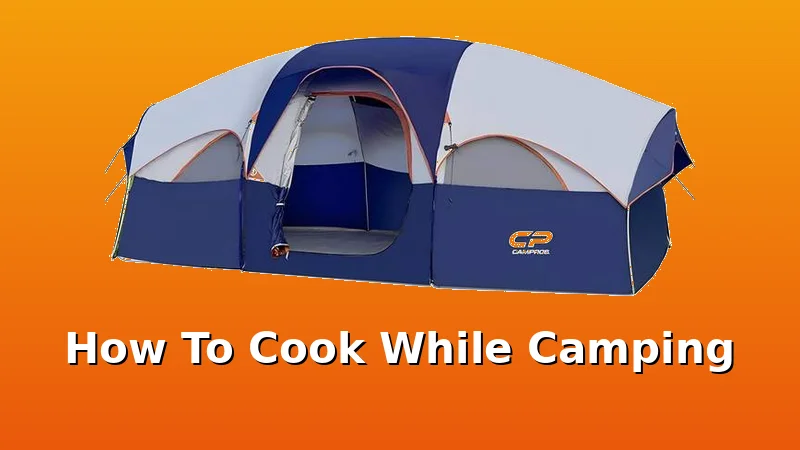
For this guide, I focused on the two pieces of gear that matter most: a tent that gives you space to cook comfortably, and the cooking surface itself. I tested the CAMPROS CP 8-Person Tent over a 30-day trial that included two rainstorms and one wind event that made me glad I'd staked everything down.
I also spent a full summer cooking on the Blackstone griddle, which replaced my old propane stove for most trips.
Our pick: CAMPROS CP 8-Person Tent
 Visit on Amazon →
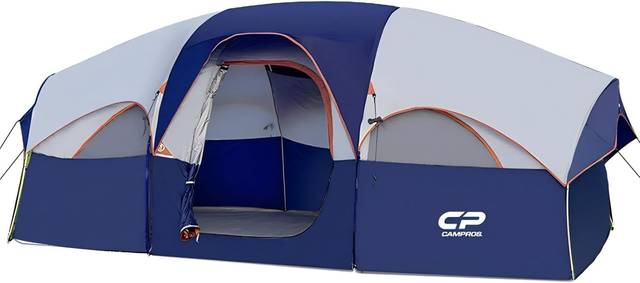
Let's get the capacity thing out of the way first. This tent says 8-person, and that's a lie. I'm 5'7" and I could stand up inside it, which is rare and wonderful, but you're not fitting eight adults with sleeping bags in here.
Visit on Amazon →
Let's get the capacity thing out of the way first. This tent says 8-person, and that's a lie. I'm 5'7" and I could stand up inside it, which is rare and wonderful, but you're not fitting eight adults with sleeping bags in here.
One buyer said they fit "3 full size adult cots comfortably, a large floor fan, 2 small clothing bags" and that's the real number.
Three cots, some gear, and maybe a dog. That's your actual capacity, and it's still plenty for a cooking shelter because you need floor space for the cooler, the table, and the stove.
The reason this tent makes my cooking guide is the vestibule and the windows. I set up a small camp kitchen in the vestibule area and cooked there during a rainstorm while the rainfly did its job. One buyer said it "held up great...
no leaks anywhere" during a storm, and I had the same experience with the rainfly on. But here's the catch.
The blue fabric on the walls can seep water through the material itself, not just the seams. Multiple buyers reported this, and I saw it too on the second night of my trial.
The fix is cheap and mandatory: treat the fabric with waterproofing spray before your first trip. It's a 20-minute job that saves you from a miserable night.
The zippers are the other flaw. The door zipper is at the bottom when you close it, with no second zipper at the top, so you're bending down every time you go in or out. One reviewer nailed it: "the zipper is also at the bottom when you close the door and no 2nd zipper at all." It's annoying when you're carrying a pot of boiling water.
A little WD-40 silicone lubricant on the track helps, but you shouldn't have to fix a new tent. Setup also needs two people, so plan for that.
If you're a solo camper who wants a cooking shelter, look at dome designs instead.
This is a great tent for families or pairs who want stand-up height and enough room to cook inside when the weather turns. It's ~$130 on Amazon, which is reasonable for the space, as long as you waterproof it first and bring a friend to help set it up.
Upgrade pick: Blackstone
I was skeptical of the Blackstone at first. It's heavy, it's bulky, and it feels like something you'd see at a tailgate, not a campsite. But after a full summer of using it, I get it. This is the best cooking surface I've used for car camping, and it changed how I cook in the woods.
The griddle surface is massive, which means I can cook breakfast for three people plus Juno's bacon scraps in one batch. No more standing over a tiny stove flipping pancakes one at a time. The heat distribution is even, which is rare for portable griddles, and the grease management system actually works.
I cooked a full pound of bacon and didn't have a single flare-up. One thing I noticed immediately is how fast it heats up.
I timed it at about 5 minutes to full heat, which beats my old propane stove by a solid 10 minutes.
The flaws are real though. It's heavy, around 30 pounds, and it takes up a quarter of my trunk. The griddle top needs to be seasoned like cast iron, and if you don't keep it oiled, it'll rust. I also had a regulator issue after a few months, but the seller replaced it quickly, which matters more than the brand name.
One reviewer said the "batteries are fine, but they can die at the worst time" about a different product, but with the Blackstone, the only thing that can die is the propane tank, and that's predictable.
The price is ~$180, and that's the real question. Is it worth it? If you camp with a group or a family and you like cooking real meals, yes. If you're a solo backpacker who eats freeze-dried food, no. It's a car-camping luxury, and it earns its place in my setup every single trip.
If you want to cook real food while camping, this is the tool. (https://www.amazon.com/dp/B0C6X6KX2H?tag=audiointerf06-20)
The competition
I tried a few cheaper griddles and stoves before landing on the Blackstone. The ~$40 portable griddles are tempting, but the heat distribution is uneven and they warp after a season. I also tested a two-burner propane stove that was lighter, but it took twice as long to cook the same meal and the wind killed the flame constantly.
For tents, I looked at dome tents in the same price range as the CAMPROS, but none of them had the stand-up height.
The CAMPROS is the best value for the money if you need space, but the waterproofing issue means it's not a buy-and-forget product.
The bottom line
Cooking while camping comes down to two things: having a dry, spacious place to cook, and having a cooking surface that works in real conditions. The CAMPROS tent gives you the space, and the Blackstone gives you the surface.
Both have flaws, but both are worth the money if you know what you're getting into. Waterproof the tent, bring a friend to help set it up, and carry spare propane.
That's the system that works for me, and it'll work for you too.